
Understanding the Binary Number System
Explore how the binary number system uses 0 and 1 to power computing & electronics 💻. Learn about bits, bytes, positional values & binary operations today!
Edited By
Emily Harding
The binary number system is fundamental to how modern computers function. Unlike the decimal system, which has ten digits (0–9), binary uses only two digits: 0 and 1. This simple approach underpins the way digital devices store and process information.

Computers rely on electronic circuits that have two distinct states: ON and OFF. These states naturally map to the binary digits, making binary the most efficient way to represent data at a hardware level. For instance, a hard drive reads and writes data as tiny magnetic spots that are either magnetised (1) or not (0). This direct correspondence reduces complexity and enhances reliability.
Binary numbers power every part of digital technology:
Computing processors: The central processing unit (CPU) performs calculations using binary arithmetic.
Memory storage: RAM and flash memory encode data in binary to save programs and files.
Network communication: Data sent over the internet, including emails and videos, is broken down into binary packets.
This binary backbone allows devices like smartphones, ATMs, and digital TVs to operate seamlessly.
Binary’s simplicity brings key benefits:
Error detection: It’s easier to spot errors in binary transmissions, improving data integrity.
Hardware compatibility: Electronic components can switch between two voltage levels reliably, ensuring faster processing.
Standardisation: Most programming languages and systems use binary, assuring broad compatibility.
Understanding binary’s role sheds light on why digital technology runs efficiently and reliably — from everyday mobile apps to complex financial systems.
By grasping how binary numbers work, investors and analysts can better appreciate technological advancements influencing sectors like fintech, data security, and telecommunications. For students and beginners, foundational knowledge of binary prepares them for deeper learning in computer science and engineering.
Understanding the basics of the binary number system is essential because it forms the backbone of all digital technology. In computing and electronic devices, information is stored, processed, and transmitted using this system. Grasping its fundamental concepts helps you appreciate why digital circuits rely solely on two symbols and why this simplifies both hardware design and software development.
Binary digits, or bits, are the smallest units of data in computing. Each bit can have only two values: 0 or 1. This simple on/off signalling aligns well with the physical realities of digital electronics, where switches (transistors) can either be off or on. For example, in a mobile phone's processor, millions of bits switch rapidly between these two states to perform complex operations.
Binary represents numbers using only these two digits, unlike the decimal system’s ten digits. Each position in a binary number signifies a power of two, starting from 2^0 at the rightmost bit. So, the binary number 1011 translates to 1×8 + 0×4 + 1×2 + 1×1 = 11 in decimal. This positional method allows computers to convert and manipulate values efficiently, especially since all operations reduce to simple binary arithmetic.
The decimal system is base-10, using digits 0 through 9, while binary is base-2, using only 0 and 1. This difference means decimal numbers process values by powers of ten (10^0, 10^1, etc.), but binary uses powers of two. For instance, the decimal number 45 is written as 101101 in binary. This base distinction impacts how systems interpret and compute numbers.
Binary is inherently more suited to computing hardware. Electronic devices deal best with two distinct states — high voltage and low voltage — rather than ten varying levels needed for decimal. This reduces errors and improves reliability. Additionally, binary simplifies arithmetic operations. Computers can implement addition, subtraction, multiplication, and division using simple logic circuits designed around binary inputs.
The binary number system's simplicity not only aligns with the physical properties of electronic components but also ensures speed and accuracy in computing tasks.
Overall, understanding how binary digits work and how numbers convert between binary and decimal enhances comprehension of computing processes. This awareness is crucial for anyone interested in technology, trading algorithms, or software development, where binary calculations underpin the logic.
The binary number system lies at the heart of computer architecture, shaping how digital devices perform computations and manage data. Understanding this role clarifies why computers rely entirely on just two symbols: 0 and 1. This simplicity maps directly onto electronic hardware, making binary indispensable for designing circuits and processing information efficiently.
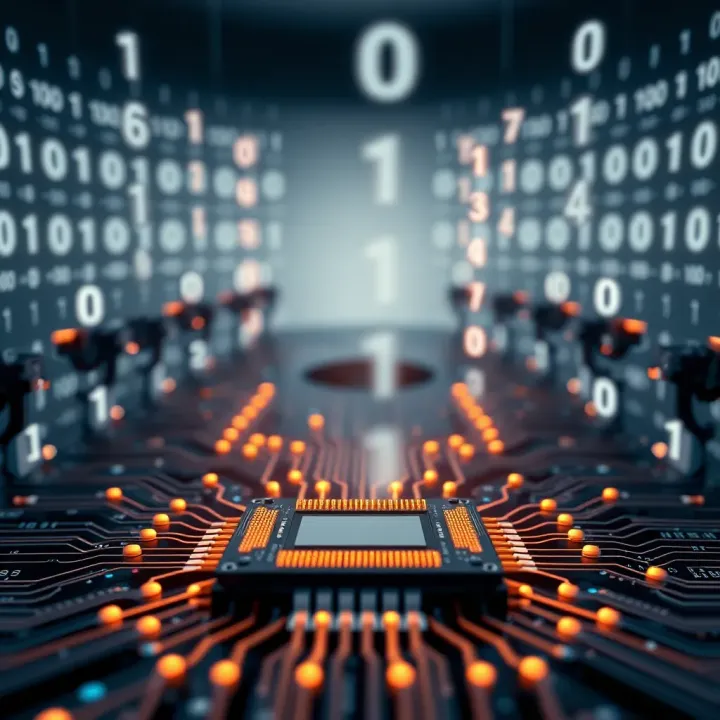
Logic gates are the building blocks of digital circuits, and their operation depends wholly on binary inputs and outputs. Each gate processes binary signals—expressed as 0 or 1—to perform basic functions like AND, OR, and NOT. For example, an AND gate outputs 1 only when all inputs are 1; otherwise, it outputs 0. This binary handling enables complex computations by combining simple gate operations, much like how small gear wheels work together to power a clock.
These gates form larger circuits responsible for essential functions such as arithmetic calculations, decision-making, and data movement within processors. The use of binary input and output ensures reliability and consistency, as every gate recognises only two distinct states, reducing errors and misinterpretations.
Electrically, binary states correspond to different voltage levels in circuits. A high voltage level (for example, around 5 volts) typically represents a binary 1, while a low voltage level (close to 0 volts) represents a binary 0. This clear distinction allows circuits to be designed economically and reliably, with transistors switching states rapidly without ambiguity.
This voltage-based representation makes hardware resilient against noise and signal degradation, which is especially crucial in everyday devices like smartphones or computers where electrical disturbances occur frequently. The binary system’s robustness ensures that calculations and data transfers do not fail easily, even under less-than-ideal conditions.
Inside computers, all forms of data—whether text, images, or sound—are ultimately stored as strings of binary digits or bits. Each bit holds a value of 0 or 1, and groups of bits represent more complex information. For instance, a single character in ASCII encoding uses 8 bits or one byte to represent letters or symbols.
This uniform binary representation simplifies data handling, allowing diverse data types to be stored, manipulated, and transmitted using the same fundamental language. It also facilitates easy conversion between different data formats, making computers versatile tools across applications.
The processor (CPU) reads and executes instructions stored in memory, both expressed in binary. Memory modules store data in binary format, organising bits into bytes and words for quick access. The processor fetches these binary instructions, decodes them, and performs calculations or other tasks accordingly.
Moreover, binary arithmetic operations like addition and multiplication are intrinsically simpler for the processor compared to other number systems, because they use straightforward logical operations on bits. This efficiency contributes to faster computing speeds and lower power consumption—factors essential to modern devices ranging from laptop computers to IoT gadgets.
In essence, the binary system’s close relationship with electronic hardware makes it the optimal choice for computer architecture, ensuring that data storage, processing, and circuit design all work smoothly in harmony.
Binary is the backbone of how computers and digital devices operate today. Its practical applications stretch far beyond just basic calculations—it's the language that powers programming, data communication, and error management in technology.
At the lowest level, computers understand only binary code—strings of zeros and ones. This machine language directly controls the processor’s actions, telling it when to add numbers, move data, or make decisions. Every software program, from a mobile app to complex trading software, eventually translates into binary so the hardware can execute instructions efficiently. For example, the Android app you use daily gets compiled into binary instructions before running on your phone’s processor.
When developers write code in high-level languages like Python or Java, it isn’t understood by the computer right away. A compiler or interpreter converts this code into the underlying binary machine code. This process ensures that the instructions are optimised and compatible with the specific hardware architecture. During execution, the CPU fetches these binary instructions one at a time, decodes them, and performs the necessary operations. This chain of compiling and execution keeps everything running smoothly—from executing trades on a stock Exchange to processing payment transactions on platforms like Paytm.
Digital networks and communication systems rely on binary to transmit data reliably. Whether it's your mobile message, an email, or streaming a video, data is broken down into packets represented in binary form before transmission. Protocols such as TCP/IP organise these packets for delivery across the internet. In India, for instance, the widespread use of mobile networks for internet access depends heavily on binary encoding for speed and accuracy.
Errors are inevitable when data travels across networks due to noise or interference. Binary systems employ methods like parity checks, checksums, and cyclic redundancy checks (CRC) to spot errors. Once detected, many systems can automatically correct single-bit errors using error-correcting codes. This approach is critical in ensuring data integrity, especially in financial transactions or digital voting systems, where accuracy cannot be compromised.
The ability to encode, transmit, and verify data using binary techniques safeguards the reliability and security of our digital world.
In short, binary isn’t just a way to count; it’s the practical foundation making modern software, communication, and error management possible. For investors and students alike, understanding these applications clarifies why binary remains at the heart of technology innovation today.
The binary number system remains central to digital technology because it offers practical advantages in hardware simplicity and computational efficiency. These benefits directly influence how computers are designed and how quickly they can process data. Understanding these gains clarifies why binary continues to dominate despite the availability of other numerical systems.
Binary’s use of only two states — 0 and 1 — simplifies electronic circuit design significantly. Unlike decimal systems that require components to recognise ten different states, circuits dealing with binary need only differentiate between two voltage levels, such as 0 volts for 0 and 5 volts for 1. This reduction cuts down the components needed and lowers manufacturing costs. For instance, in Indian manufacturing hubs making microchips, simpler binary circuits mean smaller dies and efficient silicon use.
This straightforward design also leads to fewer failure points. Because circuits only switch between two discrete states, they are less likely to misinterpret signals. Consider how straightforward Indian startups found designing simple binary circuits easier for early stage projects, avoiding costly errors linked to more complex systems.
Binary systems handle electrical noise better than other base systems. Noise introduces small fluctuations in voltage, but binary circuits tolerate these because they only check if the signal exceeds a certain threshold to decide between 0 or 1. This tolerance helps in noisy environments like crowded data centres or factories, common in Indian urban areas.
For example, a sensor in a textile mill near Coimbatore operates reliably with a binary communication system, unaffected by interference from heavy machinery. Such robustness reduces error rates and improves overall system reliability.
Computations using binary numbers are simpler for digital processors. Arithmetic logic units (ALUs) within computers perform addition, subtraction, multiplication, and division using binary logic gates that operate quickly and efficiently. Unlike decimal, binary arithmetic follows well-defined logical patterns that hardware can execute with fewer steps.
This efficiency translates into faster processing speeds and lower power consumption—a vital factor for data centres in energy-conscious India. For instance, Indian financial markets rely on rapid computations for trading algorithms, benefitting from the speed binary arithmetic offers.
Binary allows data to be compactly stored because it uses minimal states per storage unit. Every bit represents a single binary digit, making packing data efficient. Modern storage media such as SSDs and RAM in devices sold by Indian retailers like Flipkart use binary encoding to maximise storage capacity.
Consider a document stored as a series of bits. Its binary format enables it to be compressed and retrieved quickly, saving space and improving access times. This compactness also reduces costs for Indian consumers purchasing mobile and laptop devices since manufacturers can produce high-capacity storage at competitive prices.
The binary number system’s simplicity and efficiency underpin the entire digital revolution, making it essential not just for computers but for the countless devices and services we rely on daily.
In summary, the binary system’s benefits in hardware design, noise resistance, computation speed, and storage effectiveness explain why it is the backbone of modern computing, especially as India’s technology ecosystem rapidly expands.
The binary number system remains the backbone of modern computing, but innovations are pushing its boundaries. Looking ahead, emerging technologies reveal both the limits of classical binary and the promising potential of new approaches. This section explores how developments like quantum computing and the evolving digital landscape ensure binary's ongoing relevance.
Classical binary systems rely on bits that represent either 0 or 1. Though effective for most current applications, this binary encoding struggles with problems requiring massive parallelism or extreme speed, such as complex simulations or advanced cryptography. The rigid on-or-off nature means computations can become cumbersome and inefficient, especially when dealing with certain real-world problems that involve probabilities or intricate data sets.
Quantum computing offers a fresh perspective by employing quantum bits or qubits, which utilise quantum states rather than classical binary values. Unlike bits, qubits can exist in multiple states simultaneously, thanks to a principle called superposition. This allows quantum computers to process vast amounts of data in parallel, potentially solving problems in seconds that would take classical binary systems years. For instance, in drug discovery or weather prediction, quantum systems can crunch enormous data faster than their classical counterparts.
Despite advancements in quantum computing, classical binary still plays a major role in emerging fields like artificial intelligence (AI) and the Internet of Things (IoT). AI algorithms largely operate on vast binary data processed by traditional hardware, enabling machine learning models, speech recognition, and computer vision applications. Similarly, IoT devices—ranging from smart meters to connected home appliances—use binary-based digital signals to communicate reliably over networks.
At the same time, binary processing speeds and storage capacities continue to evolve rapidly. Innovations in semiconductor technology, such as smaller transistors and 3D chip architectures, push the limits of how fast and efficiently binary data can be handled. For example, the rise of multi-core processors in smartphones enables quicker calculations and smoother multitasking for users across India. Storage technologies like NAND flash memory also allow compact yet high-capacity data retention, supporting everything from high-resolution videos on streaming platforms to large-scale data analytics.
The blend of classical binary advancements and the dawning of quantum computing means that binary systems will adapt and remain central to technology for years to come.
Classical binary systems face performance limits for extremely complex tasks.
Qubits, through superposition, offer new computing potentials beyond simple 0 and 1 values.
Traditional binary remains crucial for AI and IoT infrastructure.
Continuous improvements in processing speed and storage bolster binary's practicality.
Understanding these trends helps investors, analysts, and students appreciate how foundational binary concepts remain while embracing new horizons expanding computing capabilities.
Explore how the binary number system uses 0 and 1 to power computing & electronics 💻. Learn about bits, bytes, positional values & binary operations today!

Explore the binary number system 🔢, its structure, decimal conversions, arithmetic operations, and key roles in digital tech shaping modern devices and communication.
Explore binary numbers—0s and 1s—the backbone of digital tech. Understand signed/unsigned forms, conversions, and how they power computing 💻 and data storage.
Explore the binary system in Hindi🔢, its key concepts, and step-by-step conversion from decimal. Understand its vital role in computing and digital tech today💻.
Based on 11 reviews