
Best Sites for Intraday Trading in India
Find the best intraday trading sites in India🇮🇳 with top features like real-time data, low charges, strong security, and user-friendly tools for smarter trades📈.
Edited By
Liam Walker
Bank Nifty intraday trading involves buying and selling Bank Nifty index contracts within the same trading day to capitalise on short-term price movements. This approach demands quick decisions, sound strategies, and a clear understanding of market patterns specific to Indian banks and financial sectors.
The Bank Nifty index comprises 12 major banking stocks listed on the National Stock Exchange of India (NSE). Its heavy reliance on the banking sector means it reacts sharply to announcements by the Reserve Bank of India (RBI), RBI policy rates, loan growth data, and banking sector reforms. Being volatile, Bank Nifty can offer significant profit opportunities but also comes with greater risks.

Intraday traders must respond swiftly to market changes while controlling exposure to sudden price swings common in Bank Nifty movements.
Trades open and close within the same day to avoid overnight market risk.
Requires a thorough grasp of technical indicators like moving averages, Relative Strength Index (RSI), and candlestick patterns.
Timely entry and exit are critical, often aligned with market opening volatility and RBI-related news.
Effective risk management through stop-loss orders limits losses when the market moves against positions.
For example, if the Bank Nifty opens sharply higher after a positive RBI policy announcement, an intraday trader might enter a long position aiming for quick gains before profit booking sets in. Conversely, failing to set stop-loss limits during sudden reversals could cost dearly.
Mastering Bank Nifty intraday trading means combining market knowledge, technical tools, and disciplined risk control to navigate the dynamic Indian stock market environment confidently. This foundation prepares you to explore detailed strategies and insights that follow in this article.
Understanding Bank Nifty is key to mastering intraday trading in the Indian stock market. This index reflects the health and performance of the banking sector, which plays a major role in India's economy. For intraday traders, knowing how Bank Nifty moves and what influences its patterns helps in making timely and informed decisions.
Bank Nifty comprises the top 12 most liquid and large capitalised banking stocks listed on the National Stock Exchange (NSE). These include prominent names like HDFC Bank, ICICI Bank, Kotak Mahindra Bank, State Bank of India, and Axis Bank. Since it covers major banks, it gives a direct snapshot of the Indian banking sector's market attitude. For traders, this means movements in Bank Nifty often mirror shifts in key banking stocks, offering a focused yet comprehensive ground for intraday strategies.
Bank Nifty acts as a barometer for the banking industry, which influences credit growth, interest rates, and overall economic activity. Movements in this index often signal broader market trends, especially in financial services. For instance, a sudden jump in Bank Nifty might indicate positive banking sector results or favourable RBI policies, triggering sector-wide rallies. Hence, traders closely watch Bank Nifty to gauge market sentiment and plan their intraday trades accordingly.
Unlike broader indices such as Nifty 50 or Sensex, Bank Nifty is sector-specific, offering focused exposure to banking rather than the entire market. This narrower base results in higher volatility and sharper price moves, which can present more intraday trading opportunities. While Nifty includes IT, pharma, and other sectors diluting sharp swings, Bank Nifty’s concentrated nature often delivers more actionable short-term price movements.
Bank Nifty boasts extremely high liquidity, with millions of lots traded daily. This ensures tight bid-ask spreads, faster order execution, and less slippage—vital for intraday traders who rely on quick entries and exits. For example, during market hours, contracts on Bank Nifty options and futures see heavy volumes, providing flexibility in strategy deployment such as scalping and breakout trades.
Bank Nifty experiences considerable volatility due to its concentrated sector exposure, offering sharp intraday price swings. These movements, often triggered by economic news or corporate updates, allow traders to capitalise on short-term trends. Watching how Bank Nifty reacts in the opening 30 minutes can often reveal momentum for the rest of the day, enabling effective timing of trades.
Banking sector announcements, RBI policy changes, and quarterly results of constituent banks strongly influence Bank Nifty. For example, if RBI announces a repo rate cut, Bank Nifty often responds with upward momentum since loan growth prospects improve. Traders need to track such events closely as they can cause abrupt movements, creating both risks and opportunities in intraday trading.
The key takeaway? Understanding Bank Nifty’s composition, market role, and behaviour around news and volatility levels equips traders with an edge necessary for daily trading success in this dynamic index.
Intraday trading in Bank Nifty requires a set of well-tested strategies that match the market’s rhythm and volatility. The index’s fast-paced movement demands precise tools and tactics for entering and exiting trades quickly. Having clear core strategies helps traders reduce risks, increase efficiency, and make better decisions under pressure.
Moving averages smooth out price data to highlight trends. The Exponential Moving Average (EMA) is especially favoured in intraday trading because it gives more weight to recent price changes, allowing traders to react faster to shifts. For example, a 9-period EMA crossing above a 21-period EMA can signal a buying opportunity in Bank Nifty during morning trading hours. These indicators help spot trend direction and potential reversals without waiting too long.
The Relative Strength Index (RSI) measures the speed and change of price movements, pinpointing overbought or oversold conditions. Typically, RSI above 70 indicates overbought, suggesting a possible pullback, while below 30 signals oversold, hinting at a bounce. Meanwhile, the Moving Average Convergence Divergence (MACD) highlights momentum changes through the crossing of two EMAs, accompanied by a histogram. Combining RSI with MACD offers a better chance of confirming entry and exit points when trading Bank Nifty, avoiding false signals seen with any single indicator.
Identifying support and resistance is critical in Bank Nifty intraday trades. Support represents the price level where buying interest typically stops a fall, while resistance is the point where selling pressure often halts a rise. For instance, if Bank Nifty repeatedly bounces from ₹38,000 during a session, that level acts as support. Traders watch these levels to plan entries or exit points since prices tend to respect them until significant events cause breakouts.
These setups focus on Bank Nifty moving beyond established support or resistance zones with high volume. A breakout above resistance signals strong buying interest and may open a gap for quick gains. Conversely, a breakdown below support points to sellers taking control. Traders often place stop-loss orders just below breakout points to limit loss if the move reverses, enabling disciplined risk control in the volatile intraday environment.
Scalping aims to grab small profits from minor price shifts by entering and exiting trades frequently during the session. Bank Nifty’s high liquidity supports scalping since traders can get in and out without much slippage. Successful scalpers keep their focus sharp, spotting quick momentum bursts and acting within seconds to a few minutes. For example, during the opening hour, scalpers might target 10-15 points per trade repeatedly, adding up to meaningful gains over several trades.
Candlesticks provide visual clues of market sentiment through shapes and formations. Patterns like Doji (indecision), Hammer (possible reversal), or Engulfing (strong momentum shift) help intraday traders read shifts in buyer-seller balance on Bank Nifty. For example, spotting a bullish Hammer near support can encourage entering a long position, while an Engulfing Bearish near resistance signals a potential exit. These patterns complement technical indicators and support-resistance for more reliable decisions.
Mastering technical tools and adopting proven entry-exit tactics form the backbone of successful Bank Nifty intraday trading. Combining these methods hones your ability to respond swiftly and confidently to market moves.
Successful intraday trading in Bank Nifty demands disciplined risk management and strict capital preservation. Trades happen within minutes or hours, so even a small loss can quickly erode an account if left unchecked. Without proper safeguards, traders risk blowing up their capital on a single bad day. Hence, knowing how to set limits and control exposure is essential for lasting in the market.
A stop loss is a preset level where you exit a trade to prevent larger losses. For intraday trading in Bank Nifty, strict stop losses stop losses from snowballing during volatile sessions. For instance, if you enter a long trade at 40,000 points, you might place a stop loss at 39,800 to limit risk to 200 points. Letting a loss run beyond this can quickly wipe out the profits of several winning trades.
Before entering, evaluate if the potential profit justifies the risk. A 1:2 risk-reward ratio means you aim to make double what you risk losing. For example, with a 100-point stop loss, your target should be at least 200 points away. This approach ensures that even if only half your trades succeed, you can still be profitable overall.
Traders often trail their stop losses to lock in gains as the price moves favourably. If Bank Nifty rises from 40,000 to 40,300, moving the stop from 39,800 to, say, 40,100, protects profits and reduces downside risk. However, avoid moving stops to avoid losses; adjustments should follow clear trade management rules.
Calculate your trade size by limiting risk per trade to a small portion of your capital, often 1-2%. If your total capital is ₹5 lakh, risking ₹5,000 on one trade means your stop loss distance determines how many lots or contracts you buy. This approach spreads risk and avoids large drawdowns.
Putting too much money into a single trade or holding multiple trades simultaneously without enough balance can lead to heavy losses. For example, using all your capital for one Bank Nifty position might amplify profits but also losses. Diversify trade entries and keep some balance idle to handle sudden market swings.
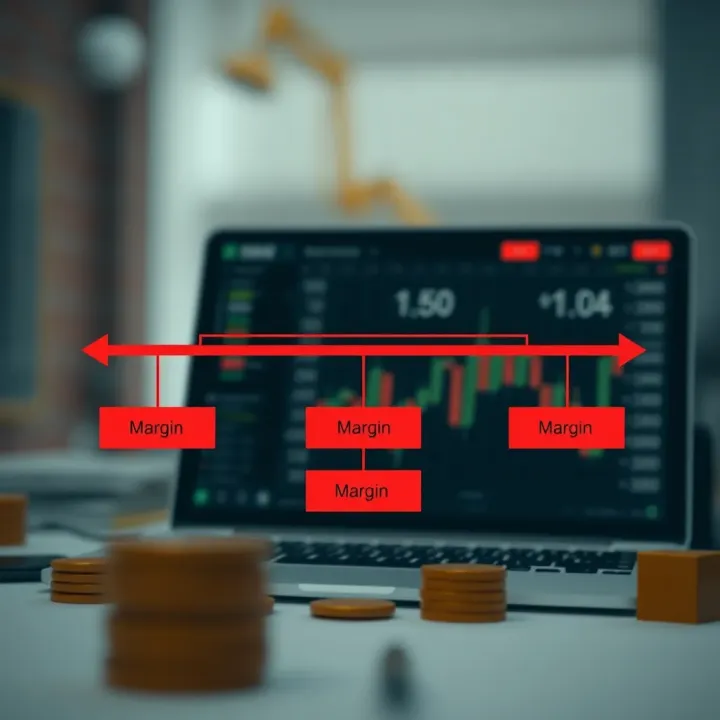
Margin allows you to control larger positions with less capital, but it magnifies losses just as much as profits. Suppose you use 5x margin on₹1 lakh; a 5% adverse move hits your capital fully. Always monitor your margin utilisation and keep buffers to avoid forced liquidation during volatile intraday moves.
Effective risk management not only protects your capital but also builds confidence to trade Bank Nifty intraday without fear. By standing by your stop losses, sizing trades based on your capital, and using margin cautiously, you ensure steady performance through both calm and choppy markets.
Successful Bank Nifty intraday trading depends a lot on timing and using data that reflects current market behaviour. Knowing when the market tends to move, when to pause, and how announcements impact price swings can help you make better trading calls. Intraday data offers a snapshot of order flow, volume, and momentum, which proves invaluable to spot entry and exit points.
Morning opening spikes usually occur within the first 15 to 45 minutes after the market opens at 9:15 am IST. This phase often shows sudden momentum as traders react to overnight global cues and domestic news. For example, if the Reserve Bank of India (RBI) announces a rate cut early in the morning, Bank Nifty may jump sharply during this time. Capturing these initial moves can offer quick profits but requires swift decision-making and tight stop losses due to high volatility.
During the midday pauses and trends, the momentum generally slows down between 12 pm to 2 pm IST. The market tends to consolidate or move sideways as market participants take a breather. Traders often find fewer clear signals and thin volumes in this phase, which could increase the risk of false breakouts. A sensible intraday approach here is to be cautious, avoid new entries, or use this time for technical analysis and preparing for the afternoon session.
The afternoon volatility bursts occur roughly between 2 pm and 3:30 pm IST. This last trading hour is often marked by renewed activity as traders adjust positions ahead of market close. Corporate announcements or RBI updates released during this time can also trigger sharp price movements. Intraday traders must be alert for reversals or breakouts to exploit these bursts. For instance, a sudden jump in banking sector quarterly earnings announced around 2 pm can spark a quick rally in Bank Nifty stocks.
The influence of RBI policy and banking results on Bank Nifty intraday movements is significant. RBI's monetary decisions on repo rates or liquidity measures can shift market sentiment instantly. Similarly, quarterly results of major banks like HDFC Bank or SBI released during trading hours often create sharp intraday swings. Traders watching such events can capitalise on heightened volatility by timing trades around these announcements.
Global cues like US Fed policies, crude oil prices, and geopolitical developments impact Bank Nifty due to its banking sector exposure and India's trade sensitivity. For example, a change in US interest rates or a major international banking crisis influences RBI policy and creates ripple effects in Indian markets. Keeping an eye on global indices and commodities helps anticipate Bank Nifty’s direction early in the day.
Using news to anticipate moves means tuning into reliable real-time sources for updates on economic data, corporate earnings, and sector-specific developments. Trading platforms offering live alerts enable intraday traders to react fast. For instance, a sudden alert about a government decision on banking reforms can trigger immediate Bank Nifty price shifts. Effective use of such news avoids surprises and aligns trades with market sentiment.
Timing the market precisely and using accurate intraday data removes guesswork. It helps you enter with confidence and exit before volatility turns against your position, enhancing your Bank Nifty intraday trading success.
Morning opening (9:15 am – 10:00 am): High volatility, quick moves.
Midday (12:00 pm – 2:00 pm): Low momentum, volume dries up.
Afternoon (2:00 pm – 3:30 pm): Volatility spikes, influenced by news and position adjustments.
Focus on events like RBI policy announcements, quarterly bank results, and global market news for intraday cues.
Use data from your trading platform for volume, price action, and real-time news alerts to guide your trade decisions during these key market phases.
Trading Bank Nifty intraday comes with its own set of challenges that can trip up even seasoned players. This section highlights the common hurdles traders face, such as emotional discipline and choosing the right technology, along with practical tips to tackle them. Paying attention to these aspects helps traders avoid losses that often stem from avoidable mistakes rather than market movements.
Sticking to a trading plan: A well-crafted trading plan acts like a road map during a hectic intraday session. It sets clear entry and exit points, defines stop-loss levels, and specifies the maximum risk per trade. Traders who stick to their plan reduce impulsive decisions driven by sudden market swings. For instance, if your plan says to exit at a loss of ₹5000, abandoning it 'hoping' for a reversal can double that loss. Discipline in following your plan keeps emotions at bay and losses manageable.
Handling losses without panic: Losses are part and parcel of intraday trading, especially with volatile indices like Bank Nifty. Panicking after a loss often leads to revenge trading – trying to recover losses in the very next trade without proper analysis. This usually magnifies losses. Instead, take a step back after a losing trade. Review what went wrong, adjust your strategy if needed, and proceed calmly. Maintaining emotional balance prevents a single losing trade from wiping out your day’s profit potential.
Controlling greed and fear: Greed can tempt traders to hold positions too long, hoping for bigger gains, while fear pushes them to exit too early, missing out on profits. These conflicting emotions distort judgement. For example, during a sharp Bank Nifty rally, one might greedily add more positions beyond their plan, exposing themselves to risk if the market reverses suddenly. A practical way to limit these emotions is to set realistic targets and adhere strictly to stop-losses. This fosters steady gains and protects capital.
Selecting brokers and trading software: Choosing the right broker and software is critical. Look for brokers registered with SEBI who offer reliable platforms with good uptime, fast order execution, and minimal lag. Popular Indian brokers like Zerodha, Upstox, and Angel Broking provide user-friendly apps and desktop platforms tailored to intraday traders. Also, check for reasonable brokerage charges since frequent trades can add up costs quickly.
Using real-time data and alerts: Intraday trading depends heavily on timely information. Platforms offering real-time price feeds, live charts, and customizable alerts help traders act promptly. For example, setting alerts on Bank Nifty breaking a key resistance can enable quick entries or exits without constant screen-watching. Delayed data can cause missed opportunities or executing trades at unfavourable prices.
Mobile trading considerations: With hectic schedules, many Indian traders prefer mobile apps for on-the-go trading. A good mobile trading app must support quick order placements, show detailed charts, and send instant notifications. It's wise to test the app’s responsiveness during market hours since slow apps can be costly during Bank Nifty’s volatile bursts. Also, ensure secure login features to prevent unauthorised access.
Successful Bank Nifty intraday trading is as much about managing your mind and choosing the right tools as about strategy. Discipline, calmness, and technology form the backbone that supports consistent performance.
By focusing on these common challenges and practical tips, you stand a better chance of staying ahead in the fast-moving world of Bank Nifty intraday trading.
Find the best intraday trading sites in India🇮🇳 with top features like real-time data, low charges, strong security, and user-friendly tools for smarter trades📈.
📈 Learn the essentials of intraday trading in India! Get tips on strategies, tools, and risks to trade stocks effectively within a day. Start smart today!
📈 Master Nifty options trading in India with this practical guide. Learn strategies, risks, and tips to boost your trading portfolio confidently!
📈 Understand margin requirements for intraday trading in India. Learn types, rules, and how to calculate margins to trade confidently and avoid penalties.
Based on 13 reviews