

Top Candlestick Patterns Every Trader Should Know
Learn to spot the strongest candlestick patterns 📊 for better timing and accurate trading decisions. Boost your strategy with proven price signals today!
Edited By
Sophie Clarke
Bullish candlestick patterns are essential tools in technical analysis, helping traders and investors anticipate potential upward price movements in stocks, commodities, or currencies. Unlike random price changes, these patterns reflect market sentiment and the tussle between buyers and sellers over a given time period.
Understanding the most reliable bullish candlestick patterns can give you an edge in spotting entry points for buying and managing risks effectively. These patterns are more than just shapes on charts—they tell a story of demand gaining strength, often at critical support levels or after a price dip.

Some common bullish patterns include the Hammer, Bullish Engulfing, and Morning Star. For example, the Hammer appears as a small body with a long lower wick, indicating buyers fought back after initial selling pressure. In Indian markets, this pattern often forms during dips in popular stocks like Reliance Industries or TCS, signalling possible reversals.
Recognising these patterns requires practice, especially in pairing them with volume and other technical indicators like Moving Averages or RSI (Relative Strength Index).
Besides individual patterns, context matters greatly—for instance, a Bullish Engulfing pattern near a well-established support level carries more weight. Likewise, the Morning Star, a three-candle pattern, often points to strong upward movement after a downtrend, signalling traders to consider long positions.
By learning these patterns, traders can:
Identify potential upward phases quickly
Improve timing of entries and exits
Reduce reliance on guesswork alone
This article breaks down these bullish candlestick patterns with practical examples and ways to combine them with other analysis methods. Whether you trade in equity or derivatives, mastering these patterns can enhance your ability to spot profitable trades and avoid false signals. Keep reading to gain confidence in reading charts and making smarter trading decisions.
Recognising bullish candlestick patterns is a handy skill for traders looking to spot potential price rises early. These patterns are visual cues on charts that often mark turning points where downward trends may end and upward moves begin. For instance, a Hammer pattern in the Sensex or Nifty charts can signal a shift from selling pressure to buying interest—the kind of insight that helps you time entries better.
Understanding these patterns isn't just about spotting shapes; it's about reading market sentiment and trading psychology. When traders see a Bullish Engulfing or Morning Star pattern, it often means buyers are gaining strength, which can lead to sustained upward moves. In the Indian market, this can be especially useful around earnings seasons or policy announcements where quick interpretation aids decisions.
Definition and purpose: Bullish candlestick patterns are specific formations made up of one or several candlesticks on a price chart that suggest a likelihood of prices moving up. Each candlestick represents price action in a given period—showing open, high, low, and close. These patterns help traders anticipate shifts in momentum without waiting for confirmation through indicators.
For example, a Piercing Line forms when a bearish candle is followed by a bullish candle that closes above the bearish candle's midpoint. This shows buyers pushing back strongly after a sell-off, signalling a potential price rise.
Role in technical analysis: Technical analysts use these patterns to predict future price moves by studying past price behaviour. Unlike fundamental analysis, which looks at company data and macroeconomics, bullish candlestick patterns provide near-term trading clues based on market psychology and supply-demand shifts.
Traders often combine these patterns with volume data or moving averages to validate signals. For instance, confirming a Bullish Engulfing pattern on a high volume day reduces the risk of a false signal, making the trade more reliable.
How they indicate potential price rises: Bullish candlestick patterns usually emerge at or near market bottoms or during dips, marking phases where sellers are exhausted and buyers start to take control. Identifying these patterns early can alert traders to potential reversals before prices rise significantly.
For Indian stock markets, where volatility can spike due to economic data releases or global events, spotting these signals provides a tactical advantage. A well-timed entry following a Morning Star pattern, for example, might help you benefit from the rally that follows after a correction.
Benefits for traders in Indian markets: Indian markets often witness sharp swings influenced by domestic and global factors, making technical signals highly valuable. Patterns like Hammer and Bullish Engulfing are practical tools for traders in cities like Mumbai, Bengaluru, or Hyderabad to read price trends quickly.
Besides stocks, these patterns apply to commodities and currency pairs popular in Indian trading circles. Recognising bullish signals can help traders set better stop-losses and profit targets—crucial for managing risk in fast-moving markets.
Mastering bullish candlestick patterns can boost your confidence to act decisively in Indian financial markets, turning price charts into a reliable guide for trading decisions.

Recognising common bullish candlestick patterns is key for traders looking to spot potential price climbs early. These patterns form distinct shapes on price charts and often signal buyers gaining control. For Indian traders dealing with volatile markets like Nifty or Sensex, understanding these patterns helps in planning timely entries and managing risks.
Formation and appearance: The Hammer shows up after a downtrend, with a small real body near the top of the candle, a long lower wick, and little or no upper wick. It looks like a 'T' with a very thin handle and signals that despite selling pressure during the session, buyers pushed the price back up. The Inverted Hammer has a similar small body at the lower end but a long upper wick, suggesting attempts to push prices higher.
Signals and interpretation: Both suggest a possible reversal but need confirmation. The Hammer indicates selling weakness turning to buying strength, often signalling the end of a downtrend. The Inverted Hammer shows initial bullish effort but with some resistance. Traders usually watch the next candle’s close above the Hammer’s high to confirm the reversal.
Key characteristics: This pattern shows a small bearish candle fully engulfed by a larger bullish candle that follows. It reflects a sudden shift in momentum from sellers to buyers. The large green candle covering the previous red one hints that buyers are overpowering sellers with confidence.
Example in chart analysis: Suppose a stock continuously falls over several sessions but then forms a Bullish Engulfing pattern near a key support level like ₹1,200. This formation at support often signals a strong bounce-back. Traders might choose to enter long positions once prices close above the engulfing candle’s high.
How the pattern forms: The Piercing Line appears during a downtrend where a red bearish candle is followed by a green candle that opens lower but closes above the midpoint of the previous red candle. This pattern signals buyers stepping in aggressively after a deep sell-off.
Indications for price reversal: This is viewed as a moderate bullish reversal pattern suggesting buyers are regaining control. In Indian trading, this can be effective during corrective phases in markets like midcaps where quick reversals are frequent. Confirmation with volume increase strengthens its reliability.
Components of the pattern: The Morning Star is a three-candle pattern starting with a long bearish candle, followed by a small-bodied candle (could be bullish or bearish) that gaps down, then a strong bullish candle closing within or above the first candle’s body.
Use in confirming bullish trends: This pattern signals a clear shift from selling pressure to buying enthusiasm. It’s more reliable than single-candle patterns due to the three-part structure showing gradual sentiment change. Indian traders commonly use it to confirm trend reversals before initiating long trades or reducing short positions.
Getting familiar with these patterns helps you read price action intuitively and improves your decision-making, especially when combined with support, resistance, and volume analysis.
Recognising bullish candlestick patterns is just the first step. Applying these patterns effectively in trading helps you make informed decisions, improve risk management, and increase the chances of profitable trades. Patterns alone don’t guarantee success; they need confirmation and precise execution, especially in Indian markets where volatility and economic factors add layers of complexity.
Trading volume plays a vital role in confirming bullish candlestick patterns. When a bullish pattern emerges alongside rising volume, it suggests stronger conviction among market participants. For instance, during a bullish engulfing pattern on a Sensex stock, an increase in volume can confirm that buyers have genuinely taken control, backing the price reversal. Low volume, on the other hand, may indicate a false signal or weak momentum.
Besides volume, technical indicators like moving averages and the Relative Strength Index (RSI) provide additional confirmation. Moving averages smooth out price data, helping identify overall trends. For example, a bullish pattern appearing above the 50-day moving average carries more weight as it aligns with the prevailing uptrend. Similarly, RSI signals whether a stock is oversold or overbought. A bullish candlestick pattern accompanied by an RSI below 30 often points to an oversold condition, increasing the probability of a bounce-back.
Setting stop-loss orders properly is crucial when trading bullish candlestick patterns. Placing a stop-loss just below the candlestick’s low or key support levels helps limit losses if the expected upward movement fails. For example, after spotting a hammer pattern in a stock like Tata Steel, placing a stop-loss a little below the hammer’s low ensures you protect your capital effectively.
Determining profit targets is equally important. Traders usually set targets based on previous resistance levels, Fibonacci retracements, or a fixed risk-reward ratio like 1:2 or 1:3. If a bullish morning star pattern appears in a Nifty stock, a trader might set a profit target near the last known resistance zone or twice the distance between entry and stop-loss. This approach ensures disciplined exits, avoiding the common mistake of holding on too long in hopes of unlimited gains.
Combining bullish candlestick patterns with volume and technical indicators, along with clear entry and exit rules, makes your trading strategy more robust and tailored to the Indian market dynamics.
Using these practical tools together helps you navigate market noise and improves your chances to capitalise on genuine bullish moves effectively.
Understanding bullish candlestick patterns is vital, but recognising common errors traders make can save you from costly mistakes. These patterns provide clues about market sentiment, but misinterpretation can lead to wrong decisions, especially in dynamic or volatile markets. This section highlights two key pitfalls: misreading patterns during market swings and over-relying on candlestick signals without considering wider market factors.
Volatile markets often generate misleading candlestick signals due to rapid price swings. For instance, a hammer pattern signalling a bullish reversal may form during a sudden bounce in a falling market, but the price might drop further afterwards. Traders unfamiliar with volatility might jump into trades too early, attracted by a hopeful pattern alone.
To avoid this, check other indicators that confirm the pattern. Volume spikes supporting a bullish reversal or positive RSI (Relative Strength Index) divergence can add confidence. In the Indian market, during quarterly earnings or major announcements, markets tend to be choppy. Relying just on one candlestick can be risky here. Waiting for confirmation, like a closing price above a resistance level, helps reduce false signals.
In fast-moving markets, patience and confirmation are your allies. Do not trust a single candlestick pattern; wait for supporting evidence.
Candlestick patterns should not be your only guide. Broad market trends, sector performance, and macroeconomic conditions must be considered. For example, a bullish engulfing pattern in a struggling sector may fail to push prices higher if economic conditions are weak or if there is negative news affecting the industry. Indian traders must watch indices like Sensex or Nifty for overall market health before trusting patterns alone.
Ignoring this context often results in losses. Patterns work best when aligned with the general market direction. If the broader market is bearish, even strong-looking bullish patterns can fail or lead to short-lived rallies.
Pairing candlestick analysis with fundamental factors strengthens your decisions. For example, a Morning Star pattern appearing on the stock of a company that just announced strong quarterly results or good government contracts gains more credibility. Fundamental analysis helps understand the 'why' behind price moves.
In India, earnings season, RBI policy decisions, or GST changes can strongly influence stocks beyond chart patterns. A trader who notices a bullish pattern alongside improving fundamentals will have a higher chance of success. Don't ignore company performance, industry trends, or economic policy when relying on candlestick signals.
With these points in mind, apply candlestick patterns carefully, combined with market awareness and fundamentals. This balanced approach helps filter noise and improves trading accuracy, especially in the fast-paced Indian markets.
Bullish candlestick patterns give traders a solid visual cue about potential upward price movements. Recognising these patterns alone may not guarantee success, but when used properly, they bring practical advantages. For Indian traders, these patterns serve as handy early warning signs to enter or exit trades, especially in volatile markets like the NSE or BSE.
Understanding bullish candlestick patterns requires careful observation combined with market context. Simple patterns like the Hammer or Bullish Engulfing signal possible trend reversals, but they work best when confirmed by trading volume or indicators like the Relative Strength Index (RSI). Indian markets often see sudden swings triggered by global cues or domestic policy announcements, so relying on candlesticks alone can lead to false signals.
Traders should also keep in mind the impact of local factors such as festive seasons, monsoon-related slowdowns, and quarterly earnings reports. For example, an inverted Hammer near a key support might be more meaningful if the volume rises sharply and the Sensex is holding strong. Keeping a watch on sectoral indices alongside main patterns can provide an extra layer of confidence.
Always combine candlestick signals with broader market analysis before making trading decisions.
Start by practising pattern recognition on historical charts of Indian stocks and indices. Keep a trading journal to note how patterns behaved seasonally or after specific events. Gradually add volume analysis and momentum indicators to your strategy. This layered approach helps filter out noise and prevents overtrading on weak signals.
Use stop-loss orders intelligently to manage risk, placing them just below key patterns’ support levels. Also, involve fundamental understanding—like company earnings or sector outlook—to complement your technical approach.
Trying a demo trading platform before committing real money will build the necessary judgement. Over time, you’ll recognise which bullish candlestick patterns align best with your trading style and Indian market conditions.
By blending candlestick patterns with smart risk management and market context, you can boost your chances of catching profitable moves effectively.
Learn to spot the strongest candlestick patterns 📊 for better timing and accurate trading decisions. Boost your strategy with proven price signals today!
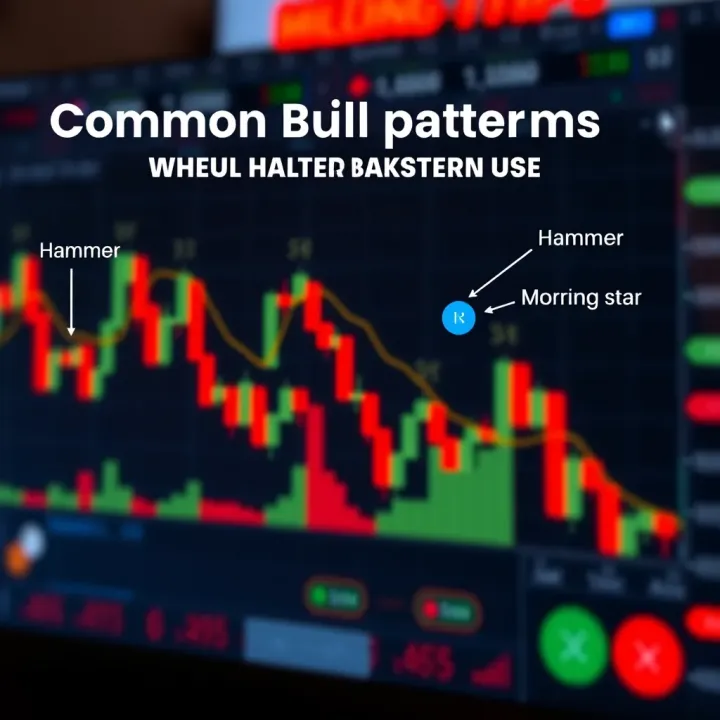
📈 Learn the most used candlestick patterns in trading to read market behavior, spot trends, and manage risks effectively for smarter trading decisions.

📈 Learn to read candlestick patterns effectively with practical tips tailored for Indian traders. Boost your trading decisions with clear insights and key patterns!

📈 Discover the most accurate candlestick patterns used by Indian traders to spot reliable signals and enhance your trading decisions with real market examples.
Based on 8 reviews