

Average Case Complexity of Binary Search Explained
📊 Understand the average case complexity of binary search, how it's computed, and what affects its performance compared to best and worst cases for your coding projects.
Edited By
James Cartwright
Binary search stands out as one of the quickest ways to locate an item in a sorted array. Unlike a linear search, which checks elements one by one, binary search repeatedly halves the search range, cutting down the work significantly.
When talking about algorithms, "time complexity" tells us how the time taken grows with the input size. Binary search's time complexity usually ranges between best, average, and worst cases.

The best case time complexity occurs when the search finds the element immediately at the first step.
Understanding this best case is important because it sets the lower bound on how efficient the algorithm can get. For example, if the array is sorted and you’re searching for the middle element of the array, binary search will find this in just one comparison. This corresponds to a complexity of O(1), which means constant time irrespective of array size.
Performance baseline: It shows the minimum time binary search might take.
Algorithm comparison: Comparing best cases helps justify binary search over other methods, especially in time-critical systems.
Practical impact: For some data distributions or early matches, applications might often experience performance near the best case.
Suppose you’re an analyst checking stock prices stored in a sorted database of 1,00,000 entries. If you want the price exactly at the 50,000th position and binary search picks the middle index first, it locates the value immediately. This saves time compared to checking every entry.
This best case scenario, however, happens only if the searched key matches the middle element at the very first check. On average, the search usually takes more steps, and in the worst case, it checks multiple splits before finding the element or concluding absence.
In summary, the best case time complexity of binary search is O(1), representing the swiftest possible search. This provides a useful benchmark, but traders, investors, and students should also understand average and worst cases to gauge overall efficiency.
Binary search stands out as a core technique for efficiently locating an element within a sorted array. Its speed makes it a favourite among investors, traders relying on quick data access, analysts sifting through large datasets, and students learning algorithm fundamentals. Understanding how binary search operates is the first step towards appreciating its impact on computational performance.
At its heart, binary search repeatedly divides a sorted list into halves, comparing the middle element with the target value. If the middle matches the target, the search ends immediately. Otherwise, it discards half of the list where the target cannot be, narrowing the search with each step. Imagine a trader looking for a stock price within a sorted record of daily closing prices spanning several years; binary search helps zero in on the exact value in just a few comparisons rather than scanning every entry. This method dramatically reduces the time taken when compared to a simple linear search.
Time complexity measures how the running time of an algorithm changes with the input size. For binary search, this is commonly expressed in Big O notation as O(log n), meaning the steps needed grow logarithmically as the list size increases. However, practical understanding requires recognising different scenarios:
Best case: the item is found on the first comparison.
Average case: the expected number of comparisons over many searches.
Worst case: the item is found after multiple splits or not found at all.
This article focuses on what happens during best case time complexity, showing how under certain conditions, binary search can deliver results instantly. Knowing these basics helps traders and analysts grasp when to expect fast lookups and how this might influence performance in real-world systems handling large volumes of data.
Grasping these core ideas prepares you to understand binary search's strengths and why its best case time complexity can significantly affect practical applications like high-frequency trading platforms or financial modelling tools.
The next sections will delve deeper into how these principles apply specifically to the best case scenario, helping you get a clear picture of binary search's efficiency in ideal conditions.
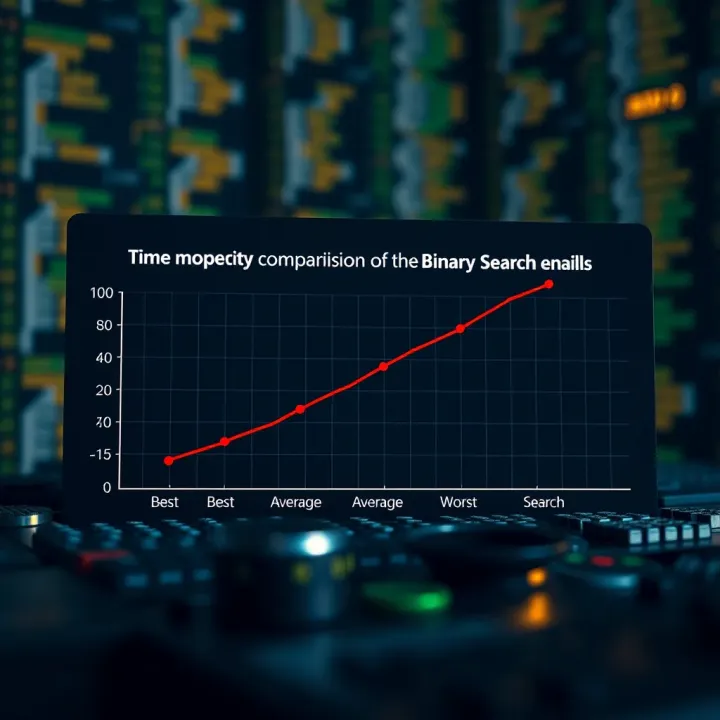
Understanding the best case scenario in binary search shines a light on when this algorithm performs at its quickest, helping us appreciate its practical efficiency. While binary search is renowned for its average and worst case performances, knowing the best case reveals how quickly it can locate an element under ideal conditions. This exploration is especially useful for students and analysts who want to grasp how often and under what circumstances binary search might finish in just one step.
The best case time complexity occurs when the target element instantly matches the middle element of the current search range. Since binary search divides the array into halves, if the middle element is the one we seek, the search stops immediately. In terms of time complexity notation, the best case time complexity is O(1), meaning it takes a constant time regardless of the array’s size. Think of it like quickly finding your name on a sorted list because it is right in the middle.
For the best case to happen, two main conditions must hold true:
The array should be sorted properly (which is a prerequisite for binary search itself).
The target element must be positioned exactly at the middle of the current search interval from the very beginning.
Imagine you are looking for the number 50 in an array sorted from 1 to 100. If the middle element is 50, you find it in the very first check. However, if your target lies anywhere else, the algorithm proceeds with more steps.
The best case might seem rare in random searches, but understanding it helps grasp binary search’s speed in favourable situations.
Knowing these specifics helps investors, beginners, and programmers appreciate how efficient binary search can be sometimes, especially when data is arranged thoughtfully or when repeated queries target middle elements. It also prepares you to distinguish best case from average and worst case, which impact real-world application performance significantly.
When evaluating algorithms like binary search, comparing the best, average, and worst case time complexities provides a complete picture of its performance. This comparison helps investors, analysts, and students understand how the algorithm behaves under different circumstances, which is essential for making informed decisions whether in trading systems, data searches, or academic projects.
The average case of binary search occurs when the target element is neither immediately found nor absent after the first division. Typically, the search halves the list repeatedly until it narrows down to the target or confirms absence. This generally requires about (\log_2 n) comparisons for an array of size n, which grows slowly even for large datasets.
On the other hand, the worst case happens when the element is at the extreme ends or simply not present at all. In this scenario, the algorithm must perform the maximum number of halving steps, which again is proportional to (\log_2 n). For example, searching for a stock symbol at the very last position in a sorted trading list means the algorithm will do all the splits before reaching the target.
These time complexities indicate that while binary search is efficient, its performance varies based on the position of the target element, affecting overall response time in practical applications.
The best case time complexity for binary search is particularly striking—it's (O(1)), meaning the target is found immediately, usually at the middle of the array in the first check. This scenario dramatically reduces computation time.
What sets the best case apart is the rarity of occurrence but its impact on perceived efficiency. Consider a trading application where the most commonly searched stock is positioned right in the middle. Every such search completes in one step, improving the user experience significantly.
While the average and worst cases give a realistic expectation of binary search’s efficiency, the best case highlights potential optimisations and ideal scenarios.
In summary, understanding these complexities allows one to anticipate the behaviour of binary search in various data environments. For beginners and analysts alike, recognising when the best case is achievable can help tailor systems for faster results, while accounting for average and worst case ensures preparedness against delays or heavier computations.
Understanding the best case operation of binary search helps demystify how this algorithm achieves its fastest possible performance. A clear, step-by-step example lets you visualise how binary search can find the target element on the very first attempt, saving time and computational effort. This practical walkthrough benefits beginners and analysts alike by breaking down the process into simple actions, which is essential when comparing theoretical time complexities with real-world scenarios.
Consider a sorted array where we want to find an element efficiently. The best case occurs when the target element is positioned exactly at the middle index of the array at the very start. Binary search begins by comparing the middle element with the target. If they match, the search completes immediately without further dividing the array.
For example, let’s say you have an array [10, 20, 30, 40, 50] and your target is 30. The middle index here is 2 (0-based indexing), corresponding to the element 30. The algorithm checks the middle element once and finds the target in this single step. This scenario illustrates the best case time complexity of O(1), meaning the search finishes in constant time, no matter the array size.
This efficiency depends heavily on the target aligning with the initial midpoint, making it the quickest possible search.
Imagine the array [5, 15, 25, 35, 45, 55, 65] where you want to find 35. The middle element is at index 3 (counting from 0), which is exactly 35. In the first comparison:
Set low = 0 and high = 6.
Calculate middle = (low + high) // 2 = 3.
Check if array[middle] == target (35).
Since the middle element matches the target, the binary search stops immediately. There's no need to split the array further or repeat the search in either half. This direct hit illustrates the best case scenario clearly.
Visual aids, such as pointer diagrams showing low, high, and middle positions, help in understanding how quickly binary search can pinpoint a target when conditions are ideal. These examples are especially useful for traders and students aiming to grasp how algorithm efficiency plays out practically.
In summary, this step-by-step example emphasises how the best case operation of binary search exemplifies its potential for speed, influencing algorithm choice where quick search results are valued in sorted datasets.
The best case time complexity, often expressed as O(1), means the element you are searching for sits right in the middle of the sorted array, so the algorithm finds it immediately. In practical terms, this translates to lightning-fast searches in scenarios where the data distribution or usage patterns favour quick hits. For instance, trading platforms that frequently access most popular stocks can utilise such optimised searches to provide instant price updates, improving user experience and decision-making speed.
That said, while best case scenarios might seem ideal, they don’t always reflect typical performance. In financial analytics, where data sets can run into crores of entries, the average and worst cases often dominate. Still, recognising the best case propels software developers to design smarter data structures — like balanced trees or indexed arrays — which increase the chances of hitting optimal search times.
Note: The best case complexity acts as a benchmark, guiding how algorithms are tuned for particular use cases, even if such conditions are rare in everyday operations.
The best case tends to appear when the element being searched is positioned perfectly at the midpoint during the initial search. This often happens in stable datasets where popular or frequently queried items are situated near the centre due to sorting and indexing strategies. In stock trading, commonly accessed stocks might be arranged to appear in the middle of search trees or arrays, making their access time minimal.
Moreover, caching mechanisms in software frequently bring hot data closer to the CPU, further increasing the chances of hitting the best case search. For students working on coding problems or analysts running queries on sorted datasets, the best case scenario underscores the importance of how data is organised before the search.
In short, although best case time complexity occurs less frequently than average or worst cases, knowing it helps optimise system design and can lead to faster, more responsive applications in crucial areas like financial trading and data analytics.
📊 Understand the average case complexity of binary search, how it's computed, and what affects its performance compared to best and worst cases for your coding projects.
🔍 Compare time complexity of linear vs binary search algorithms. Understand how data size impacts efficiency and choose the best method wisely.
Explore the space complexity of binary search 🔍, comparing iterative vs recursive methods and learn tips to efficiently manage memory in Indian computing contexts 💻.
📚 Explore the time complexity and dynamic programming behind optimal binary search trees. Learn how to minimize search time effectively in practical scenarios.
Based on 6 reviews