
Top Candlestick Patterns Every Trader Should Know
Learn to spot the strongest candlestick patterns 📊 for better timing and accurate trading decisions. Boost your strategy with proven price signals today!
Edited By
James Bennett
Bullish single candlestick patterns offer quick warning signs for traders about potential upward moves in stock prices. These patterns appear in a single trading session's chart and indicate either a reversal from a downtrend or the continuation of bullish momentum. For investors working with Indian equity markets like the NSE or BSE, recognising these patterns can help time entries or exits more effectively.
Understanding these candlestick shapes is a key part of technical analysis. They reflect the battle between buying and selling forces within the day. A vivid example is the "Hammer" pattern, where the stock price dips sharply during the session but closes near the opening price, signalling buyers regained control. This might hint at a bullish reversal, especially when seen after a decline.

Some commonly observed bullish single candlestick patterns include:
Hammer: Small body with a long lower wick; indicates potential bullish reversal.
Inverted Hammer: Small body with a long upper wick after a downtrend, suggesting buyers are testing price levels.
Marubozu (White/Green): Full-bodied candle with little to no wicks, showing strong buyer dominance.
Dragonfly Doji: Open, high, and close are the same or nearly the same price, with a long lower wick, pointing to a shift in sentiment.
Recognising these patterns in Indian stocks like Reliance Industries, TCS, or HDFC Bank helps traders gauge momentary market sentiment and make informed decisions around buying opportunities.
To apply this knowledge practically:
Look for these patterns on daily charts, especially after a downtrend or consolidation.
Confirm signals with volume spikes or supporting patterns.
Combine with other technical tools like RSI or moving averages to reduce false positives.
The real worth of bullish single candlestick patterns lies in their simplicity and speed — they don't require waiting for multiple candles, enabling quick reaction to market changes. Still, relying solely on them can be risky, so integrating these signals into a broader trading strategy is always wise.
In the context of Indian markets, these patterns are particularly useful during volatile periods like quarterly earnings announcements or RBI policy days, where rapid price movements occur frequently.
Single candlestick patterns form the foundation of technical analysis in trading. They offer quick, visual cues about market sentiment and potential price movements, enabling traders to act swiftly. Understanding these basics helps traders recognise shifts in supply and demand without getting bogged down by complex chart formations.
Candlestick charts originated in Japan centuries ago and are widely used today for tracking asset prices. Each candlestick depicts the price action within a specific time period — it can be minutes, hours, or days depending on the trader’s choice. Unlike line charts that show only closing prices, candlesticks display open, high, low, and close prices, offering a fuller picture of the trading day.
For example, if you see a daily candlestick on Nifty showing a long green body, it means buyers dominated for most of the day, pushing prices higher from open to close.
A candlestick consists of a body and shadows (or wicks). The body represents the range between the opening and closing prices, while the upper and lower shadows indicate the highest and lowest points during that period. If the close is higher than the open, the candlestick is usually green or white, signalling bullishness; if lower, it’s red or black, denoting bearishness.
Understanding these parts helps traders gauge market strength. For instance, a small body with long shadows suggests indecision or a potential reversal, crucial for spotting turning points.
Single candlestick patterns are formed by one candlestick and provide swift signals about trend changes or continuations. Multiple candlestick patterns, by contrast, involve two or more candlesticks interacting to form more complex signals.
Single patterns are quicker to spot and act on, making them suitable for fast-moving markets or beginners. A classic example is the hammer pattern, signalling a possible bullish reversal from one candle alone. Multiple candlestick patterns like the bullish engulfing require observing the relationship between two candles, which might delay decision-making but can offer stronger confirmation.
Single candlestick patterns generate trading signals faster since they rely on just one candle’s shape. This immediacy is valuable for intraday or swing traders who can't afford to wait for multi-candle confirmations. For example, during volatile sessions in Indian equity markets like Sensex or Nifty, a bullish Marubozu candle might provoke quick buy decisions based on clear dominance of buyers.
While multiple candlestick patterns often command more attention for their confirmatory attributes, single candlestick patterns maintain reasonable reliability, especially when combined with other tools. Their simplicity reduces ambiguity, making it easier for new traders to interpret market cues without confusion.
In practice, a Dragonfly Doji appearing near a support level can be a straightforward hint of bullish sentiment. Yet, it’s wise to confirm with volume or moving averages.
Indian markets can shift sharply during news events or economic data releases. Single candlestick patterns suit such environments by allowing traders to react swiftly. In commodity markets like crude oil or gold, where prices can jump drastically, these patterns help capture entry or exit points before the price moves too far.
Focusing on single candlestick patterns equips traders with timely insights to navigate market swings confidently, especially when speed and clarity matter.
By mastering the basics of single candlestick patterns, you set a strong base to read market psychology, manage trades efficiently, and reduce risks. Next, we can explore key bullish patterns and how to put them to practical use in India’s markets.
Understanding key bullish single candlestick patterns is essential for recognising potential market reversals or uptrends early on. These patterns offer quick signals backed by price action, giving traders a chance to enter or add to positions before significant moves. In the context of Indian markets such as Sensex and Nifty, where swift decisions often matter, knowing their shape and implications can improve timing and risk management.
The hammer looks like a small-bodied candle with a long lower shadow and a short or absent upper shadow. It forms after a downtrend and signals a potential reversal when buyers step in strongly. The tiny body near the top reflects that closing price is close to the open despite selling pressure during the session.

The long lower wick suggests sellers pushed prices down but buyers regained control, driving prices higher by close. It shows the bulls are fighting back after bearish pressure, signalling shift in sentiment from negative to positive. For traders, this means buyer interest at support levels.
Traders often spot hammer candles near established support or round-number levels like ₹14,000 in Nifty, using them as entry points with stop losses just below the shadow. This pattern tends to work well in sideways or mildly bearish markets, signalling a bounce.
The inverted hammer appears as a small body with a long upper shadow and little or no lower wick. It forms after a downtrend and indicates potential bullish reversal, but with hesitation since buyers tested higher prices but couldn't close strongly above.
Unlike the hammer, which has a long lower shadow, the inverted hammer’s prominent upper wick shows initial bullish attempts that faced selling pressure. While both follow downtrends, the inverted hammer is less decisive and often requires confirmation.
In Indian stocks like Reliance Industries or commodity charts, an inverted hammer might appear near support zones signalling a possible swing upward. Traders wait for the next candle to confirm buying strength before taking positions.
The bullish Marubozu is a full-bodied candle without shadows, meaning the open is the session low and close is the session high. This strong candle reflects continuous buying from start to finish.
It signals dominant bullish sentiment with no resistance during that time frame. A Marubozu on daily charts of stocks like Tata Steel signifies strong fresh demand which could lead to sustained rallies.
Buyers use Marubozu patterns to enter with confidence, often placing stop losses below the candle’s low. It serves as a clear breakout or continuation signal, especially when appearing near resistance breakouts.
The dragonfly doji has a long lower wick, with the open, close, and high prices nearly equal at the top of the candle. This means prices dropped during the session but recovered strongly to finish near opening level.
It indicates rejection of lower prices and growing bullishness, often seen at market bottoms. Indian traders may spot this on weekly charts of stocks or indices when market sentiment starts turning.
Since dojis show indecision, confirmation with higher volume in the next candle or confirmation from other indicators like RSI or moving averages helps validate the reversal, improving trade reliability.
These key bullish single candlestick patterns are valuable tools for traders aiming to catch early signs of market strength. Observing their shape, price action context, and using confirmation techniques ensures better trading decisions aligned with Indian market peculiarities.
Bullish single candlestick patterns offer traders a quick way to spot potential buying opportunities. Using these patterns can sharpen your timing and help avoid waiting for complex setups. They provide clear visual signals that reflect market sentiment, which is particularly helpful in the Indian equity and commodity markets where price swings can be swift.
Choosing the right timeframe is key to effectively using bullish single candlestick patterns. For intraday trading, patterns on 5-minute or 15-minute charts work well because they capture quick momentum changes during the trading session. Positional traders, who hold stocks for days or weeks, should focus on daily or weekly charts to see reliable signals that align with broader price trends.
Bullish patterns tend to be more reliable in markets showing signs of exhaustion after a downtrend or during consolidation phases. When the Nifty or Sensex is in a clear downtrend, spotting a hammer or dragonfly doji near a support level signals a possible reversal. During strong trending markets, however, patterns might offer early hints but often require confirmation through other tools to avoid false signals.
On 20 March 2024, the Sensex formed a bullish marubozu at a crucial support zone, signalling strong buying interest and triggering a short rally. Similarly, in commodities like gold or crude oil, a hammer pattern following a sharp decline often precedes a bounce. For instance, a hammer on MCX gold’s daily chart alerted traders to a probable reversal mid-last year, which resulted in a notable price rise over the next two weeks.
Volume adds weight to bullish candlestick signals. A bullish pattern accompanied by above-average volume suggests that buyers are genuinely stepping in, increasing the chance of trend reversal or continuation. For example, a dragonfly doji closing with high volume on Nifty usually means buyers fought hard to drive prices up, which confirms the bullish outlook.
Patterns become more meaningful when they appear near key support or resistance zones. For example, spotting an inverted hammer near a strong support level in Reliance Industries shares can alert traders to a potential upside bounce. This context helps filter out random patterns formed in the middle of a trend without much significance.
Simple moving averages (SMA) and the Relative Strength Index (RSI) assist in validating bullish patterns. A hammer forming above the 50-day SMA or when RSI is rising from the oversold area (below 30) offers more confidence to traders. It suggests the market may be staging a technical recovery rather than a random blip.
Protecting your capital means placing stop losses strategically. Generally, the low of the bullish single candlestick pattern acts as an effective stop-loss point. For example, if a hammer candlestick on Tata Motors’ daily chart shows a low at ₹400, placing a stop loss slightly below this level limits downside risk.
Entry often happens once the next candlestick confirms the bullish pattern, such as a strong green candle following a dragonfly doji. Exits should be planned around resistance levels or target prices calculated from recent volatility or risk-reward setups. Keeping an eye on trailing stops can help lock profits if the price continues in your favour.
Proper position sizing ensures that no single trade significantly impacts your portfolio. Given the sometimes unreliable nature of candlestick patterns alone, controlling trade size relative to your total capital keeps risk manageable. For instance, risking only 1-2% of your trading capital on a single trade involving bullish candlestick setups is a prudent approach.
Combining bullish single candlestick patterns with volume, support/resistance, and indicators like RSI improves trade quality. Match these signals with solid risk management to navigate the Indian markets effectively.
This practical approach helps traders use bullish candlestick patterns not just as guesses but as parts of a disciplined trading method.
Understanding the limitations of bullish single candlestick patterns helps avoid common mistakes traders often make. While these patterns offer quick insights into potential market moves, they are not foolproof signals. Recognising where they might fail or be misinterpreted is essential to protect capital and make smarter trades.
Bullish patterns can occasionally give false signals, especially in choppy or sideways markets. For example, a hammer might appear at the end of a downtrend, but if the overall market trend is weak or uncertain, the price may keep falling despite the pattern. This failure happens because single candlestick patterns don’t always reflect underlying fundamentals or larger market momentum.
In India’s highly liquid markets like the Nifty or Sensex, sudden spikes due to news or algorithmic trading can create false wake-up calls. Traders must watch volume and other indicators closely before acting on any single candlestick pattern alone.
Distinguishing noise from genuine signals requires combining candlestick patterns with broader context. If a bullish pattern forms near a solid support level with rising volume, the odds improve. But if it occurs randomly in a volatile market without confirming signals, it’s safer to treat it as noise and wait for confirmation.
Remember: Not every hammer or bullish doji means a trend reversal. Look for follow-through price action and context to separate the wheat from the chaff.
Single candlestick patterns give fast signals but neglect other technical factors. Relying on them alone can be risky without checking trend strength, moving averages, or momentum oscillators like RSI. A bullish marubozu in a strong downtrend may signal only a brief pause, not a reversal.
Adding RSI divergence or 50-day moving average support enhances reliability. It’s important not to read too much into a single candle but to view it as part of a larger picture.
Markets with high volatility or clear trends pose challenges for single candlestick interpretations. For instance, during sharp market rallies, bearish corrections might produce bullish patterns falsely viewed as reversal points. Conversely, persistent trends often swallow single signals, leading to losses if one trades counter to the trend.
In such cases, combining single candlestick patterns with trend analysis and volume confirms better trade setups.
Balancing candlestick signals with other technical tools dramatically reduces mistakes and improves decision-making in fast-moving Indian equity or commodity markets.
Summarising key points and outlining best practices help traders apply bullish single candlestick patterns effectively in real trading scenarios. This section draws attention to the practical lessons gained from recognising high-probability patterns, integrating them into trading plans, and maintaining regular chart practice — all essential for steady improvement in the Indian markets. Clear takeaways make it easier to avoid common mistakes and capitalise on strong setups.
Spotting single candlestick patterns that signal reliable bullish reversals or continuations gives you an edge. For example, seeing a Hammer form near a known support level on the Nifty 50 chart during a downtrend increases the chance of a bounce. High-probability situations also involve confirmation by volume spikes or previous resistance turning support. These clues reduce false signals and help you enter trades with better odds rather than chasing risky setups.
Bullish single candlestick patterns work best when combined with other analysis tools within a structured trading plan. If you spot a Dragonfly Doji but the overall trend is strongly bearish, it might be better to wait for further confirmation like a moving average crossover or RSI divergence. Position size, stop loss placement below pattern lows, and clearly defined profit targets form part of this plan. Such discipline keeps emotions in check and protects capital.
Practice remains the bedrock of mastering candlestick patterns. Regularly reviewing past price charts of Indian equities or commodities, such as Reliance Industries or crude oil futures, helps you recognise how patterns play out differently across markets and timeframes. Maintaining a trading journal noting successful and failed trades linked to pattern signals sharpens your judgement gradually. Over time, this habit improves your intuitive feel for when a bullish signal is genuine or likely to fail.
Consistency in applying patterns and refining your approach gives you a real advantage over impulsive guessing. This steadiness is key to becoming a confident trader.
By focusing on these best practices along with technical knowledge, you can make your use of bullish single candlestick patterns more accurate and dependable in the Indian trading environment.
Learn to spot the strongest candlestick patterns 📊 for better timing and accurate trading decisions. Boost your strategy with proven price signals today!
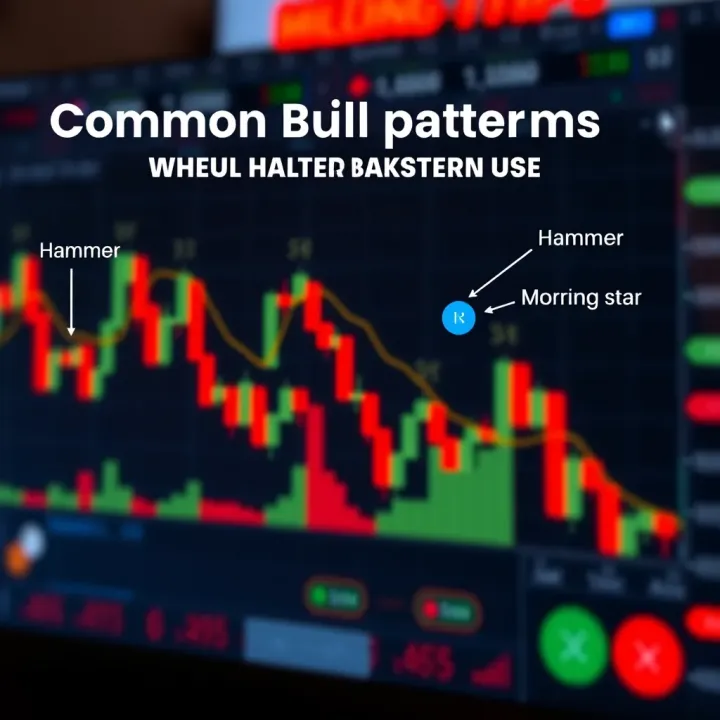
📈 Learn the most used candlestick patterns in trading to read market behavior, spot trends, and manage risks effectively for smarter trading decisions.

📈 Learn to read candlestick patterns effectively with practical tips tailored for Indian traders. Boost your trading decisions with clear insights and key patterns!

📈 Discover the most accurate candlestick patterns used by Indian traders to spot reliable signals and enhance your trading decisions with real market examples.
Based on 10 reviews