
Powerful Candlestick Patterns Guide with PDF
Discover powerful candlestick patterns 📈 key for stock & forex trading. Learn to spot market sentiment, avoid errors & access a handy PDF guide 📄.
Edited By
Henry Brooks
Candlestick chart patterns play a key role in analysing stock movements and making informed decisions in trading. These patterns provide visual cues about market sentiment, momentum, and potential price reversals, making them invaluable for both beginners and seasoned traders.
Understanding these patterns in Hindi can help many Indian investors grasp complex data more easily, especially since most resources are in English. A Candlestick Chart Patterns PDF in Hindi offers a practical way to learn at your own pace, referring back to clear examples and explanations whenever needed.

Some common patterns you’ll encounter include:
Doji: Signals market indecision when the opening and closing prices are almost the same.
Hammer and Hanging Man: Indicate potential trend reversals, with the hammer appearing after a downtrend and the hanging man after an uptrend.
Engulfing Pattern: Shows strong reversal signals when a small candle is followed by a larger candle that completely engulfs it.
Morning Star and Evening Star: Represent bullish and bearish reversals respectively, combining multiple candles to give stronger confirmation.
These patterns aren’t just theoretical; traders use them daily to time entries and exits in markets like the NSE and BSE. For example, spotting a hammer pattern near a support level on the Nifty 50 index can suggest a buying opportunity.
Mastering candlestick patterns improves your ability to read charts quickly, which can significantly enhance your trading strategy.
For learners, reliable Hindi PDFs often break down these patterns with illustrations, helping you to recognise them on live charts easily. They may also include tips on combining candlestick analysis with other indicators like RSI or moving averages to confirm trends.
If you’re serious about improving your trading skills, look for resources that cover patterns from basic to advanced, along with practical examples based on Indian markets. This focussed study can help you understand not only the ‘what’ but also the ‘why’ behind price movements.
Ultimately, a well-structured guide in Hindi serves as both an introduction and a handy reference, making the sometimes overwhelming world of technical analysis accessible without language barriers.
Candlestick charts are a fundamental tool for anyone involved in trading or investing. They offer a visual way to see how prices move within a specific time frame, which helps you make informed decisions. Unlike simple line charts, candlesticks display opening, closing, high, and low prices, giving a fuller picture of market sentiment.
A candlestick chart consists of rectangular bars called "candlesticks". Each candlestick shows price movements for a set period, such as one day or one hour. The thick part of the candlestick is called the body, which represents the difference between the opening and closing prices. If the closing price is higher than the opening price, the body is usually green or white, indicating bullish movement. Conversely, a red or black body shows that the price closed lower, signalling bearish sentiment. The thin lines above and below the body are called wicks or shadows, representing the highest and lowest prices during that period.
For example, a day when a stock opens at ₹1,000, rises to ₹1,050, drops to ₹980, and finally closes at ₹1,020 will have a candlestick with these specific features, helping you quickly grasp intraday price fluctuations.
Candlestick charts trace back to 18th-century Japan where a rice trader named Munehisa Homma developed them as a way to track market moods and emotions efficiently. His method combined price data and psychology, which proved powerful for predicting market trends. These charts reached the West only in the 1990s, becoming widely popular due to their ability to capture market dynamics in a visually intuitive way.
Understanding their origin helps appreciate that candlestick patterns aren't just numbers but reflect trader behaviour and market psychology. This background also explains why traders still rely on these patterns centuries later.
Candlestick charts give traders a faster and more insightful view of price action than traditional charts. They help spot trend reversals, continuations, and market indecision quickly. For instance, a "Doji" candle, where the open and close prices are almost equal, often signals a potential reversal point.
Besides clarity, these charts work well in conjunction with other indicators like volume or moving averages, enhancing signal confirmation. For Indian traders, combining candlestick insights with market-specific indicators like the Nifty 50 or Sensex trends can sharpen entry and exit points.
Candlestick charts let you see both price range and market sentiment in a single glance, which is why they have become essential for traders seeking an edge.
In summary, learning about candlestick charts is key to reading market behaviour effectively. Their rich history, clear visual language, and practical benefits make them a must-have skill in a trader's toolkit.
Understanding basic candlestick patterns is key for traders starting with technical analysis. These patterns reflect market sentiment and often predict short-term price movements. Recognising them helps you make informed decisions, whether you're trading stocks, commodities, or currencies.
Doji: A Doji appears when the opening and closing prices are nearly equal, resulting in a small or nonexistent body with long wicks on either side. This suggests indecision among traders; buyers and sellers are roughly balanced. For example, after a strong uptrend in Reliance Industries shares, the formation of a Doji might caution you that the bulls are tiring and a reversal or pause could follow.
Hammer and Hanging Man: Despite looking similar, these two patterns have different interpretations depending on prior price action. A Hammer forms after a downtrend with a small body near the top and a long lower wick, signalling potential bullish reversal as buyers step in at lower prices. Conversely, a Hanging Man shows up after an uptrend and warns of a possible bearish reversal. Suppose Tata Motors is on a steady rise and a Hanging Man forms; it may suggest profit-booking ahead.
Shooting Star: The Shooting Star has a small body near the bottom and a long upper shadow, often appearing after an uptrend. It indicates that buyers tried to push prices higher but sellers took control, which might foreshadow a downward move. For instance, if HDFC Bank’s price rallies throughout the day but closes near the low with a shooting star, it signals sellers asserting themselves.
Engulfing Patterns: This pattern consists of two candles where the second one completely engulfs the first. A bullish engulfing pattern, appearing after a decline, indicates buyers overtaking sellers and possible trend reversal. The opposite, a bearish engulfing, happens after an uptrend and signals sellers overpowering buyers. For example, in the Nifty 50 index, a bullish engulfing after a fall might hint at recovery.
Morning Star and Evening Star: These three-candle patterns highlight potential reversals. The Morning Star forms after a downtrend and suggests bullish reversal, starting with a large bearish candle, followed by a small-bodied candle (star), and then a strong bullish candle. The Evening Star is the mirror on the upside. These are useful for confirming trend changes better than single candlestick patterns alone.
Harami Pattern: The Harami features a large candlestick followed by a smaller one completely within the previous body. A bullish Harami during a downtrend indicates that selling pressure is easing. Conversely, a bearish Harami after an uptrend signals weakening buying interest. For instance, if Infosys displays a bullish Harami during a dip, you might expect a pause or bounce.
Basic candlestick patterns provide quick, visual clues about market sentiment. Combining them with other technical tools enhances their reliability.
Using these patterns helps investors and traders plan entries, exits, and risk management with greater confidence. Practising identification on charts and supplementing with Hindi resources will boost practical understanding.
Interpreting candlestick patterns correctly can make a significant difference in your trading decisions. These patterns serve as visual cues representing the battle between buyers and sellers in the market. When you read them well, they highlight probable future price movements, helping you decide when to buy, sell, or hold.
Candlesticks reveal market sentiment by showing the opening, closing, high, and low prices within a time frame. For instance, a series of long green (bullish) candles suggests a strong upward trend, while consecutive red (bearish) candles indicate a downtrend. Patterns like "Morning Star" or "Hammer" often signal a potential trend reversal. Consider a situation where after several red candles, a hammer pattern appears — it might mean buyers are stepping in to push prices up. Always observe the context; patterns alone don’t guarantee trend shifts without confirmation from surrounding candles or volume.
Volume acts as a reality check for candlestick signals. A bullish engulfing pattern paired with rising volume tends to be more reliable than the pattern appearing on low volume. Besides volume, indicators like the Relative Strength Index (RSI), Moving Average Convergence Divergence (MACD), or simple moving averages can strengthen pattern analysis. For example, spotting an Evening Star at a resistance level, coupled with RSI showing overbought conditions, can indicate a good chance of price decline. Using these indicators alongside candlestick patterns reduces false signals and improves your trading accuracy.
One frequent error is over-relying on isolated patterns without context. A Doji candle doesn’t always mean indecision if it appears amid a strong trend; it can sometimes be noise. Another mistake is ignoring the volume or ignoring the overall market conditions, which leads to misguided trades. Traders also tend to jump into action too quickly upon seeing a pattern, without waiting for confirmation from subsequent candles or other indicators. Lastly, confusing visually similar patterns can happen; for example, mixing up a Hammer with a Hanging Man can lead to opposite trades.
Remember, candlestick patterns are tools, not guarantees. Use them together with other technical analyses and sound money management.
Understanding how to interpret candlestick charts with these nuances allows you to see the bigger picture, reduce risks, and make informed trading choices. Practicing this skill, using reliable Hindi PDFs, and continuous learning will sharpen your market reading ability to a great extent.
Having access to quality PDFs in Hindi on candlestick chart patterns is a big help for traders and investors, especially beginners. These resources provide detailed explanations, clear visuals, and examples in your own language, making complex concepts easier to grasp. They also let you study at your own pace without depending on internet connectivity all the time—which is a plus in many parts of India.
Finding trustworthy PDFs is vital since unreliable content can mislead your trading decisions. Start by checking out official educational websites of Indian stock exchanges like the National Stock Exchange (NSE) or Bombay Stock Exchange (BSE). These platforms sometimes offer certified learning materials in Hindi.
Apart from that, some leading financial education portals, such as Zerodha Varsity or Investopedia India, provide well-structured PDF guides translated into Hindi. Their content is updated regularly and reflects current market trends.
Watch out for PDFs uploaded by individual traders or unverified blogs; they might contain outdated or incorrect information. Always cross-reference any new learning with reputed sources.
PDFs make it easier to revisit important patterns anytime and strengthen your understanding with repeated exposure. You can highlight key points, make notes in margins, and even print pages for quick reference during market hours. Unlike videos or live sessions, PDFs let you study uninterrupted, which is useful if you want to learn after work or college.
To make practice more effective, try marking charts with the patterns you read about in the PDFs. Several mobile apps and trading platforms allow importing or displaying candlestick patterns alongside live data, helping you connect theory with actual market action.
Beyond PDFs, Hindi tutorials on YouTube and podcast channels keep getting better with explanations suited for Indian traders. Channels like "Trading Chanakya" and "Market Gyaan" break down candlestick patterns in simple Hindi with real examples from Indian stocks.
Also, look for interactive courses on platforms such as Udemy or Coursera offering Hindi options. These often include quizzes and assignments to test your grasp.
Remember, no single resource can cover everything. Using a combination of PDFs, tutorials, and hands-on practice is the best way to build confidence in reading candlestick charts.
Access to Hindi resources removes language barriers and opens the door for more traders to make informed market decisions. Keep your materials updated, practise regularly, and watch your trading skills improve.
Starting with candlestick patterns can feel overwhelming, but a few grounded steps make a difference. Begin by focusing on a handful of simple patterns like Doji, Hammer, and Engulfing. Too many patterns at once often confuse beginners. Practise spotting these on historical stock charts from Indian companies like Reliance Industries or TCS to relate theory with real market action. Also, always back your reading with volume data — a candlestick pattern combined with rising volume tends to be more reliable.
Maintaining a candlestick journal helps enormously. Note down patterns you identify, what the market did afterward, and your consequent decision. This builds a practical repository and sharpens your observation over time. Remember, candlesticks show probabilities, not certainties. Do not rush into trades based on one pattern; always look for confirmation.
Candlestick patterns shine when used alongside other analytical tools. For instance, combining a bullish Engulfing pattern with a support level identified through technical indicators like Moving Averages boosts confidence in trade decisions. If the Nifty 50 is approaching its 50-day moving average and shows a Morning Star pattern in daily charts, this confluence signals a potential upward move.
Also, consider macroeconomic factors alongside candlestick signals. Indian markets often react strongly to RBI announcements or quarterly earnings. A bearish candlestick pattern appearing right before expected policy decisions might deserve caution or even avoidance. Integrating risk management practices like setting stop-loss levels based on candlestick pattern size or recent volatility can limit losses.
Consistent review separates successful traders from the rest. Set aside weekly or monthly time to review your past trades connected to candlestick patterns. Which patterns worked? Where did errors crop up? For example, you may notice Morning Star patterns work better on blue-chip stocks than mid-caps in your experience.
Use charting software or platforms like Zerodha Kite or Upstox that allow replaying of price action; this hones pattern recognition without real money at risk. Seek community input through trading forums and groups to exchange insights and validate your findings.
Practise, patience, and critical review build mastery in reading candlestick charts. Combining patterns with smart strategies and regular performance checks ensures you learn not just the theory but also its real-world impact.
By applying these practical tips, you step beyond theory and get closer to successfully using candlestick patterns in your trading journey. Keep learning, stay disciplined, and always adapt to changing market conditions.
Discover powerful candlestick patterns 📈 key for stock & forex trading. Learn to spot market sentiment, avoid errors & access a handy PDF guide 📄.
📈 Master candlestick patterns with this detailed guide! Learn key charts, strategies & get PDF resources to boost your trading skills in India. 📊
📈 Explore top candlestick patterns and learn to spot profitable trades in varied market conditions. Master these tools to sharpen your trading skills today!
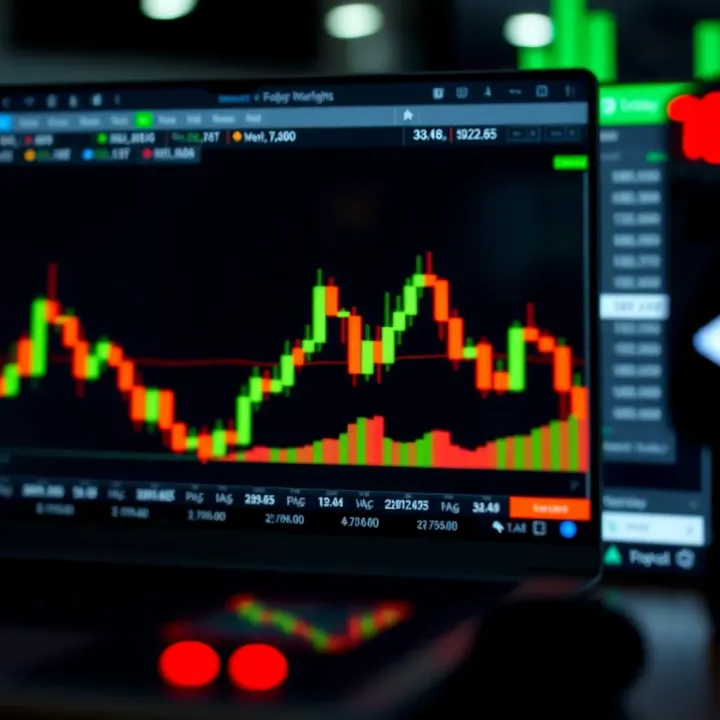
📊 Explore common candlestick patterns in trading with this comprehensive guide. Learn how to read, interpret, and apply them for smarter market decisions.
Based on 5 reviews