

Top Candlestick Patterns Every Trader Should Know
Learn to spot the strongest candlestick patterns 📊 for better timing and accurate trading decisions. Boost your strategy with proven price signals today!
Edited By
Sophie Clarke
Understanding bullish candlestick patterns is a fundamental skill for traders and investors aiming to time their entries better in the stock or commodity markets. These patterns visually represent buying pressure, signalling when prices might rise. Recognising them helps you anticipate upward moves and manage risks effectively.
Bullish candlesticks form when buyers dominate a trading session, pushing prices higher from the opening level to the closing price. The shape and position of these candlesticks, especially when they appear after a downtrend or a consolidation phase, give clues about potential trend reversals or continuations.

Body size: A long green (or white) candlestick body generally shows strong buying interest.
Shadows (wicks): Their length and position relative to the body add nuance to the signal. For example, a long lower shadow often indicates rejection of lower prices.
Context: Patterns are more reliable when appearing at support levels or after a downtrend.
Some popular bullish patterns include the Hammer, Bullish Engulfing, Piercing Line, and Morning Star. Each of these has distinct formations and suggests varying degrees of bullish strength. For instance, a Hammer has a small body with a long lower wick, signalling a rejection of falling prices and potential reversal.
Remember: No single pattern confirms a trend. Combine pattern recognition with volume analysis, support-resistance zones, or indicators like RSI to improve your trade decisions.
For beginners, start by identifying individual candlestick types before moving to combinations. Practising on historical charts of Indian markets such as Sensex or Nifty 50 can help you see how these patterns played out in real scenarios.
To sum up, mastering bullish candlestick patterns sharpens your market reading skills and improves entry timing, ultimately helping you catch opportunities before prices take off. Understanding these patterns is a stepping stone towards smarter, more confident trading.
Understanding bullish candlestick patterns is essential for anyone involved in trading or investing. These patterns provide clues about when a price might start rising, helping traders spot entry points or confirm existing trends. In Indian markets like the NSE or BSE, recognising these patterns can support timely decisions, especially around volatile periods such as budget announcements or monsoon effects on commodity stocks.
Candlestick charts display price movements within a specific time frame, usually a day, showing open, high, low, and close prices visually. Unlike simple line charts, they offer more detail about market sentiment during the period. For example, a long lower shadow indicates buying pressure after a price dip, signalling potential upward momentum. This visual format allows traders to quickly assess price action without sifting through numbers.
A bullish candlestick pattern appears when buyers gain control, pushing prices higher by the close of the trading period. These patterns often feature longer bodies on green or white candles, representing stronger buying versus selling. Certain formations, such as a hammer or bullish engulfing, stand out because they suggest a reversal from falling prices to rising ones. Around festive sales season, such patterns can hint when retail stocks might bounce back after dips.
Bullish candlestick patterns act as early warning signs for a potential market uptrend. When confirmed with other indicators like volume spikes or support levels, they increase confidence in price rallies. For instance, if the Nifty 50 index forms a morning star pattern near a support zone, this could suggest a fresh buying wave. Traders often combine these patterns with tools like moving averages to strengthen their strategy and avoid false signals.
Recognising these patterns offers practical benefits — better timing on purchases, improved risk management, and clearer insights into market mood, all vital in fast-moving Indian markets.
In summary, mastering bullish candlestick basics provides a foundation to navigate stock charts more effectively, helping traders and investors identify profitable opportunities with greater clarity.
Single-candle bullish patterns are some of the quickest signals traders watch for to spot a potential reversal or the start of an upward trend. These patterns form within a single trading session and provide immediate clues about market sentiment shifting from bears to bulls. For beginners and seasoned traders alike, recognising these candles can help make timely entry decisions with less guesswork.

The Hammer is a classic single-candle pattern signalling a potential market bottom. It has a small body, little or no upper shadow, and a long lower shadow that is at least twice the height of the body. For example, if a stock drops sharply during the day but closes near its opening price, it suggests buyers stepped in strongly, rejecting lower prices. This pattern works best when it appears after a downtrend, hinting that sellers might be losing control.
The Inverted Hammer looks like an upside-down hammer with a small body near the bottom and a long upper shadow. This shows buyers tried pushing prices up unsuccessfully, but the fact that price rejected lower levels still matters. It’s a subtle signal of a possible bullish turn, especially if the following candles confirm the move upward.
The key with both the Hammer and Inverted Hammer is their placement after a downtrend, not just the shape itself.
A Bullish Marubozu candle opens at the low and closes at the high with no shadows or very small ones. This means buyers controlled the entire session strongly. In practical terms, a Marubozu appearing near support can signal strong buying interest. Seeing this candle after several bearish sessions might be a bullish sign that momentum has flipped. Traders often use the Bullish Marubozu as a confident entry point due to its clear demand presence.
The Spinning Bottom candle has a small body with long upper and lower shadows. This suggests indecision among traders — buyers and sellers both tested prices far above and below the opening, but neither side took full control. However, when a Spinning Bottom appears after a downward move, it hints the selling pressure may be easing. This indecision can precede a reversal if the next candles show upward momentum.
Recognising these single-candle patterns and confirming them with volume or trend analysis helps traders avoid false signals. They offer quick, actionable insights into market sentiment shifts, making them valuable tools in any trader’s toolkit.
Multi-candle bullish patterns give traders a more reliable signal than single-candle patterns because they show a shift in market sentiment over multiple sessions. These patterns range from simple two-candle setups to more complex three-candle formations. They help confirm that buyers are gaining control after a period of indecision or selling pressure.
The Bullish Engulfing Pattern appears when a small bearish candle is followed by a larger bullish candle that completely covers or ‘engulfs’ the previous candle’s body. This pattern signals a sharp reversal where buyers step in strongly, overwhelming sellers. Picture this: the stock price was falling, but suddenly a big green candle swallows the red one, hinting at a fresh wave of buying.
For example, if a stock trades down to ₹450 and closes lower, followed the next day by a strong move up from ₹445 to close at ₹470, creating a sizeable bullish candle that covers the previous day’s losses, it’s a classic Bullish Engulfing. Traders often consider this a good time to enter long positions, especially if it happens near support levels.
The Piercing Line is another two-candle reversal pattern. The first candle is bearish, followed by a bullish candle that opens below the previous day’s low but closes more than halfway up the body of the bearish candle. This shows that buyers have regained strength after initial selling pressure.
Imagine a stock falls sharply on the first day, then on the next day the price gaps down at the open, giving a sense that selling may continue. However, buyers push the price up to recover more than 50% of the previous day’s loss. This shift signals a potential uptrend can develop.
The Morning Star consists of three candles and is a strong bullish reversal pattern. It begins with a long bearish candle, followed by a small-bodied candle that shows indecision or a pause. The third candle is a sizable bullish candle that closes well into the first candle’s body.
This pattern visually looks like a star rising after darkness, symbolising a turning point. For example, if a stock declines significantly over one day, then pauses with a doji or small real body candle the next day, and surges strongly on the third day, it suggests that buyers have taken control. Traders look to Morning Stars as reliable signals for a bullish entry, especially when backed by higher trading volume.
Three White Soldiers is a powerful three-candle pattern where each candle closes higher than the previous one with a strong bullish body and small or no shadows. It indicates sustained buying pressure across three consecutive sessions.
Imagine a scenario where a stock opens at ₹200, closes at ₹210 on day one, then opens near that close and pushes up again for the next two days, forming three solid green candles. This pattern reflects growing confidence among buyers and typically hints at continued upward movement.
Multi-candle patterns like these reduce the risk of false signals because they show sustained buying interest rather than a sudden bounce. Combining these patterns with volume and support levels further strengthens decision-making, helping you enter trades with more confidence.
Understanding bullish candlestick patterns goes beyond spotting shapes on a chart. Their real value lies in interpreting them together with the broader market context. This approach helps traders and investors avoid false signals and make better-informed decisions that fit current market conditions.
Volume acts as a reality check for bullish patterns. A bullish candlestick with high trade volume typically indicates stronger conviction among buyers, reinforcing the likelihood of an uptrend. For example, if a Morning Star pattern forms on the Nifty 50 index accompanied by a significant volume spike, it suggests genuine buying interest rather than just a random price move. Without volume confirmation, patterns may lack reliability and lead to misleading signals.
Trend analysis is equally important. Bullish patterns emerging after a downtrend offer potential reversal clues, while those appearing in an ongoing uptrend may signal continuation. Practically speaking, if a Three White Soldiers pattern appears during a strong rally in Reliance Industries shares, it confirms bullish momentum. Conversely, the same pattern during sideways movement might not carry the same strength.
Placing bullish patterns within support and resistance zones adds another layer of clarity. A Hammer pattern near a well-established support level, like the 1,00,000 mark in the Sensex, gains more credibility as buyers show resilience. On the flip side, bullish patterns near resistance levels often demand caution since sellers might step in, limiting upside.
Support and resistance levels act as psychological price barriers. Recognising their presence helps traders anticipate potential pullbacks or breakouts. For instance, a Bullish Engulfing pattern that breaks above a resistance line on heavy volume signals a strong breakout opportunity, prompting entry for traders.
One frequent error is reading patterns in isolation, ignoring the bigger chart picture. This often causes overtrading based on weak signals. Another mistake is neglecting volume data, which can turn a promising pattern into a dud. Traders sometimes also misinterpret small or incomplete candlesticks as valid patterns, leading to false positives.
Another pitfall is failing to consider the timeframe. A bullish pattern on a daily chart may have different implications than on a weekly or intraday basis. Lastly, relying solely on candle patterns without complementary indicators or market context often results in losses.
Successful trading depends on blending candlestick patterns with volume, trend, and support-resistance analysis. This combination provides clearer signals and helps steer clear of costly errors.
By factoring in these elements, you can use bullish candlestick patterns more effectively, making your trading approach more nuanced and reliable.
Using bullish candlestick patterns effectively can improve your timing for market entries and potentially increase your profits. This section highlights practical advice to help traders and investors apply these patterns in real trading situations.
Candlestick patterns provide visual clues about market sentiment, but relying on them alone can be risky. Combining these signals with other technical indicators, such as Relative Strength Index (RSI), Moving Averages, or MACD, adds confirmation and reduces false signals. For example, spotting a Bullish Engulfing pattern near a 50-day Moving Average could strengthen your conviction that a reversal is underway. This layered approach offers a more balanced view and helps avoid jumping into trades based on a single cue.
Spotting a bullish candlestick pattern is just the start. It’s vital to plan your entry and exit carefully to protect gains and limit losses. For instance, after identifying a Morning Star pattern, you might enter the trade at the start of the next candle, set a stop-loss just below the recent low, and target a reward-to-risk ratio of at least 2:1. Employing trailing stops can lock in profits if the price continues upward. Remember, no pattern guarantees success; proper risk management ensures you stay in the game even when the market moves against you.
Not all bullish patterns work well in every market phase. In strong uptrends, patterns like Three White Soldiers can signal the continuation of momentum effectively. However, during choppy or sideways markets, the same patterns might lead to whipsaws. Conversely, in oversold markets, patterns such as the Hammer may carry more weight as potential reversal signals. Evaluating the broader market context before acting on candlestick patterns improves the quality of your decisions.
Successful trading with bullish candlestick patterns isn’t about spotting them alone—it’s about how you blend them with other tools, manage your risks, and read the overall market properly.
By integrating candlestick patterns with technical indicators, practising sound risk management, and adapting to market conditions, you make these patterns far more useful. This practical mindset helps you avoid common pitfalls and improves your chances of consistent results in the Indian stock market and beyond.
Learn to spot the strongest candlestick patterns 📊 for better timing and accurate trading decisions. Boost your strategy with proven price signals today!
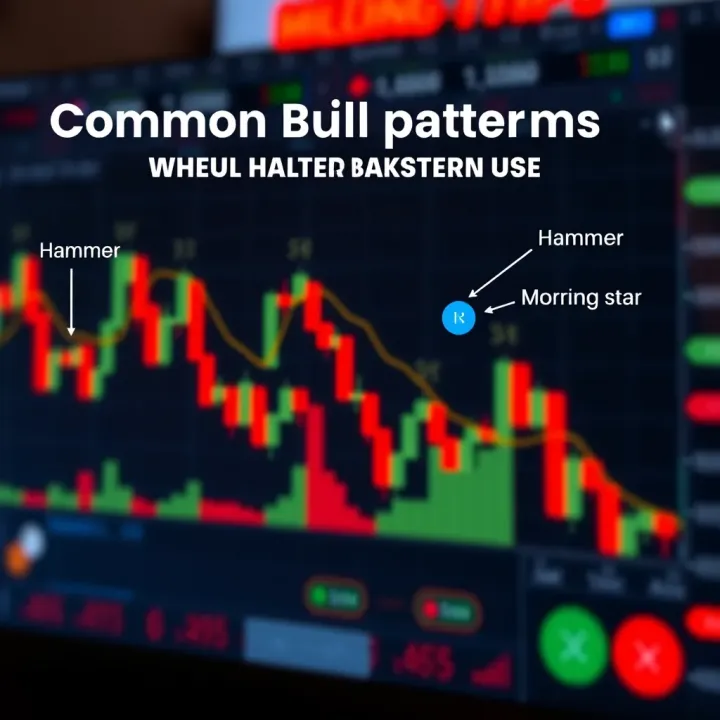
📈 Learn the most used candlestick patterns in trading to read market behavior, spot trends, and manage risks effectively for smarter trading decisions.

📈 Learn to read candlestick patterns effectively with practical tips tailored for Indian traders. Boost your trading decisions with clear insights and key patterns!

📈 Discover the most accurate candlestick patterns used by Indian traders to spot reliable signals and enhance your trading decisions with real market examples.
Based on 13 reviews