
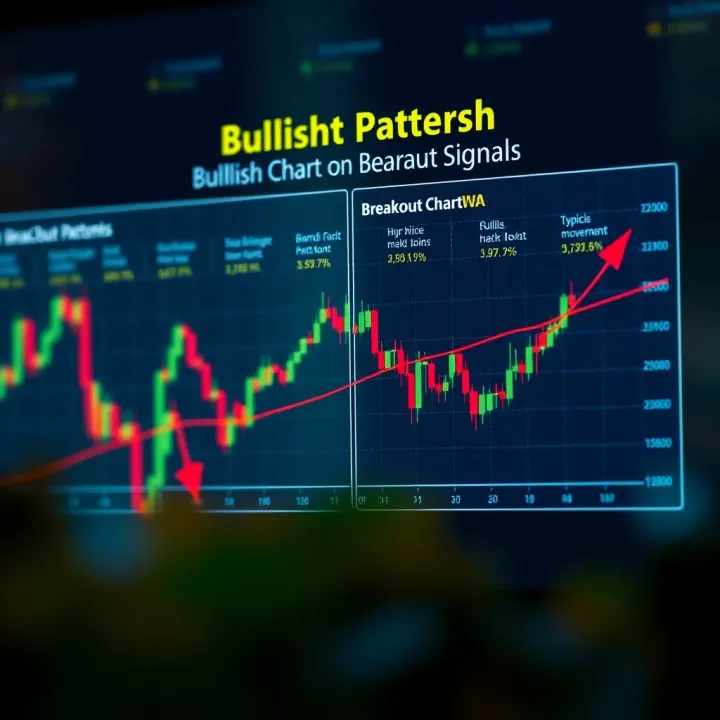
Top Chart Patterns Every Trader Should Know
📈 Discover the most reliable chart patterns traders use to forecast price moves in stocks, forex & commodities. Boost your trading game with clear insights!
Edited By
Charlotte Davies
Chart patterns are like the footprints traders leave in the market’s mud. They don’t guarantee what’ll happen next, but they sure give us clues that a smart trader can pick up on. Whether you’re just starting with stocks or have been at it for years, understanding these patterns helps you make sense of price movements instead of guessing.
In this article, we’ll break down the most common and useful chart patterns traders keep an eye on. From those that hint a trend is about to reverse, to others that suggest it will carry on, each pattern comes with its own story and signals.

By the end, you’ll know why a double top isn’t just a fancy name for a hat, or how an ascending triangle might just be shouting "Buy soon!" — all without drowning in technical jargon. We’ll cover:
How to identify popular chart patterns with real examples
The significance of each pattern for short-term and long-term trading
Practical tips on what to watch out for before deciding your move
Remember, recognizing these patterns is one piece of the trading puzzle. They should complement your overall strategy, not be the sole reason for your trades.
Let’s dive in and sharpen your market reading skills so you can spot opportunities and risks like a pro.
Chart patterns are foundational tools that traders and investors use to read what's going on in the market. They offer a visual insight into price action, helping predict future movements based on historical behavior. Understanding these patterns can be the difference between making a well-informed trade and just guessing.
In this section, we’ll break down what chart patterns actually are and why they’re so important in trading. By grasping these concepts early, you'll be better equipped to recognize key moments when the market is likely to change direction or continue with momentum.
Chart patterns are shapes or formations created by the movement of asset prices on a chart, such as candlestick or line charts. These patterns form because traders' buy and sell decisions create repeating price behaviors. For example, when prices struggle to break through a certain level multiple times, a "resistance" pattern emerges.
Think of chart patterns like footprints on a trail—they show where the price has been and hint at where it might step next. Their main purpose is to help traders spot opportunities either to enter or exit positions based on what the price is likely to do.
Technical analysis relies heavily on chart patterns to interpret market psychology. Unlike fundamental analysis, which looks at a company's financials, chart patterns focus purely on price and volume data. For instance, spotting a "head and shoulders" pattern can warn a trader about a coming reversal without needing to understand the company’s earnings report.
Their practical value lies in signaling potential reversals, continuations, or consolidations in price movements. When combined with other technical tools, chart patterns give traders an edge by offering early clues that aren’t obvious from raw price numbers alone.
One of the main reasons traders watch for chart patterns is to anticipate shifts in market direction. If a stock has been rising but forms a pattern like a "double top," it might signal the uptrend is losing steam. This predictability lets traders position themselves ahead of time—either to lock in profits or to prepare for a pullback.
For example, in the Indian stock market, Nifty’s prices forming a symmetrical triangle often suggest a head start on a significant breakout, upwards or downwards. Recognizing such formations early helps traders capitalize on upcoming trends rather than reacting after the move is underway.
Chart patterns also serve as a second opinion to other indicators. Let's say the RSI (Relative Strength Index) shows a stock is overbought. Confirming this with a chart pattern, such as a "triple top," strengthens the case for selling or shorting.
This confirmation reduces the chances of acting on false signals. It adds a layer of confidence that the signals reflect actual market sentiment and helps filter out noise from fleeting price movements.
In trading, it’s the mix of multiple signals, rather than relying on just one, that usually leads to better decisions.
By learning to identify and interpret chart patterns, traders gain a practical toolkit to navigate the often unpredictable market movements with more clarity and precision.
Reversal patterns are a crucial tool in any trader’s toolkit because they signal a potential change in the direction of the market. Recognizing these patterns can mean the difference between catching a profitable move early and being caught on the wrong side of a trade. These patterns are especially valuable when the market shows signs of exhaustion after a strong trend, whether up or down.
Understanding reversal patterns helps traders anticipate when a bullish trend might be running out of steam and giving way to bears, or vice versa. For example, spotting a head and shoulders pattern in a rising market can warn traders to take profits or tighten stops ahead of a possible downturn. In real-world terms, it’s like having a weather forecast for your trading decisions — you don’t want to be caught in a storm if you can help it.
The practical benefits of these patterns include improved timing for entering and exiting trades and better risk management. They’re not foolproof, though; combining reversal patterns with volume analysis and other technical signals can improve their reliability. Essentially, reversal patterns serve as a red flag or a green light, guiding traders on when to pivot or stay the course.
The head and shoulders pattern is one of the most recognized reversal patterns. It consists of three peaks: a higher middle peak (the "head") flanked by two lower peaks (the "shoulders"). These peaks are connected by a baseline known as the neckline.
The pattern forms after an upward trend, signalling that the buying pressure is weakening. To spot it, look for the following sequence: the left shoulder forms as price rises and then dips, the head forms with a higher peak followed by another dip, and finally the right shoulder forms with a peak similar in height to the left shoulder. This speaks to the market’s inability to push prices higher, indicating sellers are gaining control.
Once the price breaks below the neckline after forming the right shoulder, it often signals a trend reversal — from bullish to bearish. This confirmation suggests the upward momentum is over and a downward trend might follow. Traders often watch volume during these stages; volume tends to be higher during the left shoulder and head formation, then fades during the right shoulder. The break below the neckline ideally comes with increased selling volume, reinforcing the reversal signal.
Understanding this pattern helps traders protect their gains from a rising market and prepare for a correction or downtrend, minimizing losses and capitalizing on the new bearish move.
Trading the head and shoulders pattern involves placing a sell order when the price breaks the neckline. When setting a stop-loss, consider placing it just above the right shoulder to limit downside risk if the breakout turns out false.
Profit targets often come from measuring the height from the head to the neckline and subtracting it from the breakout point — basically, this helps estimate how far the price might fall. For example, if the head is 10 points above the neckline, traders might anticipate a 10 point move down after the breakout.
Keep in mind, volume confirmation is key. A weak volume breakout might suggest a false signal, so some traders wait for a daily close below the neckline combined with volume spikes to confirm the trade.
Double tops and bottoms are simple yet powerful reversal patterns characterized by two distinct price peaks or troughs at roughly the same level. They often form after extended trends, marking the market’s failure to continue higher or lower.
A double top forms when price makes a high, pulls back, then attempts a similar high again but fails to break through. The double bottom is the inverse, showing two lows where the price tries to push lower twice but holds the support.
Spotting these requires patience — don’t jump the gun after the first peak or trough. Wait for that second formation to form near the same price level.
The key signal for a trend reversal in these patterns is the breakout through the “neckline,” which is the support line in a double top and the resistance line in a double bottom. For a double top, when price falls below the neckline after the second peak, it usually signals a bearish reversal. For the double bottom, a break above the neckline suggests a bullish reversal.
Volume can provide clues here too: higher volume on the breakout adds credibility to the move. Also, the time between the two peaks or troughs matters — if they are close together, the signal may be weak; wider spacing tends to indicate a more reliable reversal.

To avoid false signals, look for several factors:
Volume spikes during breakout coupled with price movement
Similar height of the peaks or troughs
A clear break below or above the neckline with a daily or weekly close
Avoid jumping on the trade too early after the first peak or trough. Wait for the pattern to mature and confirm with volume. Combining the double top/bottom with other indicators like the RSI or MACD can provide additional confirmation.
The triple top and triple bottom are extensions of their double counterparts with an extra test of the resistance or support level. This pattern involves three distinct high points or lows roughly at the same price level.
The triple top is a bearish reversal pattern forming after a price rally, showing the market’s persistent struggle to break through a resistance zone. The triple bottom similarly forms after a downtrend, indicating a potential bullish reversal as support holds strong after three attempts to break down.
Triple tops and bottoms generally offer stronger signals than double tops and bottoms because the price tests the same level one more time. This extra confirmation tends to shake out weak hands and gives traders greater confidence.
However, lengthy formation times for triple patterns can sometimes make them less practical, as the market conditions may change during the period. Still, they are considered more reliable overall due to the repeated testing.
Trading the triple top/bottom follows a similar approach to double patterns, focusing on breakouts from the neckline. Key strategies include:
Waiting for a decisive breakout with volume confirmation
Setting stop-loss orders just above or below the triple peaks or bottoms
Using price targets based on the distance between the neckline and the pattern’s high or low
Because these patterns can take longer to form, traders should be wary of potential whipsaws and always use risk management techniques to protect capital.
Recognizing and trading reversal patterns like head and shoulders, double tops/bottoms, and triple tops/bottoms provide traders with invaluable insights into when the market might turn — enabling smarter, timelier decisions in ever-changing conditions.
Continuation patterns are essential tools for traders looking to ride the wave during an ongoing trend rather than betting against it. These formations indicate a brief pause or consolidation in price movement before the previous trend resumes. Recognizing them can help you avoid jumping the gun on reversals that don't materialize, saving you from costly mistakes.
What makes continuation patterns valuable is their ability to confirm that the prevailing trend—whether up or down—is likely to stick around a while longer. For example, if a stock's price has been climbing steadily and then forms a triangle or a flag pattern, it's often a sign that the upward push isn’t over just yet. This helps traders position themselves more confidently, whether they’re scaling into a position or adding to one.
Spotting triangles means paying close attention to how the highs and lows behave on a price chart. In an ascending triangle, you'll see a flat resistance line with higher lows, indicating buyers are stepping in earlier. The descending triangle flips this—flat support with lower highs, signaling selling pressure. Symmetrical triangles show converging trendlines slanting towards each other, with highs and lows tightening.
Think of it as a game of tug-of-war getting tighter before one side pulls hard. It's crucial to watch the volume here too because these patterns work best when volume contracts during the formation and spikes at breakout.
Once a triangle is complete, the price usually breaks out in the direction of the prior trend. For example, during an uptrend, an ascending triangle often leads to a breakout upward, sometimes with a sharp move. Descending triangles tend to favor breakdowns in a downtrend. Symmetrical triangles are trickier since the breakout can go either way; historically, they often follow the existing trend but require extra caution.
For ascending triangles, you can set entry points just above the flat resistance with stop losses below the most recent low. Descending triangles invite short positions once support breaks, with stops placed a bit above the closest high. Symmetrical triangles call for a more flexible approach — waiting for confirmation through a clear breakout plus volume surge is best before taking a position.
Flags look like small rectangles or parallelograms slanting against the trend direction and are formed by parallel trendlines. Pennants, on the other hand, are tiny symmetrical triangles that consolidate tighter. Both represent a brief rest in price action after a strong move, but flags usually last a little longer than pennants.
Typically, these patterns form after a sharp price move—often called the "flagpole." Imagine a rocket taking off, pausing briefly, then zooming again. This pause represents the flag or pennant. Flags often tilt against the trend (e.g., a downward slant in an uptrend), while pennants show converging lines. The key takeaway is that both patterns suggest the trend will continue, not reverse.
Volume is your best friend here. During the formation of flags and pennants, volume tends to shrink as the pattern develops. A sudden uptick in volume during the breakout confirms the pattern is playing out as expected. Without this volume confirmation, you risk mistaking a false breakout for the real deal.
Rectangles are straightforward: price moves sideways between well-defined support and resistance levels, almost like a ping-pong ball trapped in a box. This indicates a standoff between buyers and sellers before the market decides on the next move.
Channels add a twist by slanting up or down, meaning the price is making regular highs and lows within parallel lines. An upward channel shows consistent higher highs and higher lows, while a downward channel shows the opposite. Both signal ongoing trend strength and good spots to pick entry or exit points.
Think of channel lines as flexible boundaries where prices tend to bounce. Traders often buy near the lower channel line and sell near the upper one. Unlike fixed horizontal support or resistance, channels adjust as the price trend progresses, helping traders adapt to market shifts in real-time.
Breakouts from rectangles or channels signal a possible acceleration or reversal of trend. When price breaks above resistance or below support with increased volume, it’s a cue to jump in. A common technique is waiting for a candle close outside the boundary before entering to avoid fakeouts. Setting stop losses just inside the rectangle or channel is a smart way to limit risk.
Continuation patterns serve as the bread and butter for trend traders — they tell you when the coast is clear to hold or add to your position. By learning to identify and trade these patterns with volume confirmation and prudent risk management, you can catch the bigger moves without getting shaken out early.
Some chart patterns might not get as much spotlight as the classic head and shoulders or triangles, but they pack a solid punch in signaling market moves. These "other noteworthy patterns" provide traders with additional lenses to spot shifts in sentiment or trend momentum. They’re particularly useful when combined with more common patterns, giving a fuller picture of what's cooking in the market. Mastering these can set you apart by uncovering opportunities others might miss.
The Cup and Handle is a classic setup resembling a teacup followed by a smaller handle. Picture it as a "u"-shaped dip (the cup), then a slight pullback or consolidation (the handle). This pattern often takes a few weeks or even months to form and signals a likely bullish continuation after the handle completes. Think of it like the market taking a small breath before moving higher.
This pattern stands out because it's not about wild erratic price moves but more about a smooth recovery, making it more reliable. For example, in the Indian stock market, stocks like Tata Motors have previously shown cup and handle shapes before strong upswings.
The cup phase indicates a gradual shift from bearish to bullish sentiment. Sellers dominate during the descent, but buyers slowly regain control, shaping the rounded bottom. The handle represents a last pause — a minor hesitation as traders weigh whether the rally will continue.
It's like the market catching its breath before the next big push. This signals confidence and growing demand, often after a period of uncertainty or profit-taking. When volume picks up again during the breakout from the handle, it confirms buying interest.
When trading a cup and handle, patience is key. You don’t want to jump in halfway down the cup; waiting for the handle to form and break out sets a better entry point. A breakout above the handle’s resistance level, confirmed by a spike in volume, is usually a solid buy signal.
Keep an eye on stops just below the handle’s low to manage risk. Also, be wary of fake breakouts — it pays to check other indicators like RSI to confirm the move isn’t overbought. Lastly, targets are often measured by the distance from the cup’s low to the breakout point added to the breakout price, helping set realistic goals.
A rounding bottom looks like a gentle curve starting from a downtrend, flattening out, then slowly turning up. Instead of sharp angles, the price action forms a smooth "saucer" shape on the chart over an extended period — sometimes stretching over several months.
This shape tells you the selling pressure is tapering off gently, and buyers are gradually stepping in. It's not easy to catch early since the pattern evolves slowly, but spotting it can alert you to a significant upcoming trend shift.
This pattern often signals a major bullish reversal after a prolonged decline or neutral market. It reflects a slow but sure buildup in demand, hinting markets are bottoming out in a less volatile, more stable manner.
For long-term investors, this can be a quiet clue that a stock or index is gearing up for a steady rise — a contrast to sharper reversals like head and shoulders. For example, large-cap stocks in India such as HDFC Bank have occasionally formed saucer bottoms before significant upward trends.
Since the rounding bottom signals a slow shift, the best entry usually comes near the breakout point when price breaches the resistance formed at the top of the saucer. Confirm breakout with increased volume to avoid traps.
Avoid entering too early during the dip phase; premature buys can lead to unnecessary losses. Instead, watch for a clear close above resistance with volume support.
Adding confirmation from other tools like moving averages crossing over can boost confidence. Setting stop losses just below the saucer’s midpoint or recent support zones can help manage risk.
Patience works wonders with these patterns. Watch the price carefully, let the pattern mature, and confirm breakouts with volume before taking a bet.
By understanding these other noteworthy patterns alongside more familiar ones, traders equip themselves with a wider toolkit to read the markets better and make smarter, data-driven moves.
Understanding chart patterns is only half the battle; applying them wisely can make a big difference in your trading success. Practical tips help traders avoid common pitfalls, especially false signals, and improve the accuracy of their decisions. When you combine chart patterns with other technical tools, you’re not just guessing—you’re making educated calls based on a mix of evidence. This section dives into useful strategies to make the most out of chart patterns, ensuring you trade with more confidence and fewer surprises.
Volume isn’t just background noise—it’s like the heartbeat of price action. When you spot a chart pattern, high volume backing a breakout or breakdown confirms its strength. For instance, if you see a head and shoulders pattern forming, but the breakout below the neckline happens with weak volume, chances are the signal isn’t trustworthy. Think of volume as the crowd’s vote of confidence; without enough voters, the move might fizzle out. Always check if volume spikes during the key moments—it's a practical filter for weeding out weak setups.
Not every pattern is ready to act on straight away. Maturity refers to how complete the pattern has become. Premature breaks or entries can lead to false moves and quick losses. For example, in a triangle pattern, you want to see the price tighten and approach the apex before expecting a breakout. Acting too early is like trying to read the last page before finishing the story. Make sure the pattern reaches its natural limits and shows clear signs of a move before pulling the trigger.
Moving averages smooth out price action and help you spot trends more clearly. When combined with chart patterns, they offer added confirmation. Suppose you have a breakout from a double bottom pattern just as the 50-day moving average crosses above the 200-day average—a golden cross. This alignment gives an extra nudge that the trend reversal is genuine. Traders often watch for price interactions around moving averages, as they act like dynamic support and resistance zones.
RSI is a handy momentum indicator that tells you if a stock is overbought or oversold. Pairing RSI with chart patterns helps identify when a move might be running out of steam or gearing up for a reversal. Take a cup and handle pattern: if the RSI shows overbought conditions at the cup’s peak, you might expect a short pause or pullback before continuation. Conversely, if RSI signals oversold levels during a double bottom, it adds weight to the bullish reversal signal.
Chart patterns often form near key support or resistance zones. These areas mark psychological or historical price points where trading activity tends to spike. Confirming that a pattern lines up with these levels improves reliability. For example, a breakout above a resistance level after a flag pattern completion signals strong buying pressure. Likewise, a bounce from support following a rounding bottom pattern can be a green light to enter. Always mark your charts with these levels to time entries and exits better.
Practical trading isn't about guessing the market but stacking the odds in your favor. Combining chart patterns with volume, indicators, and price levels gives you a clearer picture and reduces costly mistakes. Remember, patience and confirmation go hand in hand in effective trading.
By following these practical tips, you’ll enhance your ability to read chart patterns accurately and use them alongside other tools. This approach reduces false alarms and helps you aim for smarter trades with better risk management.
Chart patterns serve as vital tools that inform traders about potential market moves, giving them an edge when making buying or selling decisions. Understanding these patterns doesn’t just boil down to spotting shapes on a chart; it’s about integrating this knowledge into your broader approach to trading. For example, recognizing a head and shoulders pattern early on can help you exit a position before a sizable downtrend hits, saving your capital.
Chart patterns work best when paired with other analysis methods like volume tracking or moving averages. This layered approach reduces guesswork and builds confidence in your trades. Remember, no single pattern guarantees success, but when patterns align with other indicators, you get a clearer picture of market sentiment and possible directions.
Recognize patterns reliably: Developing the skill to identify chart patterns accurately is foundational for any trader. Pay close attention to key characteristics like volume spikes, neckline breaks, or consolidation phases. Don’t rush to conclusions; instead, wait for the pattern to mature and confirm itself. For instance, a double bottom needs a clear breakout above the resistance level before you can confidently expect an uptrend.
Reliable recognition helps you avoid trap trades or fakeouts — common pitfalls in markets that can erode profits quickly. Practicing this recognition means studying real-world examples from stocks such as Reliance Industries or Infosys to see how patterns play out in different market conditions.
Use patterns as part of broader analysis: Chart patterns shouldn’t be your sole decision-maker. Incorporate other tools like the Relative Strength Index (RSI) or Simple Moving Average (SMA) to validate signals. For example, if a pennant forms but RSI indicates overbought conditions, it might be wise to hold back or tighten your stop-loss.
Taking a holistic view ensures you’re not trading blindly but rather making well-informed bets based on multiple layers of data. This prevents emotional trading and reinforces a disciplined strategy that adapts better to market fluctuations.
Paper trading and simulations: Nothing beats practice, especially when you can experiment without putting real money at risk. Paper trading platforms, such as those offered by Zerodha or Upstox, allow you to test chart pattern strategies in real-time market conditions. This practice sharpens pattern recognition and timing skills.
Simulating trades helps build confidence and uncovers potential mistakes early, so you’re better prepared when actual money is involved. For instance, you might discover that you tend to jump into trades too quickly after spotting a triangle pattern, without waiting for volume confirmation, which can be corrected during simulations.
Following market examples: Staying connected to current market action is essential. Watch how well-known stocks like Tata Motors or HDFC Bank behave when classic patterns appear. Often, news or earnings reports can override technical signals, so seeing patterns unfold alongside real-world events enhances your understanding.
By regularly reviewing chart patterns in live markets, you can spot nuances and variations, making your analysis more nuanced and adaptable. Keeping a journal of these observations can turn raw data into actionable insights over time.
Learning chart patterns is not a one-off exercise but a continuing process. Combine study with hands-on practice and market observation for steady improvement.
📈 Discover the most reliable chart patterns traders use to forecast price moves in stocks, forex & commodities. Boost your trading game with clear insights!

📈 Discover the most profitable chart patterns traders use across stocks, forex & commodities. Learn to identify & apply these strategies smartly for better trading decisions!

📊 Master candlestick patterns to read markets confidently. Get tips on recognizing trends & avoiding errors, perfect for Indian traders aiming to boost their strategy.

📉📈 Explore key candlestick patterns traders trust worldwide to gauge market mood and predict moves. Learn bullish, bearish signals, and smart tips for timing trades!
Based on 11 reviews