
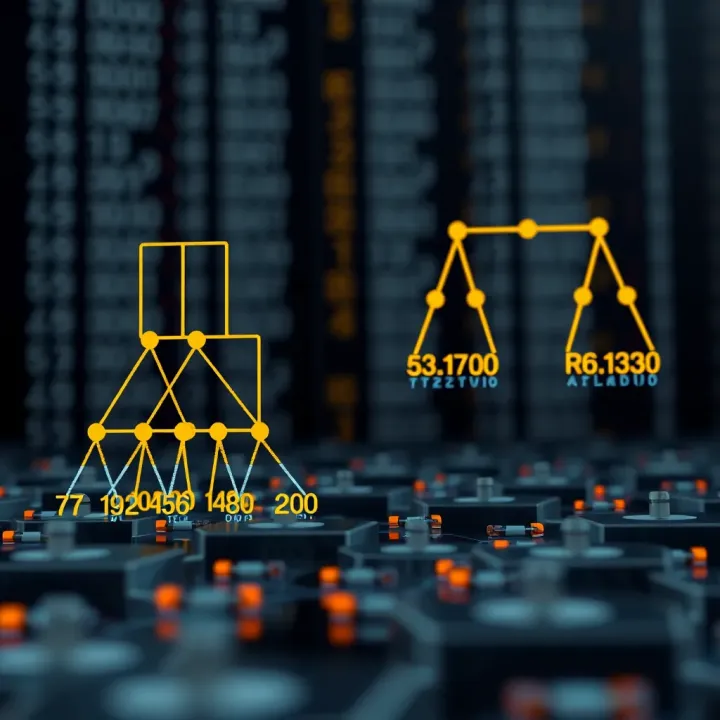
Understanding Maximum Depth in Binary Trees
🌳 Learn how to find the maximum depth of a binary tree, key methods, and why it matters in coding & interviews. Simple, clear, and practical insights for programmers.
Edited By
Edward Collins
At its core, the maximum depth (also called height) measures how many levels a binary tree stretches. Imagine a family tree where the generations grow deeper; many fields—from database querying to AI—use this idea to optimize searches or organize data efficiently.
In this article, we'll break down the main ways to find this depth, including both simple and more hands-on methods. You won’t just learn how to calculate it; we’ll also touch on why it’s important and how it impacts performance in programming tasks.
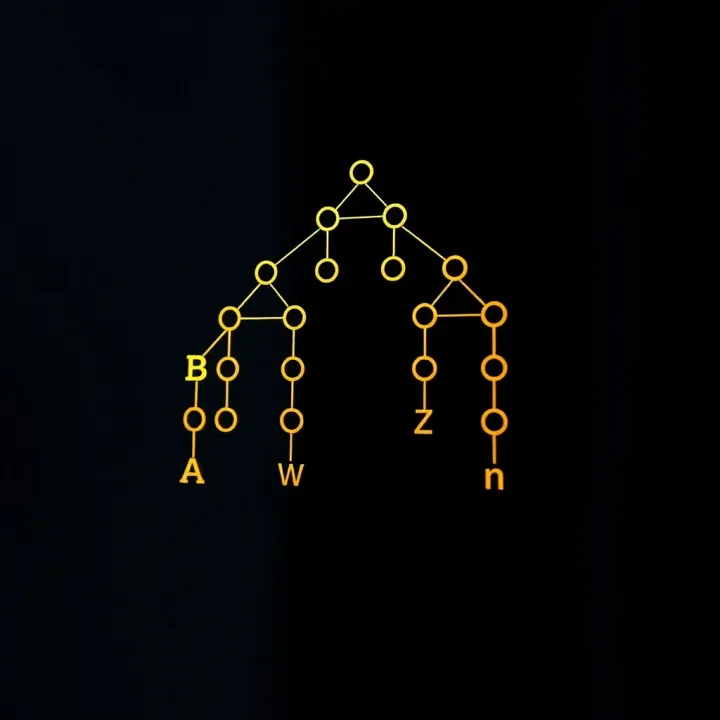
Getting the max depth right is more than just an academic exercise. Whether you’re writing software to speed up financial analytics or building smarter AI tools, knowing how to find tree depth helps keep things running smooth and fast.
So buckle up as we explain the nuts and bolts, peppered with real examples and code snippets, so you can handle this concept like a pro.
Imagine you have a directory folder structure on your computer. The maximum depth reflects the longest path from the main folder down to the deepest nested file. Without knowing this, it becomes tricky to optimize file search or manage system resources efficiently.
Tree depth refers to the number of nodes on the longest path from the root node down to the farthest leaf node, counting the root as level 1. It's a measure of how many layers the tree contains. For example, a simple tree with a root node and two child nodes beneath it has a maximum depth of 2.
Knowing the maximum depth helps us predict the worst-case scenario for operations like finding a node or inserting one. If the depth is large, these operations might take longer, so developers try to minimize depth for efficiency.
In casual talk, height and depth often get mixed up, but in trees, height usually refers to the distance from a node down to the leaf nodes beneath it, while depth is measured from the root node down to a specific node.
For example, the depth of a node could be 3 if it’s three levels down from the root, but its height depends on the subtree it leads. Understanding this difference is key when programmers write algorithms to traverse or balance trees since depth guides how nodes are positioned relative to the root.
Algorithm designers pay close attention to maximum depth because it often dictates the efficiency of their solutions. Recursive algorithms, like those used in tree traversals or searching, depend heavily on the depth for determining the number of function calls in the call stack.
Consider a recursive function searching through files organized in folders—if the structure is too deep, it can lead to stack overflow errors or longer processing times. Knowing the maximum depth allows developers to choose iterative methods or optimize recursion accordingly.
Traversal techniques such as depth-first search (DFS) or breadth-first search (BFS) perform differently depending on the tree’s depth. A deeper tree might slow down DFS because it explores nodes all the way down before moving horizontally.
Moreover, search operations can become costly in unbalanced trees where maximum depth is large, as each step down can add to the time complexity. Algorithms like AVL or Red-Black trees use balancing methods to keep the maximum depth low and search times efficient.
Understanding maximum depth isn't just theory; it connects directly to how well tree-based data structures perform in the real world—be it databases, file systems, or AI search algorithms.
By appreciating these points, readers can better grasp why measuring and managing tree depth matter, setting the stage for exploring calculation methods and practical uses in upcoming sections.
Understanding binary trees is the backbone of grasping their maximum depth. Without knowing what a binary tree is and how it's structured, discussing its depth would be like trying to find your way in the dark without a flashlight. This section lays out the nuts and bolts — how nodes connect, what those nodes represent, and the types of trees you’ll commonly run into.
Every binary tree is built from nodes, with edges linking them, kind of like dots connected by lines. Each node can have up to two children — think of them as branches that split off. The level of a node tells you how far down it sits from the top (the root), counting the root as level 1. This structure is what shapes the tree and affects its depth.
Why care? Because when calculating maximum depth, you’re essentially counting the number of levels from the root all the way down to the farthest leaf. Knowing how nodes and edges play together helps you trace paths correctly and avoid mistakes.
Nodes come in flavors:
Root node: The topmost node, with no parent. Imagine the starting point of a family tree.
Internal nodes: Those with one or two children. They’re the connectors, keeping the tree growing.
Leaf nodes: The ones without children, the tree’s endpoints.
Understanding these types is crucial when measuring depth because maximum depth is defined by the longest path from the root to a leaf. So, leaf nodes mark the end of those paths.
Binary trees don’t all look the same. Different types serve different purposes or suit various computing needs:
Full Binary Tree: Every node has either zero or two children. No one-child nodes here. This often makes traversal more predictable.
Complete Binary Tree: All levels are fully filled except possibly the last, which fills from left to right. This variant is common in heap implementations and helps keep operations efficient.
Balanced Binary Tree: The heights of the two child subtrees of any node differ by no more than one. Balanced trees like AVL or Red-Black trees aim to keep operations like search and insert fast by preventing the tree from becoming too tall.
Skewed Binary Tree: Nodes mostly have only one child, resembling a linked list. These can cause worse performance since the tree behaves like a long chain.
Recognizing these types helps you anticipate how deep the tree might get and how your depth calculations will behave. For example, skewed trees can have maximum depths close to the number of nodes, while balanced trees keep depths much lower.
By grasping the structure and variants of binary trees, you gain better insight into why maximum depth varies and how it affects the efficiency of algorithms operating on these trees. This foundation sets the stage for methods to calculate depth accurately and efficiently.
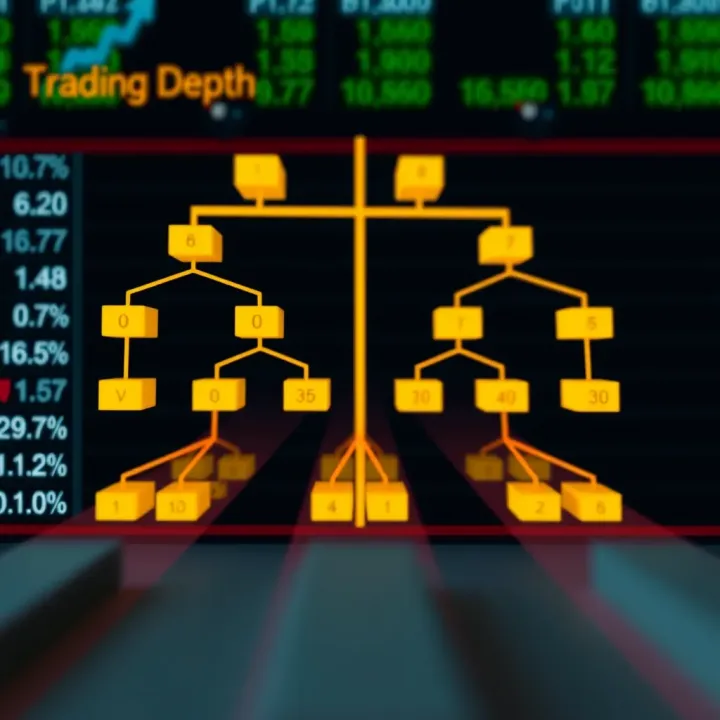
Understanding the methods to calculate the maximum depth of a binary tree is essential because it ties directly into how we work with trees in coding and algorithm design. Whether you're optimizing data search or balancing trees, knowing how deep a tree goes influences the approach you pick. It's not just an academic exercise — in real-world applications like database indexing or network routing, understanding a tree’s max depth can impact performance significantly.
Two main techniques stand out: recursive and iterative methods. Each offers its own way of navigating through the tree structure, with benefits and quirks depending on the tree’s complexity and the constraints of your environment. Grasping these methods means you can make informed choices rather than just guessing which fits the bill.
The recursive method to find the maximum depth of a binary tree works by breaking down the problem into smaller subproblems. Essentially, you ask each node: "How deep are you?" and then compare answers to find the deepest path. Starting from the root, the function calls itself on the left and right children, waits for the answer (depth), and adds one for the current node.
This technique mirrors how we think about trees logically—each subtree is a tree itself. It’s straightforward and easy to code, making it a favorite for beginners. Plus, recursion beautifully handles the tree’s branching nature without extra tools.
python
class TreeNode: def init(self, val=0, left=None, right=None): self.val = val self.left = left self.right = right
def max_depth(root): if not root: return 0 left_depth = max_depth(root.left) right_depth = max_depth(root.right) return max(left_depth, right_depth) + 1
This snippet speaks for itself – it’s clean and captures the logic accurately. Notice the base case where if the node is `None`, it returns zero, meaning we've hit a leaf's end.


### Iterative Approach with Queue (Level Order Traversal)

#### How level order traversal works

The iterative method often uses a queue to navigate the tree level by level, from the root down to the leaves. This technique, called level order traversal, tracks how many layers or "levels" the tree has, effectively counting the maximum depth.

By visiting all nodes on the current level before moving to the next, you gain a clear picture of how far the tree spreads out horizontally and vertically. This approach avoids recursion’s inherent risks, like hitting a stack overflow with very tall trees.

#### Example implementation

```python
from collections import deque

def max_depth_iterative(root):
    if not root:
        return 0
    queue = deque([root])
    depth = 0
    while queue:
        level_size = len(queue)
        for _ in range(level_size):
            node = queue.popleft()
            if node.left:
                queue.append(node.left)
            if node.right:
                queue.append(node.right)
        depth += 1
    return depth
This example utilizes Python's deque for efficient popping from the front of the queue. Each loop corresponds to a level in the tree, incrementing the depth counter.
Choosing recursive versus iterative depth calculation depends on context. Recursion is elegant and concise but risks stack overflow for very deep or skewed trees. It shines when the tree structure is balanced and not too tall.
Iterative methods, on the other hand, use explicit queues and avoid recursive call overheads. They handle deep trees better but come with a bit more complex code. Also, iterative approaches might feel less intuitive at first.
From a memory standpoint, recursion uses the call stack, which grows with the maximum depth. So, if you’re dealing with an unbalanced tree that’s basically a linked list, you might hit system limits quickly.
Queues in iterative depth calculation hold all nodes on a level at once, so memory spikes when a level has many nodes. This can be advantageous if the tree is broad rather than deep.
When it boils down to it, knowing your data and use case well will guide you in picking the method that suits both performance needs and code maintainability.
In essence, both recursive and iterative approaches have their places; armed with this knowledge, you can tailor your solutions effectively.
Understanding the complexity behind calculating the maximum depth of a binary tree is crucial for developers and computer science students alike. It determines how efficiently an algorithm runs and how much memory it consumes, which can directly impact performance, especially with large trees.
When dealing with trees that could stretch to thousands or millions of nodes, knowing the time your algorithm will take to finish can save you from unnecessary delays. Similarly, understanding memory consumption can help prevent crashes due to stack overflow or excessive heap use.
The recursive approach typically checks every node by calling itself on the left and right children until it reaches the leaves. Since it visits each node once, it has a time complexity of O(n), where n is the total number of nodes. This means doubling the nodes will roughly double the time taken. While recursive code looks neat, heavy trees with great depth might cause slower performance due to function call overhead.
The iterative method, often implemented with a queue via level-order traversal, also visits every node exactly once, leading to O(n) time complexity as well. However, it avoids the risk of hitting recursion limits and can be more predictable for large or unbalanced trees. In practice, both methods provide similar timing, but iteration may feel snappier for big inputs without deep stacking.
In recursion, the call stack grows with the depth of the tree — for a perfectly balanced tree, that’s about O(log n), but for a skewed tree (like a linked list), the stack use can balloon to O(n). This raises concerns of stack overflow in extreme cases.
On the flip side, the iterative method uses a queue to hold nodes at the current level. The queue’s size at worst matches the maximum width of the tree, which can also be quite large but tends to be more memory-contained compared to deep recursion call stacks.
The worst case for recursive depth calculation happens in a highly skewed tree, where each node has only one child, forming a linear chain. In this scenario, recursion depth equals the number of nodes, making the stack usage O(n), which can lead to stack overflow.
For the iterative version, the toughest case is a full, wide tree that has a large number of nodes at the maximum depth level, requiring the queue to hold many nodes simultaneously. This spike in memory means iterative memory use depends heavily on the tree’s shape more than depth alone.
Before choosing your method, weigh the shape and size of your tree — it helps avoid running into memory hiccups or slowdowns during max depth computations.
In summary, while both recursive and iterative methods demand linear time, their space needs reflect different aspects of tree structure — deep recursion stacks versus wide level queues. Understanding these nuances helps pick the right approach for your specific tree data and environment.
Using practical examples and code snippets is a solid way to bridge the gap between understanding the theory behind maximum depth calculation in binary trees and applying it in real scenarios. For many learners—especially those not yet seasoned with data structures—seeing actual code in action helps clear up confusion and breeds confidence in their coding abilities.
Real-world coding examples show exactly how algorithms work step-by-step, breaking down complex concepts like recursion or iterative traversal into digestible chunks. Plus, snippets are invaluable when you want to test, tweak, or expand on the logic without starting from scratch.
Remember, hands-on practice is often the quickest path to mastery in programming fields like data structures.
By incorporating code in languages like Python and Java, this section offers tools that cater to varied preferences and industry demands, making it easier to translate understanding into practice.
Recursion fits naturally with tree structures since a binary tree is inherently recursive—a node leads you to smaller subtrees. In Python, a simple recursive function to find the max depth checks if a node is None (base case) and returns zero; otherwise, it finds the max depth of left and right children and adds one for the current node.
This method is elegant and easy to implement, especially for beginners. It clearly illustrates the divide-and-conquer principle, which is vital in many algorithms related to trees.
python class TreeNode: def init(self, val=0, left=None, right=None): self.val = val self.left = left self.right = right
def maxDepth(root): if not root: return 0 else: left_depth = maxDepth(root.left) right_depth = maxDepth(root.right) return max(left_depth, right_depth) + 1
#### Iterative function example:
An iterative method often uses a queue for level order traversal (breadth-first search). This approach tracks depth by processing nodes level by level. It's particularly useful when you're wary of recursion limits or want tighter control over memory.

Python's `collections.deque` is perfect here, letting you add and drop nodes efficiently. The depth increments only after every level is processed, giving an accurate maximum depth.

```python
from collections import deque

def maxDepthIterative(root):
    if not root:
        return 0
    queue = deque([root])
    depth = 0
    while queue:
        level_length = len(queue)
        for _ in range(level_length):
            node = queue.popleft()
            if node.left:
                queue.append(node.left)
            if node.right:
                queue.append(node.right)
        depth += 1
return depthIn Java, recursion to compute max depth looks quite similar structurally but involves explicit type declarations and use of the TreeNode class. It waters down to a simple function returning 0 for null nodes and otherwise comparing the depth of left and right subtrees.
This variant is widespread in coding interviews, making it a practical choice for anyone prepping for those.
class TreeNode
    int val;
    TreeNode left, right;

public int maxDepth(TreeNode root)
    if (root == null)
        return 0;
        int leftDepth = maxDepth(root.left);
        int rightDepth = maxDepth(root.right);
return Math.max(leftDepth, rightDepth) + 1;For an iterative solution, Java typically uses a LinkedList as a queue. The approach mimics the Python pattern: traverse by levels, count depth after each level's nodes are visited.
This method shines in avoiding stack overflow errors that might come with deeply nested recursion.
import java.util.LinkedList;
import java.util.Queue;

public int maxDepthIterative(TreeNode root)
    if (root == null) return 0;
    QueueTreeNode> queue = new LinkedList();
    queue.add(root);
    int depth = 0;
    while (!queue.isEmpty())
        int levelSize = queue.size();
        for (int i = 0; i  levelSize; i++)
            TreeNode current = queue.poll();
            if (current.left != null) queue.add(current.left);
            if (current.right != null) queue.add(current.right);
        depth++;
    return depth;
Providing these practical examples helps learners see both the theory and how to implement it across different common languages. They get a feel for the nuances between recursive and iterative tasks, preparing them better for real-world programming, interviews, or academic projects.
When working with binary trees, especially while calculating their maximum depth, it's easy to stumble into common pitfalls that can trip up even seasoned programmers. Understanding these typical errors not only saves time debugging but also ensures your algorithms perform reliably. This section sheds light on frequent mistakes seen around tree depth calculations and offers practical advice to steer clear of them.
One common source of confusion is mixing up the terms "depth" and "height" of a tree. Although they sound similar, they have distinct meanings that affect how you approach calculations. Depth typically refers to the number of edges from the root node down to a given node, whereas height refers to the number of edges on the longest path from a node down to a leaf. For example, the root node has a depth of zero but its height equals the maximum depth of the tree.
Misunderstanding this can lead to wrong output or inefficient code. If you're implementing a max depth calculation but accidentally use height definitions interchangeably, the logic may break or return unexpected values. To avoid this, always clarify which term your problem or algorithm refers to, and use consistent definitions throughout your code.
Keeping depth and height distinct helps when designing recursive functions, ensuring they target the correct measurement.
Recursive methods are popular for traversing trees, but they often cause headaches if not properly handled. Two frequent errors here are causing stack overflow and misplacing base cases.
Stack overflow happens when recursive calls go too deep without stopping, typically because the base case condition is incorrect or missing. For example, forgetting to return 0 when a node is null will cause infinite recursion. On the other hand, incorrect base cases can also cause your function to return wrong values or crash unexpectedly.
To dodge these traps:
Always check if the current node is null before proceeding deeper.
Define clear return values for base cases; usually, depth for a null node is zero.
Test with edge cases, such as an empty tree or a highly skewed tree (all nodes lined up).
Here’s a quick illustration of a safe base case in Python:
python def max_depth(node): if node is None: return 0# Base case: no node means depth zero return 1 + max(max_depth(node.left), max_depth(node.right))
Following this pattern helps prevent crashes and keeps recursion depths manageable, especially in large trees.

Being mindful of these common mistakes significantly improves your ability to work with binary trees. Small oversights with terms or recursion can create big hurdles, but with clear definitions and careful checks, you can avoid those and write clean, efficient code.


## Applications of Knowing Maximum Depth


### Optimizing Tree Traversal

#### Balancing Trees Based on Depth

Balancing is all about making sure no branch of the tree gets too long compared to others. When one side of the tree is way deeper than the other, operations like search and insertion get slower, because you’re essentially traversing a long chain instead of a balanced structure. This is why self-balancing binary trees like AVL trees and Red-Black trees exist—they constantly check and adjust their maximum depth throughout operations.

For example, in an AVL tree, after every insertion or deletion, the algorithm calculates the depths of the left and right subtrees to ensure the difference is no more than one. If it exceeds that, rotations are performed to bring the tree back into balance. Knowing the max depth is essential here for triggering these balancing acts at just the right moment.

#### Improving Search Operations

The speed of searching through a binary tree is heavily tied to the tree's depth. Shallower trees mean fewer levels to navigate, which translates to faster searches. When trees get too deep, search operations look more like walking down a linked list, losing the benefits of a balanced binary tree.

If you track the maximum depth, you can predict and limit worst-case search times. For instance, in databases using binary search trees for indexing, keeping an eye on tree depth helps maintain quick record retrieval. Algorithms that dynamically adjust or rebalance the tree based on its depth ensure that search operations remain efficient even as data changes.


### Use in Real-World Problems

#### Data Storage and Retrieval

Data storage systems often rely on binary trees for organizing data in a way that’s easy to retrieve. File systems, database indexing (like B-trees which are a generalization of binary trees), and memory management schemes use maximum depth to ensure these tasks run efficiently.

Consider a file system where directories and files are nodes in a binary tree. If the tree is too deep, file lookups can take longer, frustrating users and slowing down processes. By monitoring and controlling depth, systems can keep access times fast—crucial for performance-sensitive applications like streaming services or transaction processing.

#### Network Routing and Decision Trees

Beyond storage, binary trees pop up in network routing and decision-making processes. Routing algorithms sometimes encode their decisions in tree structures where each node represents a decision point. The maximum depth indicates the longest path a data packet might travel, which impacts network latency.

Similarly, decision trees used in machine learning rely on the depth to prevent overfitting or underfitting. A very deep tree might perfectly match the training data but fail on new data, whereas a shallower tree generalizes better. By controlling the maximum depth, data scientists strike a balance between accuracy and simplicity.

> *In short, knowing the maximum depth isn’t just about numbers—it's about keeping systems responsive, manageable, and effective.*

By understanding and applying the concept of maximum depth, you can make smarter choices in structuring data, designing algorithms, and solving complex problems across computing fields.

## Outro and Key Takeaways


> The maximum depth is like the backbone measurement of your tree structure — too deep and you risk inefficiency; too shallow, and you might miss details.

By mastering various calculation methods and grasping their pros and cons, readers can make smarter choices when working with binary trees in any programming or data context.

### Summary of Important Points

**Understanding depth concept**
Depth in a binary tree tells us the longest path from the root node down to the furthest leaf. It helps define complexity and influences traversal times. For example, in database indexing, if the depth is excessive, search queries slow down, impacting performance. Knowing this, you can better balance the tree to speed up operations.

**Choosing appropriate calculation methods**
Recursive approaches are elegant and straightforward but may hit stack limits with very deep trees. Iterative methods using queues, like level order traversal, avoid this but use extra memory. Practical applications, such as embedded system programming with limited stack size, might favor iterative solutions. Understanding these trade-offs lets you pick the best fit for your project's constraints.

### Further Reading and Resources

For those wanting to dig more into binary trees and their depths, a few great resources stand out:

- **Books:** "Introduction to Algorithms" by Cormen et al. explains tree structures clearly with examples. Also, "Data Structures and Algorithms in Java" by Goodrich and Tamassia offers solid practical insights.
- **Tutorials:** Websites like GeeksforGeeks and Khan Academy have dedicated sections for trees, breaking down both theory and implementation.
- **Online references:** Platforms such as Stack Overflow provide real-world problems and solutions others have faced. They give perspective beyond textbook examples.

Taking advantage of these materials helps reinforce what’s covered here and expands your ability to apply these concepts in different coding environments and industries.🌳 Learn how to find the maximum depth of a binary tree, key methods, and why it matters in coding & interviews. Simple, clear, and practical insights for programmers.
Explore how to find the maximum depth of a binary tree 🌳 with clear examples, practical uses, and efficient methods valuable for computer science enthusiasts.
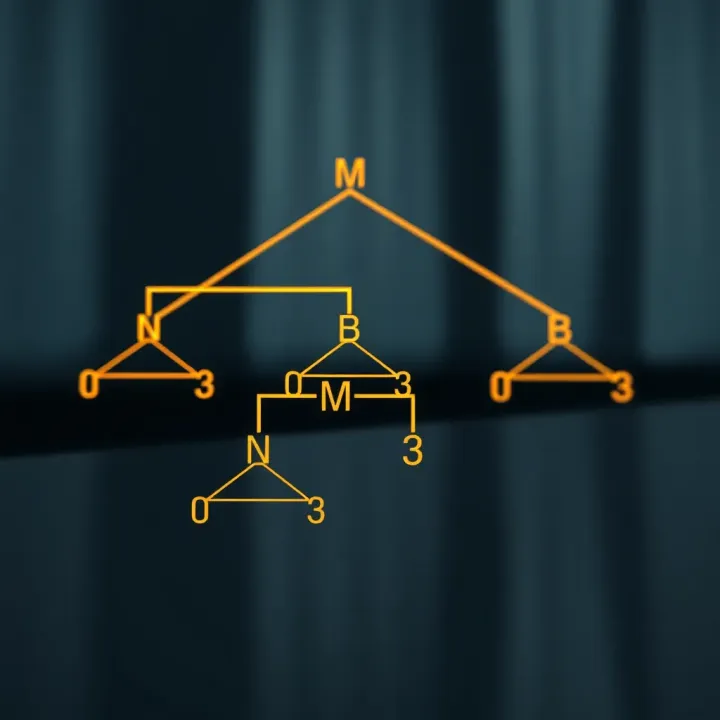
Explore how to find the maximum depth of a binary tree 🌳 using recursive & iterative methods. Learn practical tips, common challenges, and uses in programming. ⚙️
Explore how to find the max height of a binary tree 🌳, its importance in CS, and methods to calculate it with examples and algorithms. Learn tree basics!
Based on 12 reviews