

New Chart Patterns in Trading Explained
📈 Discover new chart patterns in trading markets, learn how they differ from classic ones, and see how to spot them using the latest tools for smarter trades.
Edited By
Henry Lawson
Chart patterns are like the footprints left behind by market actions, giving traders clues about what's likely to happen next. Whether you're a beginner or an experienced investor watching the charts, understanding these patterns can feel like having a map in a maze.
In the trading world, chart patterns serve as visual signals indicating potential continuation or reversal of price trends. They help traders decide when to jump in, hold tight, or step out. This article walks you through the most popular patterns seen in stock, forex, and commodity markets, explaining what they look like and what they usually mean.

We'll also touch on how combining these patterns with other tools—like volume analysis, trend lines, or oscillators—can sharpen your trading decisions. The goal here is to break down the clutter of technical jargon and show you practical ways to spot and use chart patterns effectively.
Understanding chart patterns is not about crystal balls or guesswork—it’s about reading the market’s language with clarity and confidence.
Throughout this guide, you’ll find clear examples, pointers on what to watch for, and insights to help you avoid common pitfalls. By the end, you'll be more equipped to read charts like a seasoned pro, making better-informed trades in the fast-moving markets.
Let's get started and demystify those squiggly lines so you can trade smarter, not harder.
Chart patterns are like road signs on the bustling highway of the stock market. Grasping what these patterns signal about price action can make all the difference between a risky guess and a calculated move. For traders, recognizing these shapes means getting a peek into how buyers and sellers are behaving, plus clues about where the price might head next.
Most importantly, chart patterns help break down what’s otherwise just a jumble of price points into a narrative that’s easier to follow. Think of it like reading a map—without understanding the landmarks (patterns), you’d just be wandering aimlessly. The practical benefit of this is huge: traders can enter or exit positions with more confidence.
At its core, a chart pattern is a pictorial snapshot reflecting the tug-of-war between supply and demand. For example, a rising wedge might show demand slowing down even though prices are climbing, hinting at a coming reversal. This visual cue tells you about stress points in the market—where sellers might outweigh buyers or vice versa.
Recognizing these cues helps traders anticipate shifts before they fully happen. It’s like noticing cracks on a wall before the whole thing collapses. Paying attention to the size, shape, and volume around these patterns can sharpen this insight.
Behind every peak and valley is trader sentiment playing out. Fear, greed, hope, and doubt combine to form these recognizable shapes. A double bottom, for instance, can reflect investor hesitation—a point where buyers step in twice, believing the asset is undervalued.
Understanding this psychology gives context to the patterns, turning abstract lines into human stories. It explains why a head and shoulders pattern signals a reversal: people who've been bullish are losing steam, and bears are gearing up. That human element is what makes these patterns reliable guides.
Chart patterns don't promise exact outcomes but offer probabilities based on historical price behavior. For example, an ascending triangle often precedes a breakout to the upside, giving traders a heads-up to prepare for momentum.
This advantage allows traders to plan entries, set targets, and time trades better than pure guesswork. It also helps in spotting when a trend might run out of juice, avoiding late entries or exits.
Using chart patterns is not just about chasing profits but also about cutting losses. Since patterns provide defined points like support and resistance, traders can place stop-loss orders more logically.
For example, after spotting a double top, a trader might set a stop lost just above the peak to guard against a sudden surge. This tight framework transforms volatile markets into manageable scenarios, reducing the stress of unpredictable moves.
Remember, successful trading isn’t about always being right; it’s about managing risk well. Chart patterns give the tools to do just that by offering clear levels where the trade idea fails.
In short, solid knowledge of chart patterns can turn a trader from flying blind into someone navigating markets with a reliable compass.
Chart patterns play a big role in how traders try to make sense of market moves. They’re like signposts on a busy road, showing possible directions a price might take. Understanding different types of these patterns helps traders decide whether to stick with the current trend or prepare for a change.
Broadly, chart patterns fall into two buckets: continuation and reversal patterns. Each type serves a unique purpose and offers clues about what might come next in price action. Recognizing these patterns saves time and reduces guesswork when looking at noisy market data.
Continuation patterns suggest that the current trend will likely keep going once the pattern completes. Imagine you’re riding a bike downhill and hit a small bump or a tight curve; the path’s still down, but there's a brief pause or slowdown. Similarly, in trading, these patterns show short breaks or consolidations but don’t signal a full stop or reversal.
These patterns are essential because they let traders hold onto profitable moves with more confidence. Knowing that a pattern indicates a pause rather than a turn helps avoid premature exits or rash entries.
Some of the most common continuation patterns you’ll encounter are flags, pennants, and triangles.
Flags look like small parallelograms slanting against the main trend. They’re often quick pauses after a strong price move.
Pennants resemble tiny symmetrical triangles forming after a sharp price jump or drop, showing indecision before the move continues.
Triangles can be ascending, descending, or symmetrical; each has unique traits but generally signal that consolidation is about to end.
For example, imagine a stock rising steadily, then forming a small flag pattern for a few days before breaking higher. That’s a continuation pattern signaling the trend’s strength.
Reversal patterns signal the potential flip in market direction, like a car making a U-turn after cruising down the highway. These patterns warn traders that what was once a rising or falling trend might be running out of steam.
Recognizing reversals early can be a lifesaver in trading since staying on the wrong side of a trend flip can mean losses piling up fast. These patterns help traders prepare to exit a position or open a new one going against the old trend.
Head and Shoulders and Double Top/Bottom are classic reversal patterns worth knowing.
The Head and Shoulders pattern looks like three peaks, with the middle one (the head) higher than the two shoulders. It often shows up at market tops, suggesting a turnaround is near.
Double Top and Double Bottom involve prices hitting a resistance or support level twice before reversing direction, like hitting a wall two times and bouncing back.
For instance, say a currency pair has been climbing for weeks but forms a double top near a tough resistance zone. This could mean sellers are stepping in, potentially pushing prices down soon.
Understanding these two main types of chart patterns—continuations and reversals—builds a solid foundation for spotting trading opportunities. It’s like having a map when exploring unfamiliar terrain.
By getting comfortable with these patterns, traders—beginners and pros alike—can sharpen their timing and improve decision-making in the volatile markets common in India and worldwide.
Continuation patterns play a big role in chart analysis because they hint that the current trend is likely to keep rolling. Unlike reversal patterns that tell you when the market might do a U-turn, continuation patterns signal a breather or a pause before the trend resumes. Understanding these patterns helps traders avoid jumping the gun or missing out on ongoing moves.
These patterns are especially handy for managing trades. They can show where the market is taking a short break, giving traders a moment to catch their breath, set stop losses, or plan entries with more confidence. For instance, if you catch a continuation pattern forming in a strong uptrend, it might be a green light to hold on or add to your position.
Flags and pennants often appear after a sharp price move – think of them like the market catching its breath. A flag looks like a small rectangle that slopes against the prevailing trend, while a pennant is more like a tiny symmetrical triangle. Both form on smaller scales following a strong directional move, usually lasting a few days to a couple of weeks.
Flags show up when price trades sideways or slightly counter to the trend within parallel lines. Pennants are a bit different; they’re tighter and form with converging trendlines, making a sort of small triangle that appears after a big price jolt.
These patterns are important because they typically suggest a continuation of the prior strong move once the pattern breaks out. Think of them as a pause in a race — the runners slow down momentarily, but they haven’t stopped running.

Traders usually see flags and pennants as signals that the market will keep moving in the direction it was going before the pattern formed. For example, if the price surged upward and then moved sideways in a flag, a breakout above the flag’s upper boundary suggests the uptrend will continue.
Volume often plays a key role here. During the formation of these patterns, you’ll want to see volume decrease slightly — showing reduced activity — followed by a volume spike on breakout. This confirms the pattern’s validity.
A practical tip is to place entry orders just beyond the breakout level and set stop losses just below the opposite side of the pattern. This approach helps manage risk while catching the momentum as the trend picks back up.
A symmetrical triangle forms when the price action compresses between two converging trendlines that slope toward each other, but not strictly up or down. It represents uncertainty or consolidation where buyers and sellers are roughly in balance.
What makes this pattern useful is that it signals a breakout is likely to happen, though it doesn’t predict direction on its own. Traders look for a decisive move beyond one of the trendlines to get clues about where the market is headed next.
In India’s stock markets, such as NSE or BSE, symmetrical triangles often appear before fresh moves in stocks with decent liquidity, like Infosys or HDFC Bank. Watching volume patterns and confirming breakout direction helps traders reduce guesswork.
This pattern happens when you have a flat upper resistance line and a rising lower trendline. It’s a bullish sign because it shows buyers are becoming more aggressive, pushing prices higher to test that resistance repeatedly.
When price finally breaks above the flat resistance line on strong volume, it typically leads to a continuation of the uptrend. For example, an ascending triangle in a stock like Tata Motors could suggest a surge once breakout happens.
Traders use this pattern to time entries close to the breakout point and often set targets by measuring the height of the triangle added above the breakout.
A descending triangle is the flip side — a flat support line with a descending upper trendline. This shape suggests sellers are growing more impatient, pushing prices down repeatedly to test support.
It’s generally considered bearish, as a break below the flat support line signals potential continuation of a downward trend. If you spot this pattern in commodities like crude oil futures traded on MCX, it might warn you about further price drops.
The volume pattern is similar: volume contracts during formation and expands on the breakout to confirm it’s real. Traders can use this setup to short-sell or exit longs near support and plan entries after breakdown.
Continuation patterns like flags, pennants, and triangles are invaluable tools for keeping your finger on the market’s pulse. They help you see when the party’s just paused, not over, giving you an edge in timing your moves.
By recognizing these patterns and understanding their nuances, traders can avoid many false starts and improve their odds of riding big moves with confidence. Remember to always confirm with volume and other tools to avoid falling for fakes.
Reversal patterns hold a special place for traders trying to catch the turning points in markets. Unlike continuation patterns that suggest a pause before the trend keeps going, reversal patterns signal a fundamental shift in direction. Spotting these early can save investors from sticking to a losing trade or help lock in profits before the tide turns.
Knowing when a trend is about to reverse can turn the tables from guesswork to informed decisions.
Two of the most widely watched reversal patterns are the Head and Shoulders and the Double Top/Bottom. These patterns have stood the test of time because of their reliability and clear price action signals. Understanding these helps traders anticipate market moves rather than react after the fact.
The Head and Shoulders pattern looks like a head sitting between two shoulders on the chart — literally resembling a person's profile. It consists of three peaks: the middle peak (the head) is higher than the two flanking peaks (the shoulders). This pattern typically forms after an uptrend and signals a potential reversal toward a downtrend.
Key elements include:
The left shoulder forms after a strong price rise, followed by a pullback.
The head appears with a higher peak.
The right shoulder forms when the price rallies again but reaches a lower high than the head.
A neckline connects the lows between the shoulders and the head. When price breaks below this line, it triggers the reversal signal.
Practically, traders keep an eye on volume too — volume tends to decline with each peak, indicating weakening buying pressure.
When the price breaks the neckline with conviction, it often marks a shift from bullish to bearish sentiment. Traders may use this moment to exit longs or enter short positions. The pattern is widely used because it has a decent success rate in signaling real trend changes.
A common strategy is to measure the distance from the head peak to the neckline and project that downward from the neckline break point to estimate potential price targets. For example, if Nifty forms a head and shoulders around 18,200 (head) with a neckline at 17,800, a break below 17,800 suggests a downside target near 17,400.
Double Tops and Double Bottoms are simplicity itself — they are exactly what their names suggest.
Double Top forms when price hits a resistance level twice and fails to break through, forming two peaks roughly at the same level.
Double Bottom is its mirror image, where price tests a support level twice and bounces back, forming two roughly equal lows.
The key feature is the neckline or trigger line, which is the level between the two tops or bottoms. The pattern confirms when price breaks through this level.
For example, in the Indian stock market, if Infosys stock hits ₹1650 twice and drops back, this might form a double top. Confirmation happens when price falls below the intervening low, say ₹1600.
Double Tops predict a bearish reversal, showing that bulls are losing steam and sellers are stepping in stronger. Conversely, Double Bottoms hint at bullish reversals, signaling that sellers might be exhausted and buyers taking charge.
These patterns give traders clear entry and exit points:
For Double Tops, entering a short trade or selling longs once price breaks below the neckline is a common move.
For Double Bottoms, buyers look for a breakout above the neckline to confirm the upward shift.
Using Double Tops and Bottoms alongside volume indicators strengthens signals. Usually, volume spikes on the breakout validate the move.
In short, reversal patterns like Head and Shoulders, Double Tops, and Double Bottoms give traders an edge by highlighting where trends might end and new ones begin. Watching these carefully with proper confirmation can improve timing and risk management in trading.
Chart patterns beyond the typical flags, triangles, and head-and-shoulders frequently pop up on traders’ radars. While not as ubiquitous, these "other" patterns offer important clues about market psychology and potential price action. Getting to grips with them can add another arrow to your quiver, especially when the usual signals seem unclear.
Patterns like the Cup and Handle or Rounding Bottoms and Tops have a more drawn-out development, often reflecting a gradual shift in supply and demand dynamics rather than quick spikes or drops. They invite patience and a watchful eye over longer timeframes. For active traders and investors in India’s volatile markets—where sudden news or policy changes can alter momentum—these patterns provide extra layers of confirmation.
Imagine a coffee cup lying on its side—the Cup and Handle pattern mirrors this pretty well. The “cup” is a U-shaped curve representing a price decline that bottoms out and then rises back to roughly the prior high, resembling a bowl. After this, the price often forms a small consolidation or slight pullback, the “handle,” before breaking out higher.
Key features to spot:
A rounded bottom forming the cup, not sharp V-shaped dips
The handle slopes modestly downward or sideways
The right rim of the cup should roughly match where the pattern began
Unlike abrupt reversals, this pattern reflects a slow buildup of buying interest after a dip, signalling a potential strong rally ahead.
Traders look for the handle’s breakout—often supported by rising volume—as a signal to enter a long position. It’s a pattern commonly spotted in stocks making steady recoveries rather than explosive growth. For example, a mid-cap Indian stock consolidating after a dip and then breaking out with good volume signals renewed interest.
Since the pattern takes time to form, it helps filter out noise and false breakouts common in rush trades. It’s especially useful in markets where momentum can fade quickly, such as in commodities or certain equities.
Remember, the confirmation comes not just from the shape but from the price moving above the handle's top with solid volume.
Rounding Bottoms and Tops form over longer stretches, capturing a gradual shift in market sentiment. A Rounding Bottom is similar to the cup but without a distinct handle. It illustrates a price that slowly tapers downwards before steadying and rising, tracing a smooth convex curve.
The opposite, a Rounding Top, signals a slow reversal from bullish to bearish sentiment, with prices gradually cresting and then falling. Both suggest that the market is transitioning in a less aggressive fashion compared to sharp reversals.
The slow pace means these patterns often lead investors through changing fundamentals or sector-wide shifts. For instance, an Indian IT stock sector might show a Rounding Bottom when concerns ease gradually, restoring trader confidence.
These shapes indicate a change in supply and demand balance rather than sudden panic or euphoria. When price breaks above a Rounding Bottom's high point or falls below a Rounding Top's low point, traders gain a reliable alert for new trends.
Because patterns take time to develop, they can reduce the noise from short-term volatility—a blessing in India’s often choppy markets.
Monitoring volume here is critical. Rising volume during the latter phase suggests genuine strength. For instance, a Rounding Bottom in Tata Motors shares, confirmed by expanding volume during breakout, can be a strong buy signal.
In summary, both Cup and Handle and Rounding patterns offer trustworthy indications of market turning points, emphasizing the importance of patience and volume confirmation in trading decisions.
Confirming chart patterns is a vital step that separates guesswork from informed trading decisions. Without confirmation, patterns can be misleading, leading traders down the wrong path. The goal here is to strengthen the validity of the pattern you've spotted by checking extra signs that support it. Traders mainly rely on volume analysis and support-resistance levels to verify if a breakout or reversal hinted by a pattern is genuine. This confirmation helps minimize fakeouts—those frustrating moments when price seems to break out but quickly reverses.
Volume is the heartbeat of the market as it reveals the intensity behind price movements. When a chart pattern forms, paying attention to volume can tell you a lot. For example, during a breakout from a double bottom, you'd want to see an uptick in volume to confirm strong buying interest pushing the price higher. Without that volume support, the breakout may not hold, signaling caution.
Traders might notice volume thinning during the formation of consolidation patterns like flags or pennants, followed by a surge during the breakout. This shift highlights renewed enthusiasm or panic, depending on the direction. In practical terms, always compare the volume during the breakout to the average volume in the preceding days; a spike usually indicates a credible move.
Low volume breakouts are a red flag. They often signal weak participation, increasing the chance that price will quickly reverse.
Support and resistance levels are natural checkpoints where price action often hesitates or reverses. Confirming chart patterns by watching how price interacts with these levels adds another layer of reliability. For instance, in a head and shoulders top pattern, the neckline acts as a support level. When price breaks below this neckline on decent volume, it confirms the reversal and suggests a downtrend.
Similarly, in an ascending triangle—a continuation pattern—the upper resistance line is key. A close above this resistance, especially with volume backing, confirms the breakout. On the flip side, if the price fails to break resistance and reverses, the pattern might not play out as expected.
In practice, mark these support and resistance lines clearly and observe how price behaves around them. Confirmation comes from candle closes beyond these lines, not just intraday moves. Combining close prices and volume cues gives traders a more solid foundation for making entry or exit decisions.
By blending volume analysis with support and resistance checks, traders gain a fuller picture, reducing the risk of chasing false signals. This careful approach turns simple pattern spotting into a practical and profitable method.
Chart patterns give traders a snapshot of market psychology, but relying on them alone can sometimes lead to missing the bigger picture. Integrating chart patterns with other technical tools and fundamental insights enriches your trading decisions, providing a sturdier basis for your moves. By blending visual price patterns with indicators like moving averages or RSI, and also considering economic events, you get a fuller story — one that helps filter out noise and false signals.
Moving averages smooth out price data, helping traders spot trends more clearly by cutting through daily jitters. For instance, a trader noticing a bullish flag pattern on a stock might check the 50-day moving average to see if it's trending upwards. If it is, this adds more weight to the idea that the breakout could push the price higher. Conversely, if the moving average is flat or falling, it’s a red flag suggesting the pattern might fail. Simple Moving Averages (SMA) and Exponential Moving Averages (EMA) are popular choices here; EMAs react quicker to recent price changes, making them handy in fast-moving markets.
RSI (Relative Strength Index) and MACD (Moving Average Convergence Divergence) help gauge momentum and the strength behind price moves. Imagine spotting a head and shoulders pattern signaling a potential reversal. Checking RSI can reveal if the asset is overbought or oversold, which backs up the reversal signal. For example, an RSI above 70 during the right shoulder formation confirms overbought conditions, increasing the odds of a downturn. MACD complements this by showing trend shifts through the crossing of its signal lines, adding yet another layer of confidence or caution before acting on the pattern.
Chart patterns don’t appear in isolation. Market-wide events like interest rate decisions, GDP releases, or geopolitical tensions can heavily sway price movement. Say you identify a bullish ascending triangle in a commodity like crude oil. If there’s news about OPEC cutting production, the fundamental backdrop supports the pattern, suggesting a stronger breakout. Ignoring such factors can lead you astray, especially when patterns meet unexpected shifts in overall market sentiment.
Beyond just noticing that a trend exists, understanding how strong it is plays a big role in predicting whether a pattern will hold. Tools like Average Directional Index (ADX) measure the strength of a trend without caring about its direction. A higher ADX reading during a continuation pattern like a pennant signals that the trend has muscle, improving the chances that the breakout will stick. Conversely, a weak trend indicated by a low ADX warns to be cautious, even if the pattern looks promising at first glance.
Integrating patterns with technical indicators and market context isn’t just about intelligence gathering; it’s about stacking the odds in your favor by seeing the full picture before making a trade.
Putting these elements together, traders armed with chart patterns gain extra clues that help separate robust setups from weak or deceptive ones. It’s the blend of visual patterns, indicator readings, and fundamental awareness that turns chart analysis into a practical, reliable tool for everyday trading decisions.
Understanding chart patterns is half the battle; avoiding common mistakes is where many traders either sink or swim. Chart patterns are valuable tools, but they aren't foolproof. Mistakes like jumping into trades without proper confirmation or ignoring the bigger market context can turn what seems like a sure bet into a costly error. Keeping these pitfalls in mind will save you from some of the wild swings and emotional turmoil that inexperienced traders often face.
One of the most frequent blunders is acting on a chart pattern before it’s confirmed. For instance, spotting a breakout from a triangle pattern might look promising, but if it happens on low volume or without a clear closing price above the breakout level, you might be chasing a false signal. Without confirmation, you're essentially betting on a rumor rather than facts.
Volume confirmation is critical: a genuine breakout usually happens with increased trading volume, signaling strong participation from traders. Without it, the price might just be teasing, only to reverse and trap those who bought early. Always wait for a candle close above resistance or below support with accompanying volume.
Take an example from the Nifty 50 index—during a false breakout in July 2023, price briefly surged above a resistance line forming an ascending triangle but volume didn’t back it up. Many traders got stuck as the price quickly reversed, showing how dangerous acting without confirmation can be.
Quick Tip: Always look for at least two confirming signals before acting on a pattern — price action and volume are your minimum checklist.
Chart patterns don’t exist in a vacuum; they’re part of a broader picture. Ignoring the timeframe you’re analyzing or the current market environment can lead to misreading patterns. A classic example is treating a head and shoulders pattern on a 5-minute chart the same way as on a daily chart—they carry different weights.
Market conditions also shift: what works beautifully in a strong trending market might fail miserably in a choppy sideways market. For example, continuation patterns like flags and pennants thrive in trending environments. But during range-bound phases, they can produce several false signals.
In India’s stock markets, for instance, the monsoon season often brings choppy movements owing to economic uncertainties. Traders who blindly trust chart patterns without considering such external factors might misfire repeatedly.
To avoid this, always zoom out to a higher timeframe and check the overall market context. Ask yourself: Is the trend strong? Are there macroeconomic events influencing volatility? This way, you'll make smarter decisions that align with the bigger picture.
Remember: Context is king. You’re not just trading the pattern, but what the whole market environment is signaling.
Being aware of these common mistakes — trading without confirmation and ignoring the timeframes and market conditions — helps you use chart patterns more effectively. Don't just spot patterns; understand their context and wait for the right signals before pulling the trigger. This discipline reduces risk and increases your chances of success in the long run.
📈 Discover new chart patterns in trading markets, learn how they differ from classic ones, and see how to spot them using the latest tools for smarter trades.

📊 Master key chart patterns with this practical guide! Learn to spot trends, improve trading choices, and boost your technical analysis skills for the Indian market.

📈 Master key market chart patterns to read price moves clearly. Learn to spot trends and make smarter trading choices with practical insights.
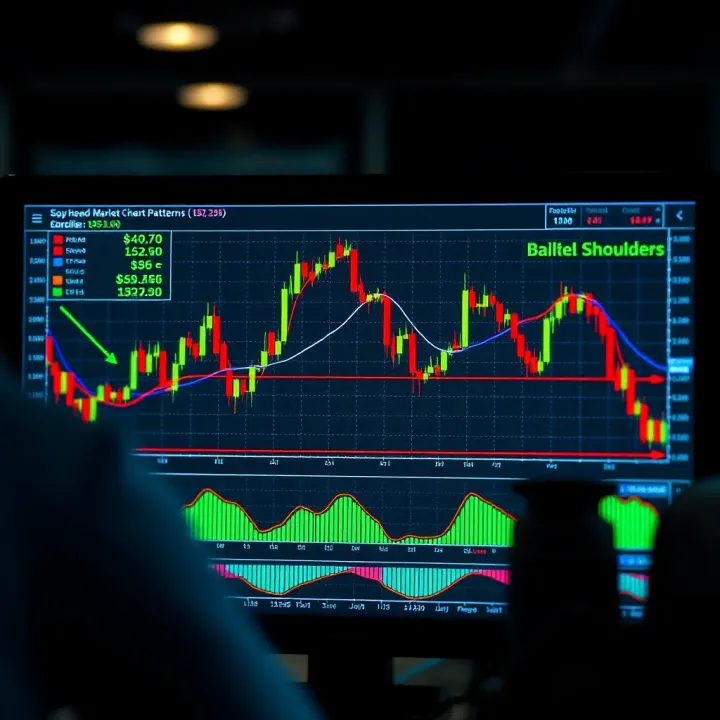
📈 Learn essential market chart patterns traders use to read price moves. Get tips & PDF resources for in-depth analysis & smarter investing decisions.
Based on 10 reviews