

Guide to Candlestick Chart Patterns with PDF Reference
📊 Understand key candlestick chart patterns with detailed analysis and practical tips. Get a handy PDF guide to master technical trading effectively. 📈
Edited By
Emily Clarke
Candlestick patterns give traders and investors a quick way to read market sentiment through price charts. Originating from Japanese rice merchants centuries ago, these patterns still play a big role in analysing price movements across stocks, commodities, and currencies.
Each candlestick represents price action within a specific period—typically one day, but intraday charts use shorter intervals like 5 or 15 minutes. The body shows the open and close, while the shadows (wicks) tell about the highs and lows. Patterns emerge when one or more candlesticks form specific shapes that traders believe signal possible trend shifts or continuations.
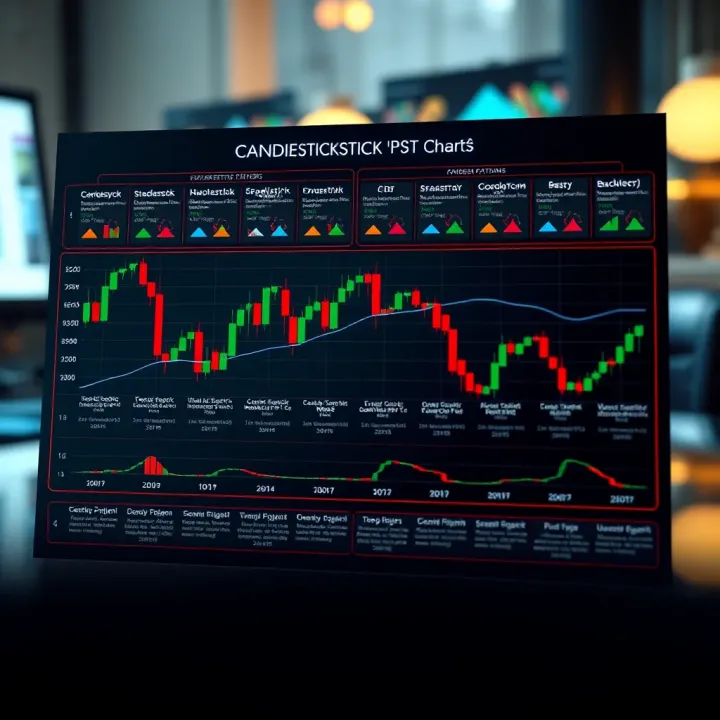
Understanding these formations lets you spot opportunities early. For example, a Hammer pattern often hints at a market bottom, suggesting buyers are gaining strength after a downtrend. On the other hand, a Shooting Star warns of a potential reversal at the top, signalling selling pressure.
Recognising reliable patterns requires practice but improves entry and exit decisions, reducing guesswork in volatile markets.
Here are some essentials to keep in mind:
Single candlestick patterns like Hammer, Doji, or Marubozu reveal immediate market moods.
Multiple-candlestick patterns such as Engulfing, Morning Star, or Three Black Crows indicate more complex shifts.
Volume and confirmation from subsequent price action matter. A pattern alone is rarely enough to act upon.
Candlestick analysis works best when combined with other tools like support/resistance levels and technical indicators.
Traders benefit from carrying a compact PDF summarising these patterns for quick reference during live trading. Such guides condense essential details and visual cues, allowing swift interpretation without hunting through lengthy charts or texts.
This guide aims to clear confusion around common candlestick formations, giving practical insights that suit everyone from beginners to seasoned analysts. Equipped with this knowledge and a handy PDF, you can confidently spot signals, manage risk, and seize trading opportunities with greater clarity.
Candlestick patterns offer traders vital insights into price action and market sentiment. Understanding these patterns helps you spot potential trend shifts early, making your trades more timely and effective. For instance, a hammer pattern appearing after a downtrend often signals a possible bullish reversal, hinting that buyers may soon take control. This guide breaks down these patterns clearly so you can pick them out quickly on your charts.
A candlestick shows price movements within a set time frame, such as a day or an hour. It consists of a body and wicks (or shadows) that extend above and below. The body represents the range between the opening and closing prices, while the wicks show the highest and lowest prices during that period. For example, in an intraday stock chart of Infosys, a long lower wick combined with a small body can indicate strong buying pressure after a dip at that moment.
Understanding this structure helps you gauge daily momentum and price volatility without needing complex indicators. A long body signals strong movement, while a small body suggests indecision among traders.
These four points form the foundation of any candlestick. The 'open' price is where a trading period starts, and the 'close' is where it ends. The highest and lowest prices during this timeframe determine the wicks. Consider Reliance Industries during a volatile trading day: its intraday high might be ₹2,500 while the low is ₹2,450, but the close can be near the opening level of ₹2,480, revealing indecision despite wide fluctuations.
These price points help investors understand whether bulls or bears dominated during that session. They also provide a snapshot of market sentiment and trend strength.
Candlesticks use colours to show whether the price gained or lost in the timeframe. A green (or white) candle signals that the closing price is higher than the opening—bulls controlled the market. Red (or black) means bears pushed prices down.
For traders in Indian markets, colours offer immediate visual cues during fast movements. For example, multiple consecutive green candles on the NSE Sensex chart can suggest a strong buying trend.
Candlestick patterns help you spot when a trend might end or carry on. Patterns like the 'engulfing' signal a possible reversal, whereas 'three white soldiers' show trend continuation. In practice, if you see a bearish engulfing pattern on the Nifty during a rally, it might warn of an impending pullback.
This ability to read market turns can help you protect profits or enter trades at better points.
Good entry and exit points can significantly impact your returns. Candlestick patterns offer precise signals for these moments. For example, a shooting star pattern at a resistance level on a stock like Tata Motors may suggest selling before a downtrend starts.
Using these patterns along with support and resistance levels lets you plan trades that balance risk and reward effectively.
Relying solely on candlestick patterns can mislead, especially in low-volume stocks or volatile markets. They work best when combined with other tools like moving averages or the relative strength index (RSI). For instance, confirming a hammer pattern with a rising RSI strengthens the bullish case.
Always cross-check patterns with volume trends, market news, and broader technical indicators to reduce false signals.
Candlestick patterns are powerful on their own, but pairing them with other analysis methods ensures smarter decisions and better control over trading risks.
By understanding these fundamental aspects, you are better placed to use candlestick patterns effectively in your analysis and trading approach.
Understanding single candlestick patterns is essential for traders aiming to read market sentiment swiftly. These patterns provide quick insights into potential reversals or continuations without waiting for several candles to form, making them highly practical in fast-moving Indian markets such as NSE and BSE.
Standard Doji
A standard Doji occurs when the opening and closing prices are almost identical, resulting in a candlestick with a very small or no body. This pattern signals indecision in the market, where neither buyers nor sellers hold control. For instance, on a volatile stock like Reliance Industries during uncertain times, a Doji could indicate a pause before the next big move. Traders watch Dojis carefully to decide whether to hold or exit positions.
Dragonfly Doji
This variation shows a long lower shadow with the open, close, and high prices being nearly the same. The Dragonfly Doji suggests strong buying pressure after a session dip. Suppose a commodity like gold trades lower intraday but closes near the high; this pattern hints buyers stepping in, possibly signalling a bullish reversal.
Gravestone Doji
Opposite to the Dragonfly, the Gravestone Doji reveals a long upper shadow with open, close, and low near the session low. This suggests sellers tried to push prices higher but failed, often hinting at a bearish reversal. For example, during equity sessions in Infosys shares, a Gravestone Doji at the top of an uptrend can warn traders of an upcoming downturn.

Identifying Hammer
A Hammer forms during a downtrend with a small body near the top and a long lower wick. This indicates that sellers pushed prices down but buyers regained control by close, hinting at trend reversal. Traders often spot this pattern in mid-cap stocks to identify recovery chances.
Recognising Hanging Man
This pattern looks like a Hammer but appears after an uptrend. It signals a potential top as sellers begin showing strength despite a close near the open. For example, a Hanging Man appearing in Tata Motors stock during a sustained rally might caution traders of possible weakness ahead.
Trading Implications
Both patterns warn traders to watch closely for confirmation through following candles before acting. An immediate price rise after a Hammer confirms bullish reversal, while a drop after a Hanging Man strengthens the bearish case. Avoid rushing trades based purely on these patterns without volume support or broader market context.
Pattern Characteristics
The Shooting Star has a small body near the low with a long upper shadow, signalling rejection of higher prices during an uptrend. Inverted Hammer, on the other hand, appears after a downtrend and looks similar but hints at buying interest despite downward pressure.
Role in Price Action
Spotting a Shooting Star atop a rally in Nifty 50 stocks can alert traders to exit or short positions, while an Inverted Hammer during market dips might suggest a bounce soon. These patterns work best when combined with other indicators like volume and RSI to reduce false signals.
Quick recognition of these single candlestick patterns empowers traders to make timely decisions, particularly in the dynamic Indian market environment. Understanding their context within price action increases the reliability of trading signals and manageable risk-taking.
Understanding multi-candlestick patterns is vital for traders because they offer deeper insights into market behaviour than single candles alone. These patterns consist of two or more candlesticks and often reveal significant shifts in momentum or trend direction. When you spot these patterns on charts from Indian exchanges like NSE or BSE, they can hint at upcoming reversals or strong continuations, helping you time entries and exits with more confidence.
Engulfing patterns form when a smaller candlestick is immediately followed by a larger one that completely covers or "engulfs" the previous candle’s body. A bullish engulfing happens during a downtrend when a large green (bullish) candle overtakes a preceding small red (bearish) candle, signalling a potential trend reversal to the upside. Conversely, a bearish engulfing appears in an uptrend when a large red candle swallows the previous small green candle, suggesting sellers are taking control.
These patterns are easy to identify and often regarded as reliable indicators of shifts in market sentiment, especially when they appear near support or resistance levels.
Engulfing patterns alone don't guarantee a reversal but serve as early warnings. Traders often wait for confirmation through the next candle or supporting indicators like volume spikes or moving average crossovers. For instance, a bullish engulfing followed by a strong green candle with above-average volume confirms buyer strength in the Indian stock context.
Using confirmation protects against false signals common in volatile sessions, especially during monsoon or festive seasons when volumes can fluctuate unpredictably.
The Morning Star and Evening Star are three-candle patterns pointing to potential reversals. The Morning Star appears after a downtrend and includes a long bearish candle, followed by a smaller indecisive candle (could be Doji or small-bodied), and then a long bullish candle indicating buyers stepping in.
Evening Star reverses this sequence after an uptrend, signalling selling pressure taking over through a long bearish candle after the indecision.
Both patterns visually represent a market losing momentum before reversing.
These setups are especially useful for timing entry points in Indian markets. A Morning Star near a support zone can signal a good buy opportunity, while an Evening Star near resistance warns of a sell or short position.
To increase accuracy, combine these setups with volume analysis or RSI (Relative Strength Index) showing overbought or oversold conditions. This layered approach helps avoid traps in illiquid stocks commonly found in tier-2 city exchanges.
The Bullish Harami occurs during a downtrend. It has a large bearish candle followed by a smaller bullish candle fully contained within the previous candle’s body. This pattern suggests weakening selling pressure and the possibility of a reversal as buyers start to gain control.
In Indian stock trading, spotting a Bullish Harami in mid-cap stocks could hint at smart money entering quietly before a rally.
The Bearish Harami shows up after an uptrend. A large bullish candle is followed by a smaller bearish candle within the first candle’s body. This indicates decreasing buying power and can warn of a potential price drop.
It’s prudent to watch for follow-up price action or volume decline to confirm the pattern on high-value stocks or commodities like gold.
For example, in late 2023, Reliance Industries displayed a Bullish Harami on its daily chart near ₹2,400, which preceded a price bounce. Such examples highlight how combining pattern recognition with studying market context leads to better decision-making.
Three White Soldiers comprise three consecutive long bullish candles with higher closes, often indicating a powerful upward trend. Conversely, Three Black Crows are three long bearish candles in succession, signalling a strong downtrend.
These patterns can affirm a trend’s strength and help traders stay in profitable trades longer.
However, both patterns can produce false signals if emerging in choppy markets or low-volume stocks typical in smaller Indian exchanges. For instance, a sudden spike in volume due to news can create these patterns momentarily, then reverse quickly.
Confirming with other tools like RSI divergence or moving averages reduces the chance of acting on misleading signals.
Multi-candlestick patterns add significant value by showing the tug-of-war between buyers and sellers over multiple sessions. Used wisely with confirmations, they can greatly improve your trading outcomes in Indian markets.
In the fast-moving world of trading, having quick access to reliable information can make all the difference. Candlestick pattern PDFs serve as a compact resource, allowing traders to identify key patterns instantly without hunting through lengthy texts or multiple screens. By having these patterns visually organised in a single place, traders save valuable time and reduce mistakes during decision-making.
A PDF guide is handy when you are tracking live markets. Imagine you are watching Nifty 50 charts during market hours and spot a potentially important candlestick formation—referring to the PDF swiftly confirms the pattern and its implications. This eliminates second-guessing and enables timely entry or exit decisions. Mobile devices and laptops can host these PDFs, making them accessible whether at home or trading at a café.
Charts speak a visual language. Regularly reviewing a PDF with colourful candlestick illustrations helps strengthen pattern recognition through visual memory. Rather than reading descriptions repeatedly, seeing a Hammer candlestick in multiple examples allows your brain to recall it quickly when analysing charts. This visual reinforcement improves your speed and confidence, especially in volatile markets like commodities or currency pairs.
The PDF format often presents multiple candlestick patterns side-by-side. This layout makes it simple to compare similar formations at a glance—for example, differentiating between a Shooting Star and an Inverted Hammer. Spotting subtle differences helps avoid misinterpretations that often lead to wrong trades. Traders can quickly flick through pages to match real-time movements with known pattern structures.
Customise your PDF by highlighting or bookmarking the patterns that you trade most often. For instance, if you frequently use the Bullish Engulfing or Morning Star patterns for Indian stocks, marking these pages saves time. Using colour codes or notes keeps your reference sharply tuned to your trading style and market preferences.
Pairing your PDF guide with a trading journal enhances learning. When you record trade entries and exits, note which candlestick patterns triggered the action. Over time, this helps you track which patterns work best in various market conditions, especially on platforms like NSE or BSE. Reviewing your journal alongside the PDF sharpens your understanding and refines your strategy.
Candlestick patterns are best remembered when revisited often. Allocate a few minutes daily or weekly to go over your PDF guide, refreshing your knowledge. This habit ensures the patterns remain fresh in your mind and reduces the risk of misreading when under pressure. Regular revision also helps in spotting new variations, keeping your analysis current.
Websites of established stock exchanges like NSE and BSE sometimes provide educational materials, including PDFs on technical analysis and candlestick patterns. These resources are trustworthy and aligned with Indian market specifics. Accessing them guarantees authenticity and relevance, helping traders adjust to local market behaviours.
Several Indian financial education platforms and brokerages offer curated PDFs tailored for Indian traders. These often include pattern explanations contextualised with examples from Indian equities, commodities, or currency pairs. Using such PDFs supports a practical approach, balancing theory with real-market application familiar to Indian traders.
Keeping a candlestick pattern PDF ready can be a game-changer — it bridges the gap between theory and practice, especially when the market moves quickly and decisions must be sharp and timely.
Understanding how candlestick patterns perform in Indian markets helps traders use them effectively. Each Indian stock exchange has unique characteristics that can influence how these patterns play out. Also, integrating candlestick signals with other technical tools can improve the accuracy of your trading decisions.
The National Stock Exchange (NSE) and Bombay Stock Exchange (BSE) are India's two main stock markets. Both provide rich data on equities, but liquidity and volatility can vary significantly between them. For example, blue-chip stocks like Reliance Industries or Tata Consultancy Services on NSE are highly liquid, making candlestick patterns more reliable for these shares compared to smaller, less liquid stocks.
Besides equities, Indian traders actively deal in commodities like gold and crude oil on platforms such as MCX, and currency pairs like USD/INR with the Forex market. Candlestick patterns apply well across these instruments, but you must consider the specific market’s trading hours, volatility, and regulatory environment to interpret patterns accurately.
Moving Averages help smooth price data and reveal trends. Using a 50-day moving average alongside candlestick patterns can confirm whether a bullish engulfing pattern truly signals a trend reversal. If the pattern forms above the moving average, it might indicate stronger upward momentum.
The Relative Strength Index (RSI) measures the speed and change of price movements and determines overbought or oversold conditions. For example, spotting a hammer candlestick at an RSI reading below 30 suggests potential reversal from oversold levels, enhancing the confidence of your trade entry.
Volume Analysis is vital in confirming patterns since volume often precedes price. A morning star pattern appearing with a surge in volume on NSE shares implies greater conviction among traders. On the other hand, low volume during pattern formation might indicate a weak signal and advise caution.
Relying solely on candlestick patterns can lead to overtrading. Jumping into trades just because a pattern appears often causes losses, especially if you ignore other signals or market news. For instance, a bearish engulfing pattern during a strong uptrend may not lead to a reversal but just a short pullback.
Ignoring the market context also creates issues. Economic events, corporate earnings, or RBI announcements drastically affect Indian markets. Candlestick patterns should be seen alongside these factors for better decision-making. For example, during monsoon months, Indian agro-commodity volatility might skew typical pattern reliability.
Lastly, misreading patterns in low liquidity stocks can be costly. Illiquid stocks tend to show erratic price movements, causing false signals. For example, a shooting star formed in a thinly traded mid-cap stock on BSE might look bearish but could result from a few large trades rather than genuine selling pressure.
Combining clear pattern identification with local market knowledge and other indicators improves your chances of successful trades in Indian stock and commodity markets.
📊 Understand key candlestick chart patterns with detailed analysis and practical tips. Get a handy PDF guide to master technical trading effectively. 📈

📊 Master key candlestick patterns for stock & forex trading in Hindi. Includes bullish & bearish types, plus a handy PDF download for easy learning & reference.

📈 Learn to spot key bullish candlestick patterns in Indian and global markets to time your stock purchases better and enhance your trading strategy effectively.

Learn how to read candlestick patterns in stock & forex trading 📈, with clear tips and HD PDF guides for sharper decisions and smarter investments 📚.
Based on 10 reviews