

Understanding the Left View of a Binary Tree
🌳 Discover how to find the left view of a binary tree with clear steps and programming tips. Perfect for students and developers interested in tree traversal.
Edited By
Oliver Hughes
When you first glance at a binary tree, it might look like just a bunch of nodes connected in neat rows. But there's more to it than meets the eye—especially when you peek from the left side. The "left side view" of a binary tree is basically the set of nodes visible if you're standing at the tree's left flank, looking straight across.
This concept isn't just a neat trick; it actually has its uses. For example, in graphical representations or when analyzing data structures for specific traversal patterns, knowing which nodes appear from the left can help you understand the tree's shape or prioritize certain nodes in algorithms.

In what follows, we'll break down what the left side view means, why it's useful, and how you can calculate it efficiently using code snippets you can adapt. The goal is to make this clear—whether you're a student just starting out, an analyst looking to sharpen your skills, or a developer aiming for cleaner tree traversals.
Understanding the left side view opens a new window on binary trees that's both intuitive and practical.
We'll cover traversal techniques like breadth-first search tailored to reveal the leftmost elements, sprinkle in examples that make the concept tangible, and show you how to bring this idea into actual programming scenarios.
By the end of this, you'll be moving past the simple node counting and actually seeing your binary trees from a fresh, insightful angle.
In computer science, a binary tree is a data structure that plays a big role in how we organize data efficiently. Think of it like a family tree, but instead of people, you have data points connected in a way that each point has up to two “offspring” or child nodes. This structure helps us perform operations like searching, sorting, and indexing data quicker than flat lists.
For anyone diving into algorithms or data handling, understanding what a binary tree is forms the foundation. When we talk about the left side view of a binary tree, we’re basically discussing how the tree looks if you stand on its left side and observe which nodes are visible, which can be crucial for debugging or visualizing complex data.
At the heart of a binary tree are nodes and edges. A node is where the data lives — it could be a number, a word, or any piece of information your program needs. The edges are the connections between these nodes, kinda like branches linking family members. Each edge shows how one node is connected to another, making the structure easy to traverse.
Why does this matter? When finding the left side view, knowing how nodes link clarifies which nodes should be visible from the left. For example, if you imagine a node connected to two child nodes, the left child edges guide what you'll see from the left side.
Every binary tree has a root — the topmost node, the starting point where everything begins. Below the root, nodes have children, which can be left or right nodes connected to their parent node. Leaves are the nodes at the very bottom that don’t have any children.
Having a clear handle on root, children, and leaves is important because the left side view always starts from the root and goes down, capturing the first nodes visible at each level. If you picture a family tree, the root is the grandparent, children are the parents, and leaves are the youngest generation with no kids.
Binary trees come in different flavors. Knowing the types helps when working with the left side view because the structure impacts what you see or how you traverse.
Full binary tree: Here, every node has either 0 or 2 children — no node has only one. This balance makes it predictable when you’re scanning from the left side, as you won’t find a node with just one missing child.
Complete binary tree: These trees are filled level by level, left to right, except possibly the last level, which is filled as far left as possible. This guarantee of left-filling means the left side view often captures nodes in a straightforward, level-wise order.
Perfect binary tree: This is a stricter cousin where every internal node has two children and all leaves are at the same depth. It’s the neatest of the bunch and easier to visualize when determining left side views.
Balanced binary tree: Here, the height difference between left and right subtrees of any node is minimal, keeping the tree roughly even. Balanced trees avoid skewing to one side, which means the left side view will give a more uniform set of nodes rather than being dominated by just one path.
Getting familiar with these tree types helps understand what you’ll encounter when trying to extract the left side view. For example, skewed trees (not balanced) might show a very linear left side view, while full or perfect trees provide a richer set of nodes visible from the left.
Understanding these basic ideas sets the stage for deeper dives into how we compute and use the left side view in various programming and algorithm challenges.
When looking at a binary tree, there are multiple ways to examine its structure. The left side view specifically highlights the nodes that are visible when the tree is observed from the left-hand side. This perspective can be quite useful, especially when you want a quick sense of the tree’s shape without diving into every node.
Taking the left side view isn't just an academic exercise. It provides a unique snapshot of the tree’s layout, which is practical when debugging or visualizing data structures in programs. For example, if you imagine a binary tree representing a company’s organizational chart, the left side view would show the leftmost representatives at each level, giving a quick look at certain key branches.
The left side view of a binary tree is composed of all nodes you’d see if you looked directly from the left side, one depth level at a time. Think of it as standing to the left of a tall building: only the outermost parts facing you are visible. In practice, this means for each level of the tree, the leftmost node is recorded.
This perspective is particularly useful because it methodically filters out nodes hidden behind others, presenting a clear outline of the tree’s left edge. To put this in perspective, if you have a binary tree where some nodes only have right children, those nodes will be visible in the left side view if no left child blocks the line of sight at that depth.
It’s easily confused with similar concepts like the right side view, which shows nodes from the opposite side, or level order traversal, which lists all nodes level by level. Unlike full traversals that record every node, the left side view is selective – it focuses only on the nodes that form the tree’s "leftmost spine."
This makes it more concise and helpful for quick checks or visual outlines. For instance, in a debugging session, seeing the left side view can confirm whether the left branch of the tree is correctly structured without sifting through the entire data.
When you work on tree-related algorithms, one common problem is visualizing how nodes connect and whether data has been inserted or deleted correctly. The left side view serves as a handy shortcut for inspections.
Instead of printing out every node, which can get messy, you can look at just the left side view to check the structure’s backbone. If expected nodes are missing from this view or unexpected ones appear, it’s a clear sign that there may be bugs in tree manipulations.
For example, when implementing a binary search tree, verifying the left side view after insertions helps ensure nodes on the left branch maintain the correct ordering.
Visualizing data is not limited to charts or graphs—sometimes, the shape and structure deliver valuable insights. The left side view gives a pared-down silhouette of a tree, simplifying complex structures.
It helps especially in environments with limited space or when you need to present tree summaries to others. Say you’re explaining how a decision tree works during a team meeting; showing the left side view can quickly convey the main decision paths on the left without overwhelming your audience with every detail.
Understanding the left side view helps you get a quick pulse on a binary tree’s structure, cutting through complexity to the essential outline.
In short, the left side view is a practical tool for both developers and learners. It highlights crucial parts of a binary tree, aiding in clear visualization and efficient debugging. Keeping this perspective in mind will make your work with trees more straightforward and insightful.
When you want to find the left side view of a binary tree, traversal techniques are your best friends. They help you systematically explore all the nodes, ensuring you don't miss which ones are visible from that left angle. Without an effective traversal method, you might end up with incomplete or incorrect views.
These traversal pathways serve more than just exploration; they help identify the 'first-seen' nodes at every level of the tree, which is exactly what the left side view requires. Two widely used methods fit this purpose well: Depth-First Search (DFS) and Breadth-First Search (BFS). Each method lets you approach the tree's layout with a slightly different strategy, impacting both the complexity and efficiency of your solution.
Let's dive deeper into how these two work and what makes them tick.
DFS often uses preorder traversal, which means visiting the root node first, then moving to the left child, and finally the right child. This order is crucial because it naturally aligns with the left side perspective you want to capture. By exploring the left subtree before the right, you ensure that nodes on the left get discovered first.
In practice, this means the first node you hit at each depth level during DFS preorder is exactly the one seen from the left side. For example, if you look at a tree representing a company's hierarchy, starting from the CEO (root), moving down the leftmost employees in each layer gives you the visible face of the company’s structure.
Keeping track of depth is key to knowing when a node should be included in the left side view. As DFS goes deeper, it records the current level or depth. When it reaches a node at a new depth for the first time, that node is visible from the left and should be captured.
Think of it like climbing a ladder: the first person you spot standing on each rung is the one you write down. If DFS finds a node at depth 3 that it hasn’t seen before, this node gets added to your left side list right away.
BFS, in contrast, explores nodes level by level from top to bottom. It typically uses a queue to handle this breadth-first approach. Starting with the root node, it checks all nodes at the current level before moving on to the next.
This straight-on approach is quite natural for capturing the left side view. By sweeping side to side at each level, BFS can pinpoint the leftmost node easily since it's the first node popped out of the queue at every depth.
The trick with BFS is simple: at every level, the very first node you dequeue (process) is the leftmost node visible from the left side view. This guarantees that as you progress through the tree, you don’t miss those key nodes.
Imagine a classroom where you're taking attendance row by row from the left side. The first student your eyes land on per row is the one highlighted in your list – essentially what BFS does with the left side view.
Side note: Both DFS and BFS have their places. DFS can use less memory on wide trees but might be trickier to implement with depth tracking. BFS is straightforward in level detection but can balloon in space usage if the tree is wide.
Understanding these traversal techniques gives you a solid toolkit to extract the left side view of any binary tree confidently, whether it’s in coding challenges, debugging, or visualizing hierarchical data structures.
Computing the left side view of a binary tree is more than just a coding task — it's about carefully choosing the right traversal strategy and managing data effectively. This guide breaks down the process into manageable stages so you can not only understand the logic but also implement it practically, whether you're debugging your code or visualizing a tree structure. By walking through step by step, you get to see how theoretical concepts play out in real scenarios.
Before diving into traversal, setting up the right data structures makes all the difference. Typically, you'll start with a list or an array to store the nodes visible from the left side. For BFS, a queue is essential to keep track of nodes at each level. For DFS, maintaining a simple list that tracks which depth levels are already visited helps avoid redundant processing. Think of this initial setup as laying out the chessboard before the game begins — everything must be positioned to keep the subsequent steps smooth and error-free.
For example, initializing an empty list called left_view and a queue (like Python’s collections.deque) gives you a clean slate to add leftmost nodes as you traverse.

Handling edge cases upfront saves you from headaches later on. Consider what happens if the tree is empty—your function should return an empty list, not crash. Similarly, a tree with just one node means the left side view is just that single node.
Other cases include highly skewed trees (nodes at all right children only), where leftmost nodes might be sparse. Your algorithm has to gracefully handle such cases without losing track of the current level or throwing exceptions. Always think, "What if this input is the oddball?" — to make your function bulletproof.
DFS approach uses a recursive helper function that travels down each branch of the tree, prioritizing the left child. The main concept here is to traverse pre-order (node, left, right) while keeping tabs on the depth level. If the current depth matches the size of your left_view list, you add the node’s value — this signals you’ve reached a new level.
This method is neat because you get a natural way to explore tree branches and record nodes from the left without extra bookkeeping. For example, in Python, you might define a helper function inside your main method, passing the current node and depth, then returning early if the node is None.
Tracking which levels you’ve already visited is vital to ensure only the first (leftmost) nodes get added. This is typically done by comparing the current depth with the length of left_view. When they’re equal, you add the current node’s value; otherwise, you skip it.
This technique prevents overwriting the leftmost value with nodes deeper down on the right side. Think of it like taking a snapshot of your tree from the left — you want just the first face that appears at each level, not the crowd behind.
BFS uses a queue to traverse nodes level by level. Initially, the root node goes into the queue. For each level, you process all nodes currently in the queue before moving to the next. This level-order traversal naturally reveals the leftmost nodes because the first node dequeued at every level is the leftmost one.
Managing the queue means enqueueing the children of the current nodes in order: left child first, then right. This enforces that when you dequeue nodes in the next iteration, you encounter the leftmost nodes before any others.
Think of the queue as a line of people where the leftmost in the audience always gets served first at each level.
While dequeuing nodes levelwise, simply take the first node in that level’s batch for your left side list. As you proceed through the levels, this node gets recorded into your results.
For example, if your queue at one level contains nodes [Node7, Node14, Node29], Node7 is the leftmost and gets added to the visible list. Subsequent nodes at that level are ignored for left side view, ensuring you capture just the left edge.
This approach is straightforward and pairs well with BFS’s natural grouping by levels, making implementation tidy and intuitive.
Remember, the key difference here is BFS handles nodes layer by layer, while DFS goes deeper down branches before moving sideways.
By following this step-by-step method, you should be able to implement the left side view efficiently and confidently, regardless of tree shape or size. The choice between DFS and BFS depends on your specific needs, but both methods hinge on carefully initializing your data structures and proper tracking of nodes at each level to show the tree’s left silhouette clearly.
When it comes to figuring out the left side view of a binary tree, choosing between Depth-First Search (DFS) and Breadth-First Search (BFS) isn't just a matter of preference. Each approach has its own quirks that affect performance, ease of implementation, and suitability based on the specific problem at hand. This section takes a close look at how these traversal methods stack up, giving you practical pointers to decide which fits your use case.
Both DFS and BFS walk through every node in the tree at least once to ensure the leftmost nodes at all levels are captured. This translates to a time complexity of O(n), where n is the total number of nodes in the tree. So, in terms of speed, neither one has a clear upper hand; they're quite comparable there.
But the story doesn’t end with just raw numbers. If your tree's structure is wildly unbalanced or very deep, DFS might pay a higher cost due to longer recursive calls or deeper stacks. BFS, working level by level, can sometimes handle these scenarios with more predictable behavior.
Remember: While complexity gives a theoretical idea, real-world performance often depends on tree shape and available memory.
This is where DFS and BFS often part ways. DFS, particularly when implemented recursively, keeps track of the call stack which, in the worst case (such as a skewed tree), can grow up to O(h) where h is the height of the tree.
BFS requires extra space to maintain a queue that holds nodes at each level. At peak, this queue could have up to O(w) elements, where w is the maximum width of the tree (the maximum number of nodes at any level).
For example, a perfectly balanced tree with a large breadth might cause BFS to consume quite a bit of memory, whereas DFS still only stores the depth path. On the other hand, in a very deep but narrow tree, DFS’s recursive stack can balloon.
Understanding these trade-offs is crucial when memory constraints are tight, such as on embedded systems or when handling very large trees.
DFS is a good call when your primary focus is on depth and you want a straightforward solution without managing extra data structures like queues. It tends to be simpler to implement recursively, especially if you enjoy clean, elegant code.
If the tree height is reasonable and not prone to deep unbalanced branches, DFS can be more memory-efficient and faster in practice.
Think of DFS like digging deep quickly: it’s great if you want to reach the leftmost nodes without worrying about everyone in the same level.
BFS shines when you want to handle nodes level by level and avoid the pitfalls of deep recursion. Because it processes nodes breadth-wise, BFS naturally gives you the leftmost node per level first, which fits the requirement of the left side view perfectly.
For trees that are balanced or have a known structure, BFS can be more intuitive and easier to debug. It also offers flexibility if you later need to extend your program to, say, print rightmost nodes or nodes at each level.
In scenarios where your application involves real-time systems or breadth-wise data interpretation, BFS might simply be the safer bet.
Both DFS and BFS methods have their place. Your choice depends on tree structure, memory availability, and how you prioritize simplicity versus control. Keep these considerations in mind, and the left side view will be just a traversal away.
When working with the left side view of a binary tree, several common challenges tend to pop up, especially for beginners. Understanding these hiccups in advance helps avoid pitfalls and makes your code more reliable and clean. These challenges often stem from specific tree structures or unusual cases that standard approaches might not handle well.
Mastering how to navigate these obstacles not only boosts your coding confidence but also improves your algorithm’s robustness in real-world applications.
Skewed trees represent an interesting case for the left side view, as the tree leans heavily either to the left or right. A left-skewed tree resembles a linked list bending entirely to the left, meaning every node only has a left child. Conversely, a right-skewed tree tilts completely right with nodes only as right children.
In a left-skewed tree, extracting the left side view is pretty straightforward—you will see every node from top to bottom since they all lie along the left. But the right-skewed tree is trickier; even though all nodes are on the right, from the left side you only glimpse the top node because the nodes veer away from that viewpoint.
To tackle this, tailor your traversal method to check node existence carefully:
For left-skewed, the left side view equals all nodes collected during traversal.
For right-skewed, ensure your method doesn’t assume the left child will always be present; you may have to peek at right children during traversal to avoid missing nodes.
This strategy keeps your solution solid even when the tree's shape is unusual, avoiding common bugs like missing out on nodes or miscalculating levels.
Null or empty trees form another basic but vital edge case to think about. An empty tree means the root is null, implying no nodes exist. Many beginners sometimes skip checks for this, leading to runtime errors or unexpected results.
The practical takeaway? Always start your function with a validation like if (root == null) return [], immediately returning an empty list or equivalent. This simple guard clause prevents your code from crashing and simplifies downstream logic.
Moreover, handling these empty cases explicitly makes your code easier to maintain, especially when integrating with larger systems where tree input might be dynamic or unpredictable.
Without accommodatig these scenarios, you risk your implementation failing silently or producing confusing outputs.
By anticipating and solving these common challenges—skewed trees and null inputs—you set yourself up for more robust and error-resistant programs when working on the left side view of binary trees. Don’t let these hurdles trip you up; understanding their quirks is half the battle won.
The left side view of a binary tree isn't just an abstract concept reserved for theory—it plays a real role in various practical scenarios. Understanding this perspective can help software developers, data analysts, and students better visualize and interact with tree structures. For example, when dealing with hierarchical data, the left view provides a snapshot that highlights how data cascades down from the root to the outermost left edges. This can simplify interpretation without diving into every node in detail.
In coding challenges and interviews, identifying the left side view often sharpens a programmer's intuition about tree traversal and depth handling. Meanwhile, in debugging, it can serve as a sanity check against unexpected tree mutations, giving clues about which parts of the structure are visible or hidden from a given vantage point.
The left side view also proves useful in educational tools, where visual learners need a straightforward way to grasp how different traversals reveal aspects of a tree. In the next sections, we'll go through some specific practical areas where this view offers real benefits.
When working with large and complex trees, clutter and overlapping nodes can hide underlying structure. Tree visualization tools that highlight the left side view help cut through this noise by presenting only the nodes visible from the left angle, simplifying the overall picture. This selective view reduces cognitive load, making it easier to comprehend the shape and branching pattern without extraneous details.
Practical visualization software like Graphviz or custom-built tools often implement features that allow users to toggle views, including the left side perspective. By extracting and showing just the left-side nodes, users get a quick grasp of the tree’s depth and spread. This approach is invaluable when comparing trees or identifying anomalies like missing children or unbalanced branches.
Essentially, these tools turn what could be a tangled web of nodes into a tidy lineup, allowing developers and data analysts to assess tree health and complexity faster and more intuitively.
Verifying the integrity of binary trees in software systems is no small task. Bugs can come from incorrect node insertions, deletions, or pointer errors that disrupt expected structure. The left side view acts as an extra line of defense during testing and debugging by giving a clear, concise representation of the tree's outer boundary.
For instance, if you expect a certain sequence of nodes visible from the left, but your left side view reveals discrepancies, it signals something’s off—maybe a subtree got misplaced or a pointer wasn’t updated correctly. This quick check is especially helpful in systems where binary trees manage crucial operations, like database indexing or memory allocation.
Automated test suites can integrate left side view verifications as part of regression tests to catch structural changes early. This avoids silent errors that might not crash the program immediately but cause faulty behavior down the line.
By focusing on the left side view, developers gain a practical debugging tool to verify tree stability and catch subtle bugs that might otherwise slip through traditional tests.
In sum, using the left side view as a lens both in visualization and debugging makes working with binary trees more manageable, accurate, and intuitive.
Good code samples here don't just illustrate the idea; they highlight important details like managing tree traversal, keeping track of depth, and maintaining the first nodes per level. These snippets also prepare you for real-world scenarios, where you might have to tweak or even optimize the basic approach.
Python makes implementing Depth-First Search (DFS) neat and straightforward thanks to its support for recursion and clean syntax. DFS is a natural fit for capturing the left side view because it explores node branches down to their leaves before backtracking, allowing you to grab the first node at every depth level. Typically, a recursive function maintains the current depth and compares it with previously visited levels; when you hit a new depth, you add that node to the result list.
This method is especially useful when memory is tight, and you want to avoid queue overhead. For instance, if you're dealing with a very deep tree, recursion might get heavy, but Python's tail recursion isn't optimized, so be mindful of stack limits.
Breadth-First Search (BFS) involves exploring nodes level by level, which directly aligns with picking the leftmost node at each level for the left side view. In Python, using a collections.deque offers an efficient queue to handle this. You enqueue the root, then for each level, process all nodes and pick the first one to record.
BFS is intuitive when you want to visualize or process nodes by layer—like checking each floor of a building before heading up. However, it tends to use more memory since it stores all nodes at a current level. This approach is great when you expect somewhat balanced trees or need breadth insight.
In Java, implementing DFS for the left side view means writing a recursive method that passes the current node and depth as parameters. Java's strict typing and absence of built-in data structures like Python's list (without imports) means you rely on ArrayList or other collections to store results. The logic remains the same: when depth exceeds the size of the result collection, add the current node’s value.
This approach suits applications where you want tight control over memory and call stack—common in enterprise systems using Java. One thing to watch for is stack overflow with very deep trees, so iterative DFS might sometimes be preferred.
Java's LinkedList is a common choice for implementing queues used in BFS. The process is straightforward: you enqueue the root, then loop while the queue isn’t empty, processing nodes level by level. For each level, the first node you remove from the queue is the left view node for that level.
This approach shines when clarity and maintainability matter, especially in environments where multithreading or large-scale processing demands non-recursive solutions. Although it uses more memory, the code is easy to understand and debug, which developers often appreciate.
Tip: Whether using DFS or BFS, make sure your code handles edge cases like empty trees or trees skewed heavily to one side. Both languages let you do that cleanly, and well-prepared code avoids nasty runtime errors.
From beginners trying their hand at binary trees to analysts looking to optimize views in large datasets, having these easily adapted examples in Python and Java is a practical gain. Looking at these real implementations side by side lets you pick the right tool for the job and deepen your understanding.
When working with binary trees, especially when extracting the left side view, it's easy to get caught up in just getting the job done. But pushing beyond the basics by applying optimizations and advanced methods can drastically improve both speed and resource use. This is crucial when dealing with large datasets or in performance-sensitive applications like trading algorithms or financial modeling tools.
Optimizations might focus on reducing memory footprint or choosing the best approach between recursive and iterative methods. Tweaking these elements can mean faster runtimes and less strain on system resources, which matters a lot when you're running repeated queries or handling massive trees.
Reducing auxiliary space is about cutting down on the extra memory your algorithm needs beyond the tree itself. When you run a depth-first search (DFS) recursively, each call adds a layer to the call stack, which stacks up with bigger trees. On the flip side, a breadth-first search (BFS) uses a queue that can grow quite large if the tree spreads wide.
To give an example, consider a huge, complete binary tree used in a financial analysis tool to categorize investment options by risk tiers. If your BFS queue holds all nodes at one level and millions exist there, you're soaking up tons of memory. One way to optimize is to process nodes in batches or prune unseen nodes earlier if your goal is strictly the left view.
Memory-saving approaches aren’t just nice to have; in real-world scenarios, they prevent crashes or freezes caused by running out of space.
Both iterative and recursive methods have their followers. Recursive DFS is clean and easy to write but can lead to stack overflow if the tree is very deep. On the other hand, iterative methods use explicit stacks or queues which you control, avoiding some of the system limits inherent to recursion.
Iterative solutions for BFS using queues are often straightforward and handle wide trees better, as they're designed to touch nodes level by level. Recursive DFS shines when you want a neat, short code and your trees aren't hiking to crazy depths.
Let’s say you're coding a financial decision tree tool for mobile devices. Choosing iterative methods to craft the left side view might preserve battery life and reduce app crashes compared to recursion-heavy code.
| Method | Pros | Cons | | Recursive | Simple to implement and read | Risk of stack overflow | | Iterative | Better control over memory | Code can be more complex |
By weighing these trade-offs, you can pick a method matching your situation. When performance and resource limits are tight, iterative methods often win; if you want faster development and the tree size is manageable, recursion may be enough.
In summary, optimizing for memory and choosing between iterative and recursive approaches are key strategies when working on the left side view of a binary tree. These choices directly impact your program’s efficiency and reliability, especially in environments where system resources are a limiting factor.
When diving into any technical topic, the frequently asked questions (FAQs) section serves as a handy resource to clear up common doubts and bring more clarity. In the context of the left side view of a binary tree, FAQs help readers break down specific concerns and nuances without wading through dense explanations. This section is especially useful for programmers and students who want quick yet thorough clarity on how subtle changes or different concepts interact with the left side view.
FAQs also highlight practical challenges one might face while implementing algorithms or while visualizing the tree. For example, understanding whether the left side view shifts after node insertion or deletion can save countless debugging hours. Overall, FAQs keep the information accessible and relevant, allowing users to apply the concepts confidently in real-world software scenarios and coding interviews.
Impact of insertion and deletion: Yes, the left side view can change if you alter the tree's structure by adding or removing nodes. Think of the binary tree as a living organism—any tweak can shift which nodes appear on the left side from a viewer’s perspective.
For instance, if you insert a new node as a left child in a previously empty spot on the leftmost path, that node might now become visible in the left side view. On the flip side, if you delete a node that was part of the left edge, the next visible node to the right could become the new left side view node at that depth.
This dynamic behavior means that the left side view is not fixed; it depends heavily on the current layout. In practice, after an insertion or deletion, recalculating the left side view using DFS or BFS traversal methods is necessary to update the visible nodes list accurately.
Keep in mind: Even small structural tweaks can subtly shift your tree’s left profile, so always verify the view after any modification.
Differences explained: This is a common point of confusion. The left side view and the left boundary traversal are related but distinct concepts.
Left Side View: This shows nodes you can see when looking directly from the tree's left side. It picks the first node encountered at each level during a level order traversal from left to right. It doesn’t necessarily include every node on the far left edge, especially if some nodes aren’t visible due to others overshadowing them.
Left Boundary Traversal: This involves traversing from the root down to the leftmost leaf, including all nodes on that extreme left boundary, such as the root, left children, and the leftmost leaf. This traversal is more exhaustive along the edge and includes nodes that might not be in the left side view if they’re obscured by deeper branches.
To put it simply, the left side view is what you see from afar on the left, a silhouette of the tree. The left boundary traversal is like walking down the actual edge, touching every node along the path.
For example, in a tree where the left child’s right subtree extends further than the left child itself, the left side view might skip some boundary nodes you’d otherwise include in a left boundary traversal.
Understanding these differences helps programmers choose the right approach for visualization, testing, or specific algorithm designs where visibility and traversal order matter.
Wrapping up, the summary and final thoughts section is like the last pit stop on a long journey—it helps you catch your breath and see the road you've traveled. For those digging into the left side view of a binary tree, this part ties everything together and reminds you why it matters. It’s not just about theory but practical use, like spotting bugs in code or visualizing data in a way that makes sense at a glance. Without this recap, it’s easy to miss the forest for the trees.
The left side view of a binary tree shows the nodes you’d see if you peeked at the tree straight from its left side. This means capturing the first visible node at each level, ignoring those hidden behind others. It’s important because it offers a quick snapshot of the tree's structure, making complex trees easier to understand and debug. Imagine you have a family tree diagram—looking from the left helps you instantly spot the oldest ancestors at each generation.
Two main ways to calculate this view stand out: Depth-First Search (DFS) and Breadth-First Search (BFS). DFS dives deep down the tree, tracking the first node at each depth during a preorder traversal. BFS takes a more level-by-level approach, grabbing the first node at each level using queues. Knowing when to use either is like choosing the right tool for the job; DFS suits recursive solutions, while BFS shines when you want clarity per level, especially in wide or balanced trees.
Putting theory into practice solidifies understanding and sharpens skills. Tackle coding challenges on platforms like LeetCode or HackerRank that ask for the left side view or similar tree traversals. Don’t just stop at one approach; try both DFS and BFS variations to see which fits your style or problem constraints better. Practicing this way turns abstract concepts into muscle memory and prepares you for real-world programming problems, like optimizing data queries or debugging tree algorithms in software projects.
Remember, understanding and applying the left side view isn’t just academic—it's a practical skill that helps in visualizing tree structures and solving common coding challenges effectively.
By keeping these points in mind and actively experimenting, you’ll get a solid grip on the left side view of binary trees—making your data structures toolkit that much stronger.
🌳 Discover how to find the left view of a binary tree with clear steps and programming tips. Perfect for students and developers interested in tree traversal.
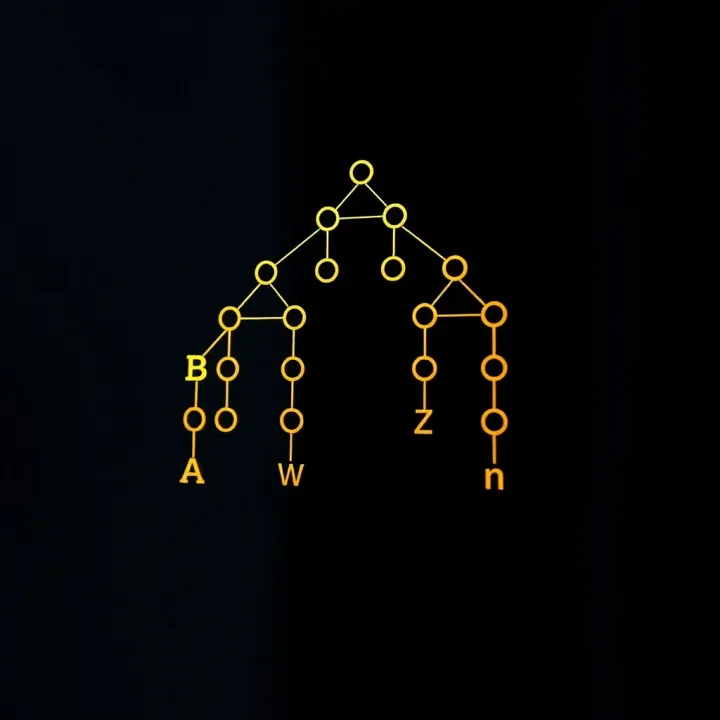
Explore the maximum depth of binary trees 🌳, with clear explanations, recursive & iterative methods, complexity insights, coding examples, and real-world uses.
Explore how to find the max height of a binary tree 🌳, its importance in CS, and methods to calculate it with examples and algorithms. Learn tree basics!

Explore how to find the lowest common ancestor in binary trees 🧑💻, compare algorithms ⚖️, and see practical examples for learners and pros in India 🇮🇳.
Based on 15 reviews