
Optimal Binary Search Trees Explained
Explore how optimal binary search trees work ⚙️ in algorithms design, with examples, construction techniques, and key applications for computer science learners and pros 💻.
Edited By
Oliver Bennett
Binary search trees (BSTs) form the backbone of many efficient programming algorithms and data structures. Their ability to organise data in a sorted manner allows quick searching, insertion, and deletion—operations vital for applications ranging from database indexing to memory management.
A BST is defined by a simple rule: for any given node, values in its left subtree are smaller while those in its right subtree are larger. However, the actual form of a BST can vary widely depending on how this structure manages balance and performance under different workloads.

Different types of BSTs aim to address challenges like excessive height growth, which can degrade search efficiency from logarithmic time to linear in worst cases.
Here's a quick overview of BST variants you'll commonly encounter:
Classic BST: The basic form without balancing. Easy to implement but may become skewed, impacting performance.
Balanced BST: Maintains height balance to ensure operations stay efficient. Examples include AVL trees and Red-Black trees.
Self-Balancing BST: Automatically performs rotations and restructuring during insertions and deletions to maintain balance.
Specialised BSTs: Variants like Splay trees adapt based on access patterns to optimise frequently accessed nodes.
Practically, choosing the right BST depends on the use case. For example, AVL trees provide faster lookups but involve more rebalancing during updates, suitable for read-heavy scenarios. Red-Black trees strike a balance, making them popular in standard libraries and software like Linux kernel or Java’s TreeMap.
Understanding these distinctions helps you pick an optimal tree structure for your specific application, be it handling large-scale trading data, managing real-time updates, or developing student projects involving datasets.
Next, we will explore each type more closely, examining their characteristics and ideal contexts for use.
Binary Search Trees (BSTs) form the foundation of many efficient data structures used in programming, especially when quick data retrieval and management are needed. Their structured nature helps maintain sorted data, enabling fast search, insert, and delete operations. Understanding the introductory concepts of BSTs is critical for grasping how different BST types work and why they matter.
A Binary Search Tree is a type of binary tree where each node holds a key, and every node's left subtree contains keys smaller than the node's key while the right subtree contains keys greater than it. This property allows BSTs to maintain sorted order, which is useful for various search and sorting tasks. For example, if you store stock prices in a BST, you can quickly find the next highest or lowest price relative to a value.
The key rule for BSTs is the ordering property: for every node, all values in the left subtree are less, and all values in the right subtree are greater. This strict order facilitates efficient search operations. Because of this, BSTs naturally avoid random placement of nodes unlike simple binary trees, allowing faster lookups. Also, duplicate values are usually avoided or handled by specific rules to maintain correctness.
BSTs offer an efficient way to organise and retrieve data, making them vital in areas ranging from databases to in-memory indexing. For instance, an Indian e-commerce platform can use a BST to quickly manage product IDs, enabling swift retrieval of product records during searches. While arrays or lists might require linear time to find an element, BSTs can often reduce this to logarithmic time, improving user experience during peak sale seasons.
Adding a new element in a BST involves traversing the tree from the root, deciding at each node whether to move left or right based on the ordering property, until an appropriate empty spot is found. Deletion is a bit trickier; it may require rearranging nodes to maintain the BST property, especially if the deleted node has two children. Managing these operations efficiently is essential for applications like maintaining real-time stock ticker data.
Searching in a BST is straightforward due to its ordered nature. Starting at the root, you compare the target key with the current node, moving left if the key is smaller and right if greater, until you find the key or hit a null leaf. This approach significantly cuts down search time compared to unsorted data collections, which is why it's beneficial for applications like verifying user information in digital wallets.
Tree traversal is about visiting all the nodes systematically. Common methods include inorder, preorder, and postorder traversals. Inorder traversal visits nodes in ascending order, which is handy for producing sorted outputs, such as listing all customers' transactions in order. Preorder and postorder have their uses too, like reconstructing trees or processing hierarchical data.
Understanding these fundamentals equips you to pick the right BST type for your needs and implement efficient data-driven solutions from fintech apps to inventory management systems.
Classic Binary Search Trees (BSTs) form the foundation of various advanced tree structures. These trees organize data so that for any node, the left child's value is less, and the right child's value is greater, enabling efficient searching. Despite their simplicity, they play a key role in teaching and understanding fundamental tree operations such as insertion, deletion, and traversal. For learners and professionals alike, getting a solid grasp of classic BSTs helps in grasping the challenges and innovations found in more complex variants.
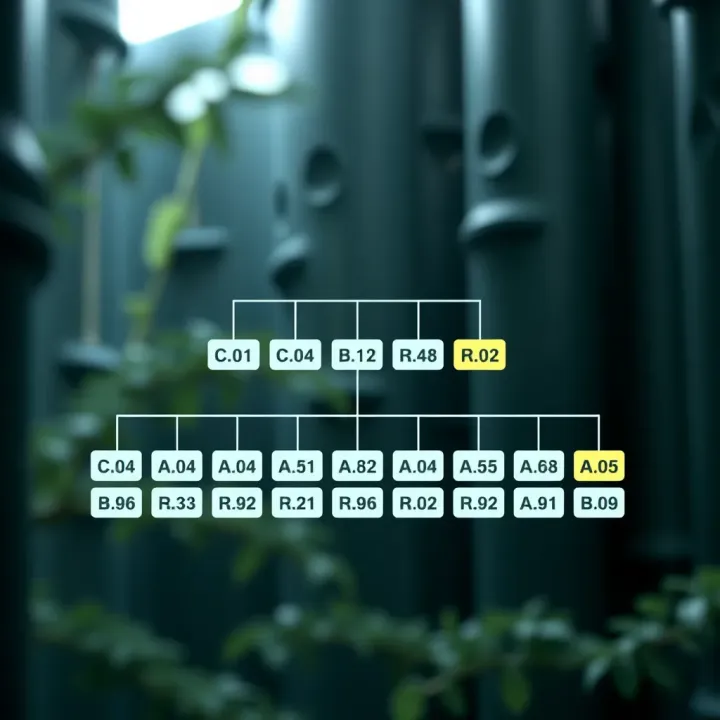
One major feature of classic BSTs is that they are not self-balancing by design. This means the tree's shape depends heavily on the order of insertion and deletion of elements. Over time, if elements are added in sorted or nearly sorted order, the tree tends to skew heavily to one side, forming a shape similar to a linked list rather than a balanced tree. This unbalanced nature drastically affects performance.
For example, searching for an element in a well-balanced BST typically takes about O(log n) time, where n is the number of nodes. However, for an unbalanced BST leaning heavily to one side, the search operation degenerates to O(n), similar to a linear search. This loss in efficiency is significant, especially with large data sets.
Consider a scenario where an investor maintains a BST to store their portfolio based on stock codes. If stocks are added in alphabetical order without balancing, the tree becomes skewed. Searching for a particular stock can take as long as scanning through all stocks, reducing the benefit of using a BST.
On the other hand, a fresh graduate preparing for competitive exams might use BSTs for managing question banks. If questions are categorised poorly resulting in unbalanced insertion, navigating the question bank slows down. Both cases show practical consequences of the unbalanced structure in everyday applications.
The main limitation is clearly the lack of automatic balancing which causes inefficient worst-case performance. Basic BSTs don’t guarantee predictable operation times, making them unsuitable for systems with stringent time constraints like high-frequency trading platforms or real-time analytics.
Additionally, basic BSTs don’t efficiently handle duplicate values or bulk data insertions without risking deeper trees. This deficiency necessitates either careful data ordering or enhancing BSTs with balancing mechanisms, which leads to balanced or self-balancing BSTs described later.
The simplicity of classic BSTs makes them great for learning and smaller tasks, but their unbalanced nature impacts performance severely in larger or critical applications.
In summary, classic BSTs offer straightforward implementation and concept clarity but have noticeable limitations when it comes to performance in practical, large-scale uses. Understanding these traits helps in deciding when to stick with basic BSTs or move to more advanced tree structures.
Balanced Binary Search Trees (BSTs) address performance issues that arise from unbalanced structures. When a BST leans too heavily on one side, it can turn into a near-linear chain rather than a tree. This weakness slows down search, insertion, and deletion operations, impacting efficiency especially when dealing with large data sets typical in financial trading or stock analysis platforms.
Unbalanced BSTs often degrade to linked lists, making operations like searching take linear time instead of log time. For example, if you're analysing stock price trends using an unbalanced BST, each search could potentially examine every entry without any shortcut, slowing down decision-making. This delay itself can cost traders their edge, especially when milliseconds count.
Balanced BSTs maintain their height close to log(n), which guarantees operations like search, insert, and delete complete in logarithmic time. This results in rapid and consistent performance, crucial when processing large volumes of data or real-time transaction records. By keeping the tree balanced, programmers ensure predictability and efficiency, essential for applications like portfolio management systems or algorithmic trading.
AVL trees maintain balance by keeping the height difference between left and right subtrees at no more than one. This strict balancing makes AVL trees ideal for situations where search operations far outnumber insertions or deletions, such as static analysis of market datasets. For instance, historical price databases that require fast lookups but seldom updates benefit greatly from AVL trees’ quick search capabilities.
Red-Black trees use a colour property for each node to regulate balancing, which is less strict than AVL but allows faster insertion and deletion. This makes them suitable for dynamic environments like live trading platforms where new data streams in continuously. Their ability to balance efficiently without heavy restructuring ensures that updates happen in real time without sacrificing search speed.
Splay trees adjust their structure by moving recently accessed elements closer to the root, favouring access patterns common in caching or database indexing. Treaps combine BSTs with heap properties, using random priorities to maintain balance, which makes them useful in scenarios requiring probabilistic balancing and fast average-case performance. Both provide flexibility where strict balancing is less critical but adaptive performance matters.
Balanced BSTs are essential for ensuring data structures stay efficient under varying workloads, especially when rapid data access directly impacts decision speed and outcomes.
In summary, choosing the right balanced BST depends on the application’s update frequency and access patterns. AVL trees suit read-heavy tasks, Red-Black trees excel with frequent updates, while splay trees and treaps offer adaptable performance for specialised needs.
Specialised binary search tree (BST) variants address unique challenges beyond basic search and insertion. These trees adapt the BST structure to specific problems like range queries, efficient traversal, or application requirements. Understanding these special variants helps in choosing the right data structure for advanced tasks where classic BSTs may fall short.
Structure and Purpose
Segment trees and interval trees extend BSTs to manage intervals or segments efficiently. A segment tree stores aggregate information, such as sums or minimums, over ranges of an array, while interval trees focus on overlapping intervals. Both maintain a balanced tree-like structure with nodes representing specific ranges or intervals.
Use Cases in Range Queries
They excel in queries over a range or interval, such as asking for the sum of values between indices 10 and 50, or detecting if a time booking overlaps with an existing appointment. For example, a stock analyst may use segment trees to quickly calculate the highest and lowest stock prices within any time window. Interval trees are vital in GIS, scheduling, and genome mapping, where overlapping intervals must be found rapidly.
Concept of Threading
Threaded binary trees modify null pointers in BST nodes to point to the in-order predecessor or successor, creating threads. This threading avoids the need for stacks or recursion during traversal. Instead of leaving null pointers empty, they serve as links to nodes that can be visited next.
How It Improves Traversal
This approach makes traversing the BST more efficient in memory and time, especially for in-order traversal. For instance, in an application where resources are tight, like embedded systems, threaded trees reduce overhead significantly. The traversal becomes iterative rather than recursive, enhancing performance without affecting the BST’s search properties.
Implementing BST Types in Programming
When implementing BSTs, programming languages like C++, Java, and Python provide the basic tools. Specialised variants require additional logic — such as handling segment ranges or threading pointers. Popular libraries or frameworks may already contain implementations, but understanding the underlying principles is crucial for debugging or optimisation.
Choosing the Right BST for Your Application
Choosing the most suitable BST variant depends on the use case. Balanced BSTs are ideal for general dynamic data where quick insertion and deletion matter. When the application includes range queries, segment or interval trees serve best. Threaded trees fit scenarios where traversal speed and memory are critical. Evaluating the problem’s nature before implementation saves time and enhances efficiency.
Specialised BSTs enable handling complex queries and optimising resources, making them indispensable in advanced computing tasks.
Segment and interval trees help with range and overlap queries
Threaded BSTs optimise traversal, lowering memory use
Implementations vary by language and application needs
Select BST types based on specific performance or functional demands
These specialised variants add much-needed flexibility and power to the BST family, fitting modern applications that basic trees cannot manage efficiently.
This section sums up the various binary search tree (BST) types discussed and offers practical advice on selecting the right one. It is vital because understanding the unique features and limitations of each BST helps programmers and analysts make choices that improve performance and save time.
Classic BSTs are simple but prone to imbalance, leading to slower operations. Balanced trees like AVL and Red-Black Trees maintain better performance by restructuring themselves, though at the cost of extra complexity. Threaded and segment trees serve niche purposes such as fast traversal and range queries but come with overhead in implementation and maintenance.
This comparison matters because it highlights trade-offs between speed, complexity, and resource use. For instance, an AVL tree suits applications demanding quick searches and updates, while a segment tree fits scenarios needing efficient range queries, like financial data analysis.
Choose a standard BST for learning or simple tasks where data insertion order is random and balanced enough by chance. Opt for self-balancing trees in real-time systems where predictable performance is crucial, such as trading platforms analysing price changes.
Specialised trees like interval trees help when dealing with overlapping intervals—say, managing time slots in scheduling apps—while threaded trees are excellent for memory-efficient traversals in embedded systems where hardware constraints matter.
Ongoing research is focused on reducing the overhead of balancing while maintaining or improving speed. Innovations might bring hybrid variants combining the features of AVL and Red-Black Trees to fit diverse workloads more effectively. These improvements can lower the lag in high-frequency trading or big data querying.
Such developments are significant as they can enable BSTs to handle larger, dynamic data sets more efficiently without heavy computation, which is often a challenge in current implementations.
BSTs are gradually blending with distributed systems, cloud platforms, and database engines. Adapting BST algorithms for parallel processing can improve indexing and data retrieval speeds across large datasets, critical for platforms like e-commerce and stock exchanges.
Furthermore, integrating these trees with India’s growing digital infrastructure—such as UPI transaction logs or Aadhaar data lookup—can aid in faster, more reliable services. This shows BSTs are not just academic but hold practical value in the evolving data environment.
Solid knowledge of BST types and their practical applications allows you to choose optimised structures for your projects, boosting efficiency and saving costs.
To sum up: Knowing the strengths and weaknesses, when to use different BSTs, and watching future trends helps you align your choice with the needs of modern data processing and analytics. This ensures your work remains scalable and efficient as data systems grow increasingly complex.
Explore how optimal binary search trees work ⚙️ in algorithms design, with examples, construction techniques, and key applications for computer science learners and pros 💻.

Explore binary search trees (BST) 📚 in data structures, their efficient data organisation, key operations, traversal methods, and real-world computing uses with clear examples.

Explore how dynamic programming builds optimal binary search trees to cut search costs in computing. Learn algorithms, examples, and real-world uses 🖥️🔍

Explore how optimal binary search trees improve search efficiency 📚. Learn dynamic programming methods, implementation tips, and real-world applications 🌐.
Based on 9 reviews