

Understanding Candlestick Chart Patterns in Trading
📊 Understand key candlestick chart patterns with clear images to spot bullish and bearish signals in stock and forex trading. Make smarter market decisions today!
Edited By
Emily Foster
Hammer candlestick patterns are a key tool in technical analysis, helping traders spot potential price reversals. In simple terms, a hammer signals that buyers are stepping in after a sell-off, which could mean the market might turn bullish soon. Indian stock markets, like the NSE and BSE, often reflect such shifts, making this pattern useful for traders and investors alike.
A typical hammer looks like a candlestick with a small body near the top and a long lower shadow that’s at least twice the size of the body. This shape shows the price fell sharply during the session but recovered by the close, suggesting buyers gained control. The pattern usually appears after a downtrend, hinting that the selling pressure is weakening.

The hammer does not guarantee a reversal, but it signals a possible change in market sentiment that traders should watch.
Here are some points to identify a hammer:
The lower shadow must be long and prominent, showing rejection of lower prices.
The body of the candle is small and positioned near the top.
The upper shadow is either very small or missing.
Keep in mind, volume can add strength to this signal. If a hammer forms on high volume in Indian markets such as Reliance Industries or HDFC Bank, the likelihood of a reversal increases.
To put this in context, imagine a stock falling sharply from ₹2,000 to ₹1,800 during a trading session but closing near ₹1,980. The long lower wick shows investors found value and bought aggressively towards the end of the day.
By learning to identify hammer candlesticks, you can better time your entries or exits in trading. This skill is especially helpful for beginners and analysts aiming to read market sentiment quickly in the Indian context. Next sections will explore variations of hammer patterns, practical uses, and common mistakes to avoid.
The hammer candlestick pattern is a valuable tool in technical analysis, signalling a potential price reversal, especially after a downtrend. Traders and investors often rely on this pattern to identify buying opportunities as it represents a shift in market sentiment from bearish to bullish. Understanding what constitutes a hammer pattern helps navigate price charts more effectively and make informed trading decisions in markets like the NSE or BSE.
A hammer candlestick has a small real body located near the upper end of the trading range, with a long lower shadow that is at least twice the length of the body. The upper shadow is either very short or non-existent. This shape indicates that while sellers pushed the price down during the session, buyers managed to bring it back near the opening price by the close. The long lower shadow highlights rejection of lower prices, which can be a bullish sign.
Compared with other candlestick types, the hammer’s defining characteristic is its long lower wick combined with a small body near the top. For instance, doji candles have small bodies but typically feature shadows of similar length above and below. In contrast, hammers specifically show strong buying pressure at the lower end of the price range. This difference aids traders in distinguishing meaningful reversal signals from indecision.
During the candlestick’s timeframe—be it daily, hourly, or weekly—the price opens near the high, dips significantly to form the long lower shadow, but then recovers to close close to the opening price. This movement shows sellers’ attempt to push prices down was overcome by buyers, hinting at possible trend reversal.
Looking at the specific price points, the opening and closing prices are close to one another at the upper part of the candle’s range, while the low price forms the tip of the long lower wick. The high price is generally close to the open and close. This price structure signals a battle between bears and bulls, with bulls gaining control by session end, valuable information for those trading in volatile Indian equity markets.
Spotting a hammer candle early can help traders time their entry better, reducing risk when buying into a potential uptrend.
Small body near top signals buying strength despite initial selling pressure
Long lower shadow must be at least twice the body size
Close near open, both near session high
Recognising these elements precisely can increase confidence in trading signals, especially when combined with other indicators or volume analysis.
Knowing how to spot hammer candlestick patterns correctly is key for any trader wanting to make sense of market turns. These patterns give early hints of possible price reversals, but misidentifying them can lead to bad decisions. So, a clear understanding of the shape and context goes a long way in improving trading accuracy.
The hammer’s most telling feature is its long lower shadow—often at least twice the body’s length. This shadow shows that sellers pushed prices down substantially during the session. However, buyers regained control, pushing the price back up near the opening level. The real body is usually small, appearing at the top end of the trading range. For example, in a stock like Infosys, if the daily candle shows a small real body near the session’s high and a long tail below, it may indicate a hammer.
This combination suggests the market rejected lower prices. Without a long lower shadow and small body, the pattern loses its significance. Traders often dismiss candles that look similar but don’t meet this proportion rule.
A hammer pattern is most reliable when it appears after a downtrend. It signals a possible bottom where buyers are stepping in. Spotting a hammer in isolation often leads to false calls; its power lies in signaling a potential trend reversal when the preceding trend is bearish. Consider the Sensex dropping over several sessions; when you then see a hammer-shaped candle, it suggests the selling pressure might be easing.
If such a pattern forms in a sideways or uptrend, it usually lacks the same meaning. Therefore, always review the broader price movement before acting on a hammer.
Volume adds weight to the hammer signal. A pattern formed on higher-than-average volume suggests genuine interest among traders, making the reversal more credible. Take, for instance, the case during the monsoon season when certain stocks see increased volume due to seasonal factors. A hammer candle appearing with swelling volume is more trustworthy than one with thin trading.
In contrast, if volume is low, the pattern might reflect a momentary price blip rather than a solid shift in sentiment. Volume confirmation is particularly helpful in Indian markets where liquidity may vary across stocks and sessions.
Hammer candlesticks near established support levels carry more significance. If a hammer appears right at a strong support zone, such as a previous low or a moving average line, it reinforces the idea that buyers are defending prices there. For example, if Reliance Industries shows a hammer candle near its 50-day moving average, it may indicate a turning point.
On the other hand, a hammer far from support or breaking below it usually has less impact. Combining hammer patterns with support and resistance analysis helps avoid false signals and fits well within a disciplined trading strategy.
To summarise, looking beyond the candle itself — considering shadow proportion, trend context, volume, and key price levels — is essential to identify hammer patterns accurately. This approach makes your trading choices in Indian markets more informed and less prone to error.
Hammer candlestick patterns hold a key position in technical analysis due to their potential to signal upcoming trend reversals. Recognising these patterns helps traders anticipate shifts in market direction, allowing timely entry or exit decisions. This is particularly useful in volatile Indian markets, where sudden swings can lead to significant gains or losses.
Bullish reversal signals: A hammer candle typically forms after a downtrend, indicating that sellers pushed prices lower initially but buyers regained control by the close. This pushback creates a small body with a long lower shadow, suggesting buying pressure is increasing. For example, if Reliance Industries share price has been falling steadily, spotting a hammer pattern on a daily chart might hint at a reversal, encouraging traders to consider buying soon.
Context within downtrends: The hammer’s reliability increases when it appears near established support levels or after prolonged downward moves. It shows a pause or rejection of lower prices, signalling the downtrend could be weakening. However, traders should combine this with other confirmations like volume rise or support zone tests before acting, since false signals are common in choppy markets.
Buyer-seller dynamics: The hammer pattern captures a tug-of-war between sellers and buyers during the trading period. Sellers initially drive prices down as panic or profit booking sets in. But by the close, buyers step in with strong support, preventing further falls. This shift in control illustrates how market participants change sentiment from bearish to more cautious or optimistic.
Market sentiment shifts: The long lower wick signals that despite bearish pressure early in the session, optimism returns by the end, reflecting a change in mood. For Indian traders watching indices like the Sensex or Nifty, seeing this pattern may indicate that investor confidence is returning, encouraging fresh buying interest. This subtle shift often precedes larger trend moves, giving traders a chance to act ahead of the crowd.
Recognising the psychology behind the hammer pattern equips traders to read beyond price—understanding the tug between fear and hope helps spot genuine market turns sooner.
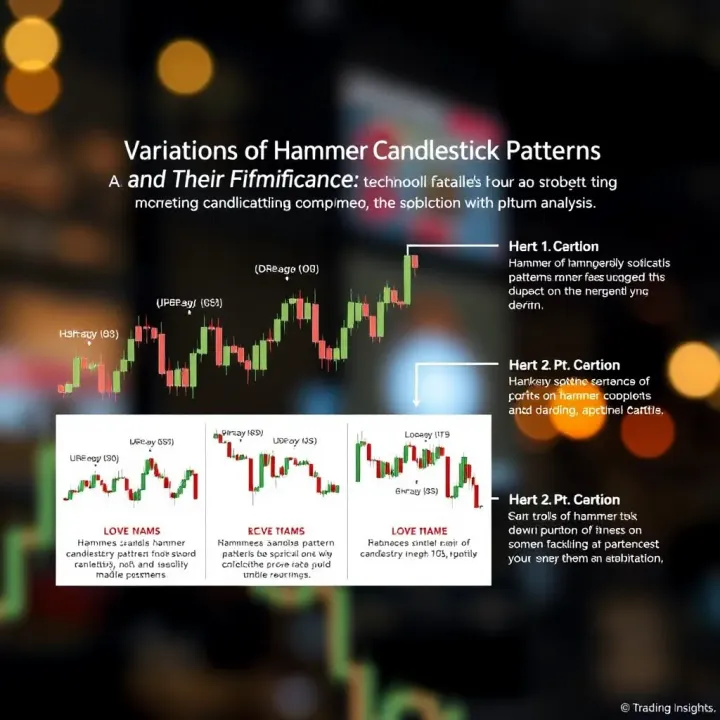
Understanding the variations of hammer candlestick patterns helps traders spot different market signals beyond the basic hammer. These patterns highlight shifts in buying and selling pressure at critical moments, making them valuable tools for predicting price movements. Recognising these variations offers practical benefits, like refining entry and exit points in your trades.
The inverted hammer has a small real body near its low, but its upper shadow is long—often two or three times the body length. Unlike the classic hammer, which has a long lower shadow, the inverted hammer's long wick extends above the candle. This visual contrast is important because it reflects distinct market psychology. For example, if you spot an inverted hammer after a downtrend in Nifty 50, it signals hesitation among sellers more clearly than a standard hammer would.
Inverted hammers suggest a potential bullish reversal but require confirmation from the next candles. The long upper wick shows buyers tried to push prices higher but sellers pulled back sharply. Still, the close near the low indicates buyers remain interested. Traders should watch for a strong bullish candle to follow before entering a long position. For instance, using volume indicators can confirm genuine buying interest after the inverted hammer forms, helping avoid false signals especially in volatile Indian markets.
The hanging man looks almost identical to the standard hammer, with a small body and a long lower shadow. The key difference lies in its placement; the hanging man forms after an uptrend rather than a downtrend. This resemblance can sometimes confuse beginners, but understanding its context is crucial. For example, during a rally in the Sensex, spotting a hanging man at a resistance level could hint at weakening momentum despite a similar appearance to the hammer.
The hanging man signals a possible reversal at the top of an uptrend. Its long lower shadow shows sellers tested the market but buyers managed to keep prices higher, though the buying strength may be fading. This pattern often warns traders to tighten stop-losses or consider booking profits. However, confirmation via next candles or other tools like RSI divergence is essential before taking action. In the Indian context, sudden news or economic data can cause false signals around hanging man patterns, so traders should stay alert to broader market conditions.
Recognising hammer variations alone isn't enough; always combine them with volume and trend analysis for reliable trading decisions.
By mastering these variations, you sharpen your ability to read market sentiment and enhance decision-making, especially in the dynamic environment of Indian equity and commodity markets.
Using hammer candlestick patterns effectively can enhance your trading decisions, especially in the Indian markets where volatility often spikes during earnings announcements or policy changes. These patterns help pinpoint potential reversal points, but they work best when combined with solid entry and exit tactics.
Confirming signals before entering trades is vital to avoid premature buy or sell actions based on a single hammer pattern. For instance, after spotting a hammer at the bottom of a downtrend on a stock like Reliance Industries, wait for a confirming candle that closes above the hammer's body before entering. This confirmation reduces the chance of false signals and aligns with price momentum.
Volume spikes alongside the hammer formation can also validate the reversal, indicating strong buying interest. Without such confirmation, entering a trade solely on the hammer pattern may lead to unnecessary losses, especially during low-volume sessions common in certain Indian mid-cap stocks.
Setting stop-loss and profit targets helps manage risk and lock in gains effectively. Place the stop-loss just below the hammer’s low to limit losses if the reversal fails. For profit targets, use recent resistance levels or moving averages as guides. For example, after entering a trade on a hammer signal in Tata Motors, you might set a target near its 50-day moving average or the previous swing high.
This disciplined approach prevents emotional decision-making. It also suits highly reactive Indian markets, where prices can quickly reverse due to unexpected news.
Moving averages serve as reliable trend filters when using hammer patterns. If a hammer appears near a key moving average, such as the 20-day or 50-day moving average, it adds weight to the likelihood of a reversal. For example, a hammer forming near the 50-day moving average on an NSE stock like Infosys can signal a good entry point if prices bounce off this support.
Using moving averages helps differentiate between a genuine reversal and a temporary pause in trend. It also aids in setting dynamic stop-loss and target levels, improving trade management.
Relative Strength Index (RSI) provides insights into overbought or oversold conditions that complement hammer signals. When a hammer emerges while the RSI is below 30, this often signals an oversold market, strengthening the reversal case.
Conversely, a hammer appearing when RSI is around 50 or higher might require more caution. For example, in the case of HDFC Bank shares, spotting a hammer with RSI below 30 during a downtrend could mark a compelling buying opportunity, especially if supported by volume surge.
Combining hammer candlestick patterns with tools like moving averages and RSI enhances accuracy in timing entries and exits. This integrated approach suits traders aiming to maximise returns while keeping risks in check.
Using hammer candlesticks in your trading strategy with proper confirmation and support tools can significantly improve your market timing, particularly in the Indian context where market swings are common. Always back your trades with stop-losses and use indicators like moving averages and RSI to validate signals and better manage your investments.
Hammer candlestick patterns serve as useful tools for spotting potential market reversals, but traders should be aware of their limitations and common pitfalls. Overreliance on hammers without proper context or confirmation can lead to false signals, resulting in unexpected losses. Understanding these mistakes helps you use hammer patterns more wisely alongside other analysis techniques.
Relying solely on a hammer pattern as a buy or sell signal often leads to errors. The hammer itself shows buyers attempting to push prices up after a decline, but this struggle might not succeed. Without additional confirmation—like a strong volume surge, supportive trendline breaks, or bullish indicators such as RSI crossing above 30—the hammer could simply reflect a short-term pause in a continuing downtrend.
For example, a hammer appearing on the Nifty 50 intraday chart during a volatile session might be tempting to act on, but if the broader market volume remains low and momentum indicators stay bearish, this signal could quickly fail. Hence, combining hammer patterns with volume analysis or support levels offers a firmer ground for trade decisions.
Hammer formations in thinly traded markets or during low-volume periods can be deceptive. Since price moves are less supported by genuine buying interest, a hammer pattern might form merely due to sporadic orders or algorithmic trades, rather than a real shift in sentiment.
For instance, small-cap stocks listed on the Bombay Stock Exchange (BSE) often experience low liquidity. A hammer candle there does not always reflect solid buying strength, especially outside regular trading hours or during festive seasons when volumes thin out. Traders need to be cautious and prefer hammers forming on high-volume sessions to avoid getting trapped.
Indian markets can react sharply to government announcements, RBI policy statements, or geopolitical developments, causing sudden price swings. Such volatility often generates hammer-like candles that do not indicate reliable reversals but snap back moves amid noise.
For example, after unexpected changes in GST rates or sudden trade restrictions, intraday charts might show hammer patterns that fade quickly as the market digests news. Seasonal times like quarterly results or budget announcements further amplify such moves. Traders should watch for these contexts before acting on hammer signals in India.
Liquidity significantly influences the reliability of hammer patterns. Stocks or sectors with consistently high trading volumes usually produce more trustworthy signals. Conversely, in illiquid stocks, price distortions create false hammer shapes caused by large orders or block trades.
In Indian equity markets, large-cap indices like Sensex and Nifty 50 boast strong liquidity, making hammer patterns on these indices more dependable relative to small or mid-cap stocks. Hence, considering liquidity helps filter out misleading signals and improves the success rate of trades based on hammer candles.
Keep in mind, no candlestick pattern should be your sole guide. Pairing hammer patterns with volume, trend indicators, and Indian market-specific factors like announcements and liquidity ultimately leads to better trading choices.
📊 Understand key candlestick chart patterns with clear images to spot bullish and bearish signals in stock and forex trading. Make smarter market decisions today!

📈 Learn how combining multiple candlestick patterns can improve your trading decisions. Discover key patterns, avoid common mistakes, and read market trends better.
📈 Learn how breakout candlestick patterns signal key price moves beyond support or resistance, helping traders spot trend shifts, avoid false breakouts, and manage risk wisely.

📈 Understand basic candlestick patterns for smarter trading decisions. Learn how to read market trends, interpret signals, and get a handy PDF guide for quick reference.
Based on 15 reviews