

Best Bullish Candlestick Patterns for Trading Success
📈 Learn to spot key bullish candlestick patterns to identify upward price moves confidently. Combine these insights with other tools for smarter trading decisions.
Edited By
Sophia Edwards
Candlestick patterns offer a clear window into the market’s psychology, helping traders understand price movements at a glance. Originating from Japanese rice traders in the 18th century, these patterns have since become a staple in technical analysis worldwide, including in India’s fast-growing equity and commodity markets.
By visually representing market sentiment through shapes formed by opening, closing, high, and low prices within a time frame, candlesticks provide essential clues for making trading decisions. For example, a long green candle often signals bullish momentum, while a long red candle suggests bearish pressure.

Understanding these basic patterns allows traders—from freshers exploring the stock market to seasoned analysts—to spot potential trend reversals, continuations, or indecision. This insight helps time entry and exit points more effectively, reducing guesswork and emotional bias.
Mastering candlestick patterns equips you with a powerful tool to read market mood swiftly, without relying solely on complex indicators.
Here are some practical uses of candlestick analysis:
Trend Confirmation: When a series of candles show consistent direction, traders gain confidence about a current trend.
Reversal Identification: Patterns like the hammer or shooting star suggest possible market turning points.
Entry/Exit Timing: Spotting doji candles might signal hesitation, indicating a good time to prepare for a trade.
Besides individual patterns, combining candlesticks with volume and support-resistance levels improves reliability. In India’s equity markets, such as the BSE Sensex or NSE Nifty 50, many traders depend on these visual cues daily.
The article will break down key patterns with precise explanations and demonstrate how to apply them practically. Additionally, a downloadable PDF guide will be available for quick reference, making it easier to learn and implement candlestick analysis effectively.
Once you grasp the essentials explained here, you'll navigate market fluctuations with better clarity and make well-informed trading choices.
Candlestick patterns form the backbone of technical analysis, especially for traders aiming to predict market moves with better accuracy. These patterns offer a visual representation of price action in a given time frame, helping investors spot shifts in market sentiment quickly. For beginners and seasoned traders alike, understanding these patterns can significantly improve decision-making during trading.
Candlestick charts display price data through "candles," each representing a specific time period such as one day or one hour. Each candle shows the opening, closing, high, and low prices. Unlike simple line charts, candlesticks provide more detail about daily market behaviour, which helps traders grasp short-term trends and market momentum. For instance, a long green candle typically indicates strong buying interest during that session.
Candlestick patterns mirror the battle between buyers and sellers — the market’s tug-of-war at a glance. When a particular pattern forms, it reveals underlying trader sentiment such as fear, greed, indecision, or confidence. A classic example is the Doji candle, which suggests a market in hesitation, where neither buyers nor sellers have full control. Recognising such signals helps traders anticipate whether the current trend might stall or reverse.
Candlestick patterns are useful tools for spotting trend continuation or reversal points ahead of time. For example, a bullish engulfing pattern at a recent low might hint at a rally starting soon, prompting traders to consider buying. Conversely, a shooting star after an uptrend could warn of a potential pullback. Using these signals effectively reduces the risk of mistimed entries or exits.
Unlike bar or line charts, candlestick charts offer richer information in a visually intuitive way. While line charts connect closing prices only, and bar charts show similar price points but less detail, candlesticks give insight into market momentum and psychology within each period. This makes them particularly valuable for intraday traders and swing traders who rely on timely, actionable signals rather than just historical price points.
Understanding candlestick patterns is like having a daily snapshot of market emotions, helping you tune into the traders' collective mindset—and that insight itself can be the difference between profit and loss.
By grasping these basics, you'll build a strong foundation for recognising more complex patterns and improve your overall trading skills.
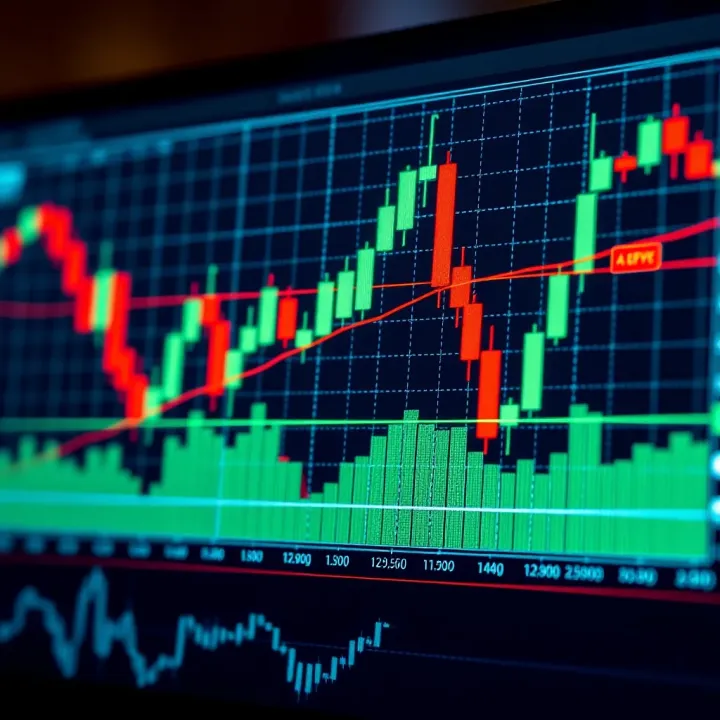
Understanding core candlestick patterns is essential for any trader aiming to read market sentiment quickly and make smart decisions. These patterns help identify trends, potential reversals, and market indecision, providing guidance on when to enter or exit trades. For instance, recognising a bullish engulfing pattern early in an uptrend can signal a good buying opportunity, whereas spotting a bearish engulfing in a downtrend might warn to sell or avoid entering.
Being familiar with these basic patterns equips you to interpret stock charts like a pro without relying on complex indicators alone. This knowledge is particularly helpful in volatile markets, where quick decisions matter. Let’s explore some key patterns you should have on your radar.
Characteristics and identification: A bullish engulfing pattern appears when a small red (bearish) candle is immediately followed by a larger green (bullish) candle that completely covers or "engulfs" the previous candle’s body. The reverse is true for a bearish engulfing pattern — a small green candle followed by a larger red candle that swallows it. These formations show strong shifts in market sentiment. For example, if Reliance Industries shows a bullish engulfing pattern after a few red candles, it may hint that buyers have taken control.
Trading implications: Traders often see bullish engulfing as a sign of trend reversal or continuation upwards, especially near support levels. It might encourage buying or holding positions. In contrast, bearish engulfing suggests selling pressure and possible downtrend, signalling caution or exit. However, these patterns work best with confirmation from volume or other indicators like RSI (Relative Strength Index). Blindly trading only on engulfing patterns can lead to losses if the broader context is ignored.
Appearance and types of Doji: A Doji candle forms when the opening and closing prices are nearly equal, resulting in a tiny or non-existent body with upper and lower shadows (wicks) that vary. Types include the standard Doji, Dragonfly Doji (long lower wick), and Gravestone Doji (long upper wick). Each type gives subtle clues about market sentiment. For example, a Dragonfly Doji on a downtrend might indicate selling exhaustion.
What Dojis signify about market indecision: Doji candles reflect a tug-of-war between buyers and sellers, resulting in indecision. They often appear before major price movements or reversals. But alone, a Doji doesn't guarantee anything; it signals traders should watch for confirmation next. For instance, if a Doji forms after a prolonged downtrend, and the next candle is bullish, it suggests buyers may be returning.
Visual features: Both hammer and hanging man candles have small bodies near the top of the range and long lower shadows at least twice the body size. The upper wick is small or absent. They look similar but appear in different contexts.
Context in uptrends and downtrends: A hammer appears after a downtrend, signalling possible reversal with buying pressure pushing prices back up. It indicates that sellers tried to push the price down but buyers fought back well. By contrast, a hanging man shows up after an uptrend and warns that selling pressure might start increasing, hinting at a potential downside.
How to spot these patterns: The shooting star looks like an inverted hammer but appears after an uptrend. It has a small body near the bottom and a long upper shadow twice the body length, signalling that buyers tried to push prices higher but sellers forced a pullback. The inverted hammer appears after a downtrend, similar in shape but signals possible bullish reversal.
Interpretation for price movement: A shooting star signals potential trend reversal downward, warning traders to be cautious or prepare for selling. Conversely, the inverted hammer indicates that buyers might be gaining momentum after a fall, suggesting possible support and bounce back.
Recognising these core candlestick patterns helps traders act promptly on shifting market moods. Always combine pattern reading with volume trends and other technical tools to reduce risk and increase chances of success.
Understanding candlestick patterns is just the first step – using them wisely can make a real difference in your trading outcomes. Patterns alone don’t guarantee success; reading them in combination with other factors improves accuracy and reduces guesswork. This section explores how to confirm signals with volume and technical indicators and highlights common mistakes to avoid for sharper trading decisions.
Volume reveals how strong a price move really is. For example, a bullish engulfing pattern accompanied by high trading volume shows genuine buying interest, making the signal more trustworthy. On the other hand, if the volume is low, the pattern may not have enough momentum to sustain a trend reversal. Traders often overlook volume, but it helps filter out false signals that could otherwise lead you astray.
Combining candlestick patterns with indicators like the Relative Strength Index (RSI) or Moving Average Convergence Divergence (MACD) brings more clarity. RSI indicates overbought or oversold conditions, which supports pattern interpretations. For instance, spotting a doji near an oversold RSI level strengthens the case for a potential reversal. MACD helps track trend strength, so if a hammer pattern appears alongside an MACD crossover, it adds confidence to the trade signal.
Ignoring the broader market context is a frequent error. A shooting star pattern during a strong uptrend might not lead to a reversal but rather a brief pause. Without considering prevailing trends, support and resistance zones, or news events, traders can misinterpret signals. For example, a bearish engulfing pattern seen in a high-volatility phase triggered by quarterly results may not reflect a true trend change.
Relying on a single candlestick without confirmation is risky. Candlesticks are snapshots—not guarantees. Waiting for the next candle to confirm the initial signal, or using volume and other indicators as mentioned earlier, can prevent premature decisions. For instance, a hammer pattern alone does not ensure a bottom; confirmation through a rising close in the following session helps confirm that buyers are stepping in.
Effective candlestick reading demands combining patterns with volume, indicators, and market context. Avoid jumping in on every pattern without confirmation to make smarter, evidence-backed trades.
By integrating these practices, traders and beginners can use candlestick patterns more confidently, improving both timing and risk management while navigating the market’s ups and downs.
Candlestick patterns offer valuable insights, but remembering all the details can be challenging, especially for traders starting out. Here, using PDF guides filled with basic candlestick patterns becomes an effective solution. These PDFs provide structured, easy-to-access information that helps you quickly recognise patterns during live trading or study sessions.
PDF guides serve as a handy quick reference for traders. Unlike online articles or videos that may require scrolling or pausing, the PDF format lets you bookmark pages and jump straight to the patterns you need. For example, if you are analysing an engulfing pattern on your trading platform, you can instantly check the PDF chart to confirm if your observation matches the textbook definition.
Such guides also make revision simpler. Suppose you are preparing for stock market exams or enhancing your trading skills; flipping through labelled candlestick examples in a PDF allows rapid reinforcement of concepts without distractions.
Another advantage is the offline availability. Once downloaded, these PDFs can be accessed without internet connectivity, which works well when you are commuting or in areas with poor signal. This way, you don't miss out on practice or revision just because the network fails.
Many traders, especially in tier-2 or tier-3 cities of India, find offline materials convenient. Imagine a beginner trader revising Hammer or Doji patterns while travelling on a local train — the PDF format fits perfectly for such situations.
Look for PDFs on well-established Indian financial education websites or through popular trading apps like Zerodha’s Varsity or Upstox learning centre. These platforms usually offer free, accurate guides tailored for Indian markets.
Avoid random PDFs from unknown sources, since incorrect or outdated information can mislead trading decisions.
Always check the file size and format before downloading — PDFs should be modestly sized and open smoothly on mobile and desktop.
Beware of PDFs that require suspicious permissions or redirect you to unrelated sites. Using official platform downloads reduces the risk of malware or phishing attempts.
Also, ensure the PDF is regularly updated and compatible with your current trading knowledge level.
Set specific times to study PDFs systematically. For instance, dedicate 20 minutes daily to review a particular pattern, like the Shooting Star or Inverted Hammer, and note their appearances across your live charts.
You can also make flashcards based on PDF diagrams or try replicating patterns on charting tools to strengthen pattern recognition.
Refer to your PDF guide alongside your trading platform while analysing stocks or commodities. When you spot a potential pattern, cross-check the PDF to confirm its characteristics before making any trade.
Furthermore, keeping a PDF open on a secondary device or printed out can speed up decision-making during fast market movements.
Using PDFs as a complement to live analysis bridges theoretical knowledge and real-world trading, making your learning process more grounded and practical.
Employing basic candlestick pattern PDFs wisely enhances your trading confidence and sharpens your market reading skills. Whether you are a beginner or honing your expertise, these structured references offer consistent support every step of the way.
📈 Learn to spot key bullish candlestick patterns to identify upward price moves confidently. Combine these insights with other tools for smarter trading decisions.
📉 Learn key bearish candlestick patterns to spot market downturns confidently. Understand their meaning, common errors, and confirmation for smarter trades.
Learn to spot the strongest candlestick patterns 📊 for better timing and accurate trading decisions. Boost your strategy with proven price signals today!
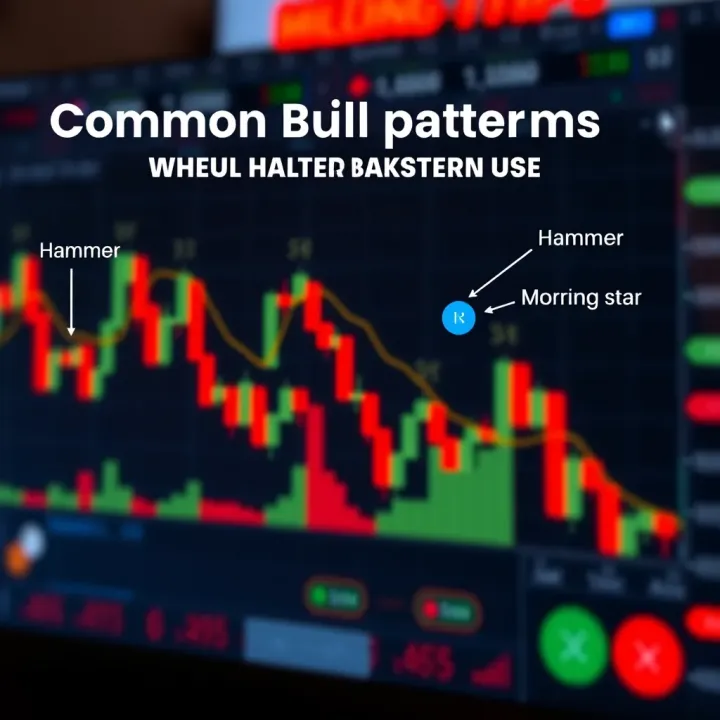
📈 Learn the most used candlestick patterns in trading to read market behavior, spot trends, and manage risks effectively for smarter trading decisions.
Based on 10 reviews