Best Website for Paper Trading in India
Overview
Paper trading is a method to practise stock market investing without putting real money at risk. For new investors in India as well as seasoned traders trying out fresh strategies, paper trading platforms play a vital role in gaining practical experience. These platforms simulate live market conditions, allowing you to buy and sell shares virtually.
Choosing the right paper trading website involves understanding several key factors. These include the accuracy of market data, ease of use, the variety of instruments available for simulation, and the quality of the educational resources provided. For example, a platform offering real-time prices for NSE and BSE stocks will deliver a more realistic trading experience than one with delayed or outdated information.
Paper trading gives you a safe space to test your ideas and build confidence before risking actual capital.
Another consideration is the platform’s interface and accessibility. Some websites provide mobile apps tailored for Indian investors, which can be handy for trading on the go. Also, platforms that incorporate Indian market regulations and tax implications create an environment closer to real-life investing.
When assessing platforms, pay attention to features like:
User-friendly dashboards and order placement procedures
Availability of technical analysis tools
Support for multiple asset classes including equities, commodities, and derivatives
Ability to track portfolio performance over time
Community support or expert guidance for learning
Practical usage tips include setting realistic goals, simulating trades with amounts reflecting your planned investment size, and regularly reviewing performance to identify mistakes. Practising consistently on such platforms can sharpen your decision-making and reduce emotional bias.
Next sections will compare several popular paper trading websites available to Indian users and offer guidelines on selecting a platform that matches your trading style and learning needs.
Understanding Paper Trading and Its Benefits
Paper trading refers to practising buying and selling stocks, commodities, or other financial instruments using virtual money rather than real funds. This simulation mimics actual market conditions, enabling users to test strategies and understand market dynamics without financial risks. For instance, a student preparing for investment exams or a fresher in the stock market can use paper trading to gain hands-on experience before investing real money.
What Paper Trading Means
In simple terms, paper trading acts like a mock stock market where your trades happen on paper or a digital platform with fake money. You execute trades based on real-time or delayed data, but no actual money changes hands. This allows traders to experience the impact of market movements on their portfolio without risking their savings.
Advantages of Practising with Virtual Funds
Risk-free learning environment
One significant advantage of paper trading is that it offers a completely risk-free environment to learn how markets function. Beginners who are unfamiliar with order types or market volatility can navigate through without worrying about losing money. For example, a first-time trader in Mumbai might try different order strategies like limit or stop-loss orders using a paper trading platform like Zerodha Kite. This helps them build familiarity before moving to real trades.
Testing new investment strategies
Experienced traders also find paper trading useful to test new investment or trading strategies. Suppose a trader wants to explore arbitrage opportunities or options strategies like covered calls; paper trading lets them evaluate these tactics in live market conditions without real financial consequences. It gives them clarity on whether a strategy fits their risk appetite and investment goals before committing actual capital.
Building market confidence
Besides learning and strategy testing, paper trading builds confidence in market participation. Often, novice investors hesitate due to fear of losses or unfamiliarity. Practising trades regularly with virtual funds reduces this anxiety, making it easier to transition to live trading. For instance, many college students pursuing finance courses use paper trading to track the Sensex or Nifty 50 movements and simulate investing, gaining confidence over time.
Who Can Benefit Most from Paper Trading
Paper trading works best for newcomers to the market, retail investors looking to improve their timing and decision-making, and traders experimenting with advanced strategies without the pressure of real money. It also suits those preparing for exams or certifications requiring practical understanding of trading mechanics. However, seasoned investors might use paper trading only occasionally to fine-tune new tactics or when entering unfamiliar asset classes.
Practising paper trading is the closest one can get to real stock market experience without risking rupees. It offers a safe ground to learn, experiment, and grow as a trader before venturing into actual investments.
Key Features to Look for in a Paper Trading Website
When selecting a paper trading website, certain features can make all the difference between a frustrating experience and an effective learning tool. You want a platform that not only simulates real market conditions with precision but also fits your trading style and level of expertise. Focusing on core elements like ease of use, data reliability, instrument diversity, customisation options, and brokerage integration ensures you reap the maximum benefit from virtual trading practice.
Ease of Use and Interface Design
An intuitive interface is essential for paper trading beginners and seasoned traders alike. Websites cluttered with confusing layouts or buried menus can quickly discourage users. A clean dashboard that highlights watchlists, orders, and portfolio performance at a glance helps maintain focus. For example, Zerodha's Kite platform is known for its minimalistic yet comprehensive design, making order placement and monitoring straightforward even for freshers. Interactive charts, logical navigation, and responsive controls contribute to smooth practice sessions without unnecessary distractions.
Real-time Market Data and Accuracy
The value of paper trading relies heavily on how closely it mimics actual market behaviour. Delayed or inaccurate price feeds distort the learning curve and can create false impressions of strategy effectiveness. Look for platforms that offer real-time streaming data or the minimal possible latency, reflecting intraday price swings precisely. For Indian users, integration with NSE (National Stock Exchange) and BSE (Bombay Stock Exchange) markets through trusted data providers ensures realistic simulations. This accuracy is especially critical when testing strategies sensitive to timing and price levels.
Range of Tradable Instruments
The variety of assets available for trading on a platform determines how comprehensive your practice can be. Diverse instruments expose you to different market dynamics and help refine specific skill sets.
Stocks
Trading stocks forms the foundation for most investors, so a paper trading site must offer an extensive stock universe, particularly including Indian companies from NSE and BSE. Access to mid-cap and small-cap stocks alongside large-cap offerings lets you experiment with different volatility profiles and liquidity conditions. Platforms that allow sector-wise or index-based scanning make it easier to hunt for trading opportunities, mimicking actual market research.
Options and Futures
Derivative instruments like options and futures add another dimension to trading, with leveraged exposure and complex payoff structures. Practising these requires more sophisticated tools to analyse Greeks, expiry dates, and strike prices. A paper trading website that supports options chains for indices like Nifty and Bank Nifty, along with futures contracts, equips you to test hedging techniques or income strategies such as writing options. These features are vital for traders wanting hands-on experience without risking margin money.
Commodities and Forex
India's active commodities markets and growing interest in currency trading make it important for platforms to include these instruments. Paper trading in commodities like gold, silver, crude oil, and agricultural products helps users understand seasonality and geopolitical factors affecting prices. Similarly, forex pairs involving the Indian rupee (INR) alongside the US dollar or euro enable practice in international market reactions and exchange rate impacts. Inclusion of these instruments broadens your exposure and sharpens skills relevant to diversified portfolios.
Customisation and Strategy Testing Tools
Beyond basic trading features, the ability to customise dashboards, alerts, and order types enriches your experience. Advanced platforms offer backtesting options where you can apply historical data to validate strategies before risking real or virtual funds. Simulators with the facility to run scenario analyses or modify factors such as slippage and commissions give a truer sense of trading outcomes. For example, TradingView’s charting and scripting capabilities allow traders to design indicators or automate strategy testing effectively.
Integration with Brokerage Accounts
Some paper trading websites allow linking with brokerage accounts, bridging practice and real trading seamlessly. This integration enables transfer of strategies tested virtually straight into live markets without re-entering data or familiarising again with tools. For Indian traders, platforms like Zerodha and Upstox provide smooth transitions between their simulators and trading desks. This feature is especially helpful for beginners aiming to convert paper trading gains to real profits with minimal hassle.
Choosing a paper trading website that ticks these boxes ensures you get a practical, realistic, and user-friendly environment to sharpen your market skills without risking your hard-earned money.
Comparing Popular Paper Trading Websites Accessible in India
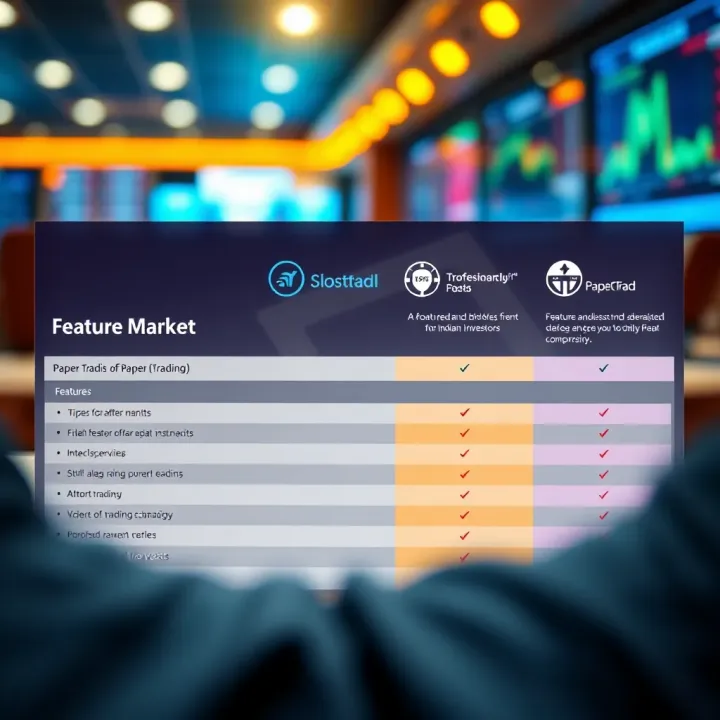
Comparing popular paper trading websites accessible in India helps traders select a platform that matches their needs and market preferences. Given the diversity of options, understanding each platform's features like ease of use, market integration, and customization can guide users toward practical learning and effective strategy testing. For example, platforms like Zerodha and Upstox offer different experiences tailored to Indian markets, while others like TradingView serve global traders but remain relevant for Indian users. This comparison gives clarity on what to expect and how platforms fit specific goals.
Zerodha Varsity and Kite
Features and usability: Zerodha offers Kite, a web and mobile trading platform featuring intuitive interfaces and smooth navigation. Its integration with Zerodha Varsity — an educational resource — enhances practical learning. Users find the dashboards clean and straightforward, making it easy for beginners to chart their investments or test techniques without feeling overwhelmed.
Integration with Indian markets: Kite connects seamlessly with the National Stock Exchange (NSE) and Bombay Stock Exchange (BSE), offering timely market data and real-time updates essential for accurate paper trading. This direct link helps traders simulate actual market conditions, including Indian-specific events like corporate announcements or government policies impacting stock movements.
Pros and cons: Zerodha's strength lies in its solid Indian market integration and user-friendly design. However, some features are limited to Zerodha customers, restricting access for those wanting purely standalone paper trading. Also, while educational content is detailed, it requires dedication to fully benefit from it.
Upstox Pro Simulator
User experience: Upstox Pro Simulator provides a clean, modern interface designed for quick order placement and easy bid-ask visibility. Traders appreciate the simple layout that doesn't clutter information, ideal for focusing on order execution and basic strategy testing.
Market coverage: It covers NSE and BSE equity segments along with derivatives, allowing users to practice options and futures trading relevant to Indian markets. This breadth lets traders explore multiple asset classes within a single platform.
Limitations: The simulator mainly caters to Upstox account holders, limiting wider accessibility. Additionally, it lacks some advanced charting and analytical tools, which might disappoint users wanting deep technical analysis.
TradingView Paper Trading
Global market access: TradingView stands out for offering paper trading across multiple international exchanges, not just Indian markets. This wide reach suits traders interested in diversification or learning global market behaviour alongside Indian stocks.
Charting tools: It boasts advanced charting capabilities with numerous indicators, drawing tools, and custom scripts, which traders often find helpful in strategy formulation and testing. These tools surpass many local platforms in technical analysis.
Suitability for Indian traders: While it supports Indian stocks, the delay in real-time Indian market data and limited brokerage integration might be a hurdle. Traders focused entirely on the Indian market might find it more suitable for supplemental analysis than sole paper trading.
Other Noteworthy Platforms
Interactive Brokers Paper Trading: Known for its global market reach and professional-level tools, Interactive Brokers offers paper trading that supports Indian and international securities. However, its complexity can overwhelm beginners.
Investopedia Simulator: This platform is educational with simulated trading focusing mostly on US markets but offers valuable lessons for beginners worldwide. Its gamified environment encourages learning but falls short on Indian market relevance.
Moneycontrol Virtual Market: Specifically designed for Indian traders, this platform reflects real-time Indian market conditions and allows beginners to practise with virtual funds using actual stock prices. It serves as a practical starting point, especially during Indian festival seasons when market volatility spikes.
Choosing the right paper trading platform involves considering market coverage, usability, and toolsets. Each website brings different strengths for Indian traders, so weighing these factors carefully can greatly improve learning outcomes.
How to Make the Most of a Paper Trading Platform
Paper trading platforms offer an excellent chance to practice investing without risking real money. Yet, simply using a platform isn’t enough—making the most out of it requires a clear plan and disciplined approach. Let’s explore some key steps that help you gain real skills and confidence.
Setting Realistic Trading Goals
Start by defining what you want to achieve through paper trading. Are you focusing on learning basic order types, testing short-term trading strategies, or understanding how broader market events impact stock prices? Set specific, measurable goals like "increase virtual portfolio by 5% in 3 months" or "make 50 simulated trades practising stop-loss orders." Avoid unrealistic expectations like doubling the portfolio within weeks, as this sets a false benchmark and may lead to frustration.
Developing and Testing Strategies
Use the platform to experiment with various trading strategies without fear of loss. For example, you can try momentum trading with mid-cap shares from the Nifty 100, or practice options strategies such as writing covered calls using popular stocks like Reliance Industries. Remember to keep detailed notes on entry and exit points and strategies deployed.
Testing under different market conditions—whether trending, sideways, or volatile—helps identify strengths and weaknesses of your approach. Custom tools on platforms like Zerodha Kite or TradingView can simulate these scenarios and aid strategy development.
Reviewing Performance and Learning from Mistakes
After trades, spend time analysing what worked and what didn’t. Did you exit too early or hold on too long? Did external news affect your positions differently than expected? Platforms often provide reports to track key statistics such as win-loss ratios and average holding periods.
Honest assessment assists in recognising patterns in your decision-making. This reflection turns paper trading into a powerful learning exercise.
Successful traders aren’t those who avoid mistakes but those who learn quickly from them.
Transitioning from Paper Trading to Actual Investing
Even when you feel confident, remember real markets add emotional pressure. Begin with small amounts to test your strategies live. Use your paper trading experience to adjust risk management—like position sizing and stop-loss placement—to reflect actual capital.
Avoid rushing into full-scale investing just because paper trades showed profits. The aim of paper trading is to build disciplined habits and confidence, which take time to translate into real gains.
By setting clear goals, practising strategies, reviewing trades critically, and cautiously moving into real investments, you turn paper trading from a theoretical exercise into a practical stepping stone.
Mastering this process helps you navigate Indian stock markets more confidently, reducing costly errors during the actual trading journey.
Common Limitations of Paper Trading Platforms
Paper trading platforms provide a great way to practise without risking real money, but they also come with certain drawbacks investors should be aware of. Understanding these limitations ensures you don't get a false sense of confidence and helps prepare for the transition to real trading.
Differences between Virtual and Real Market Conditions
Virtual trading often does not mimic real market conditions perfectly. For instance, paper trading platforms typically assume trades execute at displayed prices instantly. However, in actual markets, prices can slip due to volatility, especially in fast-moving sessions or illiquid stocks. An order may not fill entirely or may face delays. This gap can mislead beginners into expecting smoother executions than what happens in real life.
Moreover, some paper trading sites don't factor in bid-ask spreads and transaction costs fully. In reality, these can significantly affect profitability, particularly for intraday traders or those dealing with options and futures. For example, in the Indian markets, brokerage fees, Securities Transaction Tax (STT), and other charges play a role in net returns but might not reflect in virtual trading.
Psychological Factors and Emotional Control
Trading with virtual money removes the emotional pressure that comes with risking your own capital. This matters a lot because real trading brings stress, fear, and greed, which often influence decisions. A trader might stick to a plan during paper trading but panic or be overconfident when actual money is on the line.
A practical example is a beginner who excels on a simulator but struggles with discipline once they start live trading. Paper trading can’t fully replicate the psychological challenges of watching your money fluctuate by thousands or lakhs of rupees. Hence, while it builds skill, it does not prepare you completely for the emotional roller-coaster of real markets.
Technical Restrictions and Delays
Paper trading platforms may have technical limitations such as delayed data feeds, restricted order types, or simplified interface options that don’t match real brokers. Some platforms update prices with a lag, which affects the timing and realism of trades. For example, a delay of even a few seconds can alter the outcome of a day trade in volatile stocks listed on NSE or BSE.
Also, many simulators offer limited access to advanced order types like stop-loss limits, bracket orders, or options strategies. This restricts thorough testing of complex plans. Without full-feature access, the transition from paper to real trading can introduce surprises that catch even experienced users off guard.
Understanding these common limitations helps set sensible expectations and ensures paper trading serves as a stepping stone, not a complete substitute, for actual investing.
In short, paper trading is invaluable for learning and experimenting but should be combined with awareness of its gaps. Real market experience brings elements that no virtual setup can fully recreate—important to keep in mind while selecting your platform and preparing to trade live.