

Most Profitable Chart Patterns for Traders
📈 Discover the most profitable chart patterns traders use across stocks, forex & commodities. Learn to identify & apply these strategies smartly for better trading decisions!
Edited By
Sophie Clarke
Candlestick charts remain one of the most popular tools for traders and investors to interpret market sentiment and predict price movements. Originating in Japan centuries ago, these charts have gained worldwide adoption due to their clear visualisation of price action within specific time frames.
Each candlestick includes four key data points: the opening price, closing price, high, and low during a set period. This simple structure forms distinctive patterns that provide clues about potential market direction.

Understanding candlestick patterns helps you spot bullish or bearish trends, key reversals, and continuation signals. These can improve your timing when entering or exiting trades.
To make the most of candlestick patterns, it's important to recognise the difference between single and multiple candle formations. Single candle patterns such as the Hammer or Shooting Star often hint at immediate price reactions. In contrast, multi-candle patterns like Engulfing or Morning Star reveal deeper shifts in market momentum.
Candlestick patterns should never be used in isolation; combining them with volume data, trend analysis, and other indicators will strengthen trading decisions.
For example, a Bullish Engulfing pattern appearing near a support level indicates a possible upward reversal, while a Bearish Harami near resistance suggests sellers gaining control.
Key reasons why candlestick analysis suits Indian traders include its visual simplicity, compatibility with mobile trading apps like Zerodha Kite or Upstox, and relevance across asset classes—from Sensex shares to currency pairs.
This guide will walk you through the most common candlestick patterns, their structure, and how to apply them practically in your trading strategy. By mastering these, you can decode market psychology and improve your chances for profitable trades.
Understanding candlestick charts is essential for anyone trading or investing in the stock market. These charts provide a visual summary of price movements within a set period, revealing patterns that help predict future market behaviour. For traders and analysts, grasping the components of candlesticks sharpens decision-making and enhances strategy development.
Candlestick charts originated in Japan in the 18th century, initially used by rice traders to study market trends and prices. Since then, they have become popular worldwide for analysing financial markets due to their clear, easy-to-read format. Even in today's high-speed Indian markets, candlestick charts remain a favourite for spotting price action quickly.
A candlestick represents price data for a specific time frame, such as a minute, hour, day, or week. The visual cues allow traders to assess market sentiment at a glance, making these charts practical tools for both beginners and experienced professionals.
Each candlestick consists of a body and wicks (also called shadows). The body shows the range between the opening and closing prices during the period. A longer body indicates stronger price movement, while a shorter body suggests indecision.
The wick or shadow extends from the body and represents the highest and lowest prices reached. For example, a long upper wick signals that buyers pushed prices up but sellers brought them down before the close. Understanding these elements helps traders gauge volatility and momentum within that period.
The four key prices – open, close, high, and low – form the backbone of each candlestick. The open price is where the trading starts, and the close price is where it ends during the time frame. The high and low prices indicate the extremes reached.
For instance, if a day’s candlestick shows a close significantly higher than the open with a small lower wick, it suggests buyers dominated that day. Traders often look at these figures closely to assess strength or weakness in a stock or index.
A candlestick is bullish when the closing price exceeds the opening price, typically shown with a white or green body. It means buyers had control, pushing prices higher. By contrast, a bearish candlestick has a closing price lower than the opening, often coloured black or red, signifying seller dominance.
Recognising this difference quickly allows traders to read market sentiment accurately. For example, a series of bullish candlesticks in daily charts of the Nifty 50 might suggest an uptrend, signalling an opportunity for long positions.
Mastering candlestick components gives you a reliable lens to interpret price action and make informed trading decisions. It is the foundation on which all pattern recognition builds.
Single-candle patterns play a key role in understanding short-term market sentiment quickly. These patterns form from just one candlestick and often signal potential price reversals or pauses. For traders and investors, recognising these patterns helps in making swift decisions without waiting for a series of candles. In the Indian stock market, spotting these single-candle signals on indices like Nifty or Sensex can offer immediate hints about intraday or short-term trend changes, aiding better timing of trades.
Standard Doji: A standard Doji appears when the opening and closing prices are virtually the same, leaving a small or non-existent body. It reflects market indecision as neither bulls nor bears dominate during the session. For example, after a strong uptrend in an Indian mid-cap stock like Tata Motors, a Doji candle signals that the momentum is weakening. Traders should watch for confirmation from following candles before deciding on a reversal.
Dragonfly Doji: This variation has a long lower shadow with the open, close, and high prices near each other at the top. It suggests the sellers pushed prices down intraday, but buyers regained control by close. Seen at the end of a downtrend, it signals a potential bullish reversal. For instance, if Reliance Industries shows a Dragonfly Doji after falling sharply, it hints at buying pressure building up, tempting traders to prepare for upward movement.
Gravestone Doji: The Gravestone Doji is the opposite, with a long upper shadow and the open, close, and low near each other at the bottom. This pattern points to buying pressure fading as sellers overwhelm buyers by closing near the session low. When appearing after uptrends, it warns of bearish reversal chances. In India's pharmaceutical sector, say Sun Pharma, a Gravestone Doji can alert traders to cautious exit or sell decisions.

Characteristics: Both have small real bodies near the top of the range with long lower shadows, resembling a hammer's shape. The Hammer generally appears after a downtrend, indicating rejection of lower prices, while the Hanging Man shows up after an uptrend, warning of possible trend exhaustion.
Signals for reversal depending on trend context: The Hammer near support levels signals buyers returning and potential bullish reversal. For example, a steel stock like Tata Steel forming a Hammer during a dip might encourage buying. Conversely, the Hanging Man hints at bearish reversal risks when found after substantial rallies, like Infosys experiencing selling pressure despite a recent rise. Confirmation through subsequent price action or volume increase enhances trade reliability.
Understanding market indecision: The Spinning Top candles have small bodies with long upper and lower shadows reflecting a tug-of-war between buyers and sellers. This pattern suggests uncertainty about the next move. Traders watching IT stocks such as Wipro in volatile markets may use Spinning Tops to pause before committing to new positions.
Strong momentum indicators: In contrast, Marubozu candles lack shadows and show strong conviction— a full-bodied green candle signals robust buying, while a red one indicates decisive selling. On days when the Nifty climbs with several green Marubozu candles, traders gain confidence about the strength of the rally.
Single-candle patterns condense market psychology into simple visual signals. Understanding these can help you anticipate short-term price shifts, manage risk better, and fine-tune entry-exit points with greater confidence.
By combining these single-candle insights with volume data or moving averages, traders in the Indian markets can improve the accuracy of their strategies substantially.
Multi-candle patterns are essential in candlestick analysis because they convey more robust market sentiment than single candles. These patterns, formed from two or more consecutive candles, help traders see shifts in momentum, potential reversals, or continuations with better reliability. Unlike individual candles, which show momentary price action, multi-candle patterns capture a developing story and often act as stronger signals.
A bullish engulfing pattern happens when a relatively small bearish candle is immediately followed by a larger bullish candle that completely covers or engulfs the previous candle's body. Visually, the second candle’s body wraps around the first one, signaling strong buying interest. The bearish engulfing is the exact opposite: here, a small bullish candle is overtaken by a larger bearish one. This clear shift in candle size and direction tells us that the market sentiment has switched hands.
Bullish engulfing usually marks a potential reversal from a downtrend to an uptrend. This pattern is popular among traders in Indian markets, especially when confirmed with volume spikes. For example, a stock like Reliance Industries showing a bullish engulfing near a support zone might suggest buyers stepping in strongly. Bearish engulfing, conversely, can hint at a trend change from up to down, often prompting traders to tighten stop-losses or book profits.
The morning star is a three-candle pattern signalling a bullish turn. It starts with a strong bearish candle, followed by a small-bodied candle (often a doji or spinning top), indicating indecision. The third candle is a strong bullish candle that closes well into the first candle’s body. Confirmation comes with the third candle's size and close above the middle candle’s range. The evening star is its bearish counterpart, suggesting a downtrend after an uptrend.
Morning stars often appear after a decline, suggesting buyers are gaining control. In volatile sessions, such as during monsoon uncertainties, this pattern helps traders spot recovery chances. Evening stars occur near resistance or after rallies, warning of potential reversals. Recognising these can help traders avoid buying into topping markets or selling prematurely during dips.
The three white soldiers pattern consists of three long bullish candles consecutively closing higher, each opening within the previous candle's body. This pattern signals strong buying momentum and usually confirms a bullish reversal after a downtrend. On the other side, three black crows are three consecutive long bearish candles, signalling a potential bearish reversal after an uptrend.
To trust these patterns, the candles should have minimal wicks and close near their highs (white soldiers) or lows (black crows). Ideally, volume should increase alongside the pattern to confirm strength. For instance, in Nifty 50 trading, a strong three white soldiers pattern during a correction suggests a solid bounce, giving traders confidence to buy.
Multi-candle patterns such as these offer traders clearer signals than single candles alone, especially when combined with volume or trend indicators. They help cut through market noise and provide a framework to anticipate movements with better odds.
In summary, understanding these common multi-candle patterns equips you with practical tools to gauge market turns and momentum shifts more accurately. Careful observation of their formation and confirmation enhances trading decisions significantly in Indian market contexts.
Continuation patterns are essential for traders to understand because they signal the likelihood that the current trend will keep going. Unlike reversal patterns, which suggest a change in direction, continuation patterns help confirm that the price movement—whether bullish or bearish—is resting before it pushes further. This can be especially useful in volatile markets like the Indian stock market where quick confirmation helps traders decide whether to hold positions or enter new ones.
These patterns simplify the decision-making process by offering signs of paused momentum without losing the overall trend's strength. For example, a trader spotting a continuation pattern during a bullish run might choose to hold onto shares instead of selling prematurely, thus potentially maximising returns.
Pattern formation: The Rising Three Methods pattern occurs in an uptrend and consists of a long bullish candle followed by three or more small bearish or sideways candles that stay within the range of the first candle. The pattern finishes with another strong bullish candle breaking above the initial candle's high. Conversely, the Falling Three Methods pattern appears during a downtrend, where a long bearish candle is followed by small bullish or sideways candles, ending with a large bearish candle breaking below the initial low.
This structure shows a brief pause or consolidation before the trend resumes. It reflects traders’ short-term uncertainty but overall confidence in the ongoing trend. Spotting these patterns can alert investors to a good point to enter or add to their position.
Uses in confirming trend strength: These patterns act like a trend’s checkpoint, confirming its strength and sustainability. In the Indian context, say the Nifty 50 is climbing steadily, spotting a Rising Three Methods pattern suggests buyers are still in control despite a short breather. This can reassure traders amid fluctuating volumes during events like quarterly results season.
Similarly, the Falling Three Methods confirms bearish momentum, helping traders plan short positions or exit points. Since Indian markets sometimes show sharp reversals around economic announcements, using these patterns alongside volume and moving averages makes trend confirmation more reliable.
Signals of market pause and continuation: A Doji Star forms when the price opens and closes at nearly the same level, showing indecision among traders. When seen during a trend, it signals a temporary pause but not necessarily a reversal. The market appears to catch its breath before continuing. Tasuki Gaps, on the other hand, are gap patterns that indicate continuation of the prevailing trend and show strong conviction among traders.
For example, in a rising market, a bullish Tasuki Gap forms when a gap up is followed by a small pullback without closing the gap, indicating that buyers remain strong.
How traders interpret these: Traders view the Doji Star as a warning: the existing trend might pause but will often continue if confirmed by subsequent candles. It urges caution, suggesting that momentum is weakening but not lost. Tasuki Gaps, however, provide stronger signals for continuation, often prompting traders to stay with a position or even add more.
In the Indian market, combining these patterns with volume spikes or RSI (Relative Strength Index) levels brings better clarity. For instance, if a Doji Star appears near a major support level on the Sensex with rising volumes, it could mean a short pause before the uptrend resumes. Conversely, a bearish Tasuki Gap in a declining market signals sellers are firmly in control.
Understanding continuation patterns like Rising Three Methods, Falling Three Methods, Doji Star, and Tasuki Gaps enhances your ability to read pauses and confirm strengths in price trends. This knowledge helps you manage trades more sharply, especially during volatile Indian market phases.
By mastering these patterns, traders gain the confidence to hold their ground during minor corrections and recognize when a trend genuinely loses steam.
Understanding candlestick patterns within the Indian stock market can sharpen your trading approach. Indian markets, represented by indices like Nifty and Sensex, often reflect specific liquidity patterns, volatility, and market sentiment influenced by domestic economic events, policy decisions, and investor behaviour. Applying candlestick analysis here helps interpret price action within these unique market pulses.
Candlestick patterns gain strength when confirmed by trading volume and moving averages. For instance, a bullish engulfing pattern in Reliance Industries backed by higher-than-average volume signals stronger buying interest. Similarly, observing a candlestick pattern near a significant moving average line — such as the 50-day or 200-day moving average — provides clues about trend support or resistance.
Traders often look for confirmation when price respects these averages after a candlestick signal. If the price breaks above the 200-day moving average accompanied by a strong bullish candle and increasing volume, it tends to signal a reliable uptrend in Indian stocks.
The Relative Strength Index (RSI) and Moving Average Convergence Divergence (MACD) complement candlestick patterns by indicating overbought or oversold conditions and momentum changes. For example, spotting a hammer candlestick at the bottom while RSI is below 30 (indicating oversold) increases the chances of a trend reversal.
MACD’s crossover combined with a doji candle near a support level may hint at market hesitation before a move. Using these momentum indicators with candlesticks helps avoid false signals in a market known for sudden shifts, like India’s stock exchanges.
Relying on candlestick patterns without considering the larger trend often leads to poor decisions. For example, spotting a bearish pattern during a strong bull market on the Nifty might simply be a minor retracement, not a full reversal. Indian markets can have persistent trends driven by global factors or domestic policies that overpower short-term candlestick signals.
Always place patterns in the context of weekly or monthly charts to avoid jumping on false alarms caused by market noise. This approach filters out distractions and keeps focus aligned with the bigger market direction.
Candlestick signals alone don’t guarantee market moves. Confirmation via additional indicators or price action is essential to avoid traps. For instance, a morning star pattern may signal bullish reversal but without a follow-through candle or volume spike, the signal might fail.
In Indian markets, where sudden events can cause volatility, waiting for confirmation helps manage risk better. This practice prevents premature entry and loss, especially for freshers learning the nuances of price action.
Consider a scenario on the Nifty 50 where a bullish engulfing pattern formed near the 18,000 level with increased volume. Simultaneously, the RSI turned up from 40, indicating improving momentum. This cluster of signals suggested that the downward pressure was easing and a short-term rally could happen.
This example illustrates how multiple tools and candlestick patterns come together to provide clearer signals than pattern recognition alone.
A trader noticing the bullish engulfing on Nifty could have entered a long position around 18,000 with a stop loss just below the recent low. As the Nifty rose to 18,500 over the next week, the trade would have yielded a gain of roughly 500 points. Such setups reward patience and confirmatory signs, key for success in the Indian market.
Applying candlestick patterns with other technical indicators and in the right context transforms them from simple shapes on a chart to powerful tools that reflect true market sentiment in India.
📈 Discover the most profitable chart patterns traders use across stocks, forex & commodities. Learn to identify & apply these strategies smartly for better trading decisions!

📈 Discover the most reliable chart patterns traders use to forecast price moves in stocks, forex & commodities. Boost your trading game with clear insights!

📊 Learn candlestick chart patterns in Hindi with this practical guide! Understand basic to advanced signals for smart trading decisions. Get reliable PDF resources too.
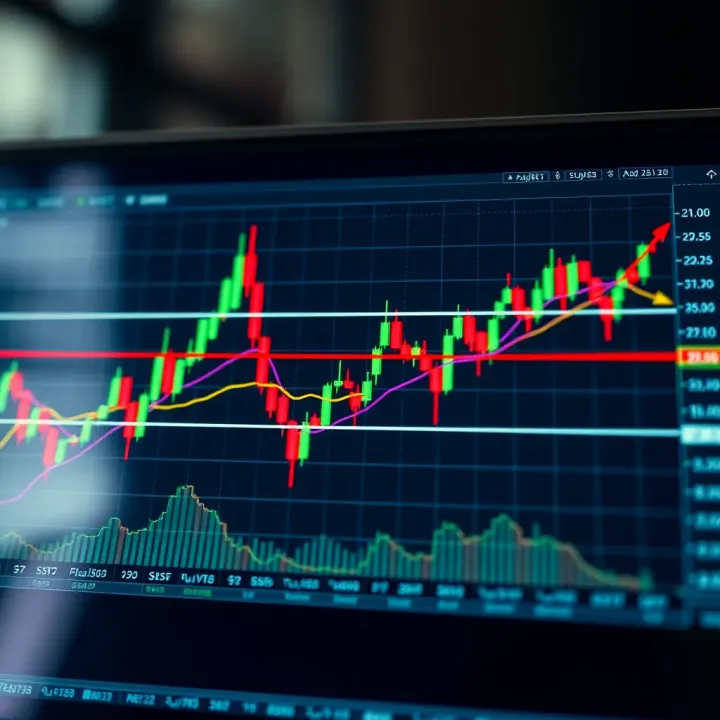
📊 Master key chart patterns with this practical guide! Learn to spot trends, improve trading choices, and boost your technical analysis skills for the Indian market.
Based on 15 reviews