
Understanding Candlestick Patterns: A Practical Guide
Learn how to read candlestick patterns in stock & forex trading 📈, with clear tips and HD PDF guides for sharper decisions and smarter investments 📚.
Edited By
Emma Clarke
For anyone stepping into the world of trading—whether stocks, commodities, or forex—understanding candlestick and chart patterns is a must. These graphical tools help reveal market sentiment by showing price movements visually, allowing traders to predict potential future trends. Without this grasp, making confident buying or selling decisions becomes more guesswork than strategy.
Candlestick patterns originated in Japan centuries ago and provide a snapshot of price action during a specified time frame, combining the open, high, low, and close prices into a single shape. Chart patterns, meanwhile, map broader price movements and help identify trends or reversals over days, weeks, or months.

Knowing how to read these patterns can give you an edge: spotting a bullish engulfing pattern early or recognising the head and shoulders formation might save you from losses or help lock in profits.
Many traders in India and elsewhere rely on these tools as part of their technical analysis toolkit. For example, during volatile phases in the Nifty 50, observing a doji candle at crucial support levels often signals a pause or reversal. Similarly, pattern recognition can guide decisions in currency trading or commodities like gold.
To really benefit, one should study well-structured PDF guides available through Indian financial education platforms or brokerage firms. These resources often present annotated charts alongside explanations, which helps solidify your ability to spot and act on patterns.
In summary, mastering candlestick and chart patterns lets you interpret market psychology and price action with more confidence. This guide will walk you through key patterns, their meanings, and how to access reliable PDF resources to enhance your trading skills effectively.
Candlestick charts offer a clear, visual way to understand market dynamics by displaying price movements within a given time frame. They simplify complex price action, making it easier for traders and investors to gauge market sentiment and make quick decisions. This section explains what candlestick charts are, why they matter, and why traders in India and worldwide rely on them.
Candlestick charts were originally developed in Japan during the 18th century to track rice prices. A Japanese rice trader named Munehisa Homma is credited with popularising this method. Despite their age, candlestick charts remain relevant because they effectively summarise price information in a compact form, helping traders spot trends and reversals quickly.
A single candlestick combines four key price points: open, close, high, and low. The 'body' of the candle shows the difference between the opening and closing prices, while the 'wicks' (or shadows) extend to the highest and lowest prices reached during the period. For instance, if the close price is higher than the open, the body is usually white or green, signifying bullish sentiment; if lower, it's often red or black, indicating bearishness.
This visual format provides traders with immediate insight into daily market activity, much more so than just line charts which only plot closing prices. The high and low wicks highlight market volatility, while the body gives clues on buying or selling pressure.
Candlestick charts provide clear visual advantages over other chart forms like line or bar charts. They convey more information at a glance, allowing traders to identify patterns such as Doji, Hammer, or Engulfing, which often signal potential trend changes. This immediacy makes them popular with beginners and professionals alike.
Trading decisions benefit from the quick insights into price action offered by candlesticks. For example, spotting a Hammer pattern after a downtrend could alert traders about a possible reversal, prompting timely entry or exit. Since recognition comes visually, it speeds up reaction time in fast-moving markets.
In Indian equity and commodity markets, candlestick patterns are widely adopted due to the markets’ volatility and participation by diverse investors. Platforms like NSE and BSE incorporate candlestick charting tools, and numerous Indian brokers provide pattern recognition features in their apps, helping traders capitalise on short-term price movements effectively.
Understanding candlestick basics equips you with an essential skill for spot-on market analysis, especially in India’s dynamic trading environment. Recognising these patterns enables better timing of trades and improved risk management.
This foundational knowledge prepares readers to explore complex patterns and use reliable resources for deeper learning, which further enhances trading expertise.
Understanding common candlestick patterns gives traders quick insights into market sentiment and potential price movements. These patterns serve as signals to anticipate trend reversals or continuations without needing complex calculations. Especially in Indian markets like NSE and BSE, recognising such patterns can improve timing for trade entries and exits, saving both money and time.
A Doji forms when the opening and closing prices are almost the same, resulting in a very small body with long wicks on both sides. This reflects indecision between buyers and sellers. For example, after a strong uptrend on Reliance Industries shares, a Doji appearing on the daily chart could warn traders that momentum might be fading.
Traders use Doji cautiously as it itself does not confirm reversal but signals the need to watch closely for the next few sessions. Combining Doji with volume spikes or support/resistance levels often gives better clues.
Both these single candlestick patterns have small bodies and long lower shadows but indicate different signals based on position. A Hammer at a downtrend’s bottom often hints at a bullish reversal, while a Hanging Man after an uptrend warns of potential weakness.
In practical terms, if a Hammer appears on Tata Steel’s chart close to a key support zone, traders might consider it a buying opportunity with well-planned stop-loss below the shadow. Conversely, spotting a Hanging Man on Infosys near a resistance level could prompt profit booking or caution before entering further long positions.
A Shooting Star looks like an inverted hammer but forms after an uptrend, showing sellers pushed prices back down by the session’s close. It signals a possible bearish reversal. The Inverted Hammer appears after a downtrend and signals a potential bullish reversal.
For instance, a Shooting Star on a Nifty 50 stock index chart after steady rises can advise traders to book some profits or tighten stops. In contrast, an Inverted Hammer on a weak banking stock may invite cautious buying with confirmation from the next candle.
These two-candle patterns highlight shifts in market momentum. A Bullish Engulfing occurs when a small red (bearish) candle is followed by a larger green (bullish) candle that completely covers it, indicating buying strength.
On the other hand, a Bearish Engulfing forms when a small green candle is overtaken by a larger red candle, signalling selling pressure. This pattern can be spotted on stocks like HDFC Bank during volatile days, helping traders catch early reversals.
These are three-candle patterns presenting clearer signals. The Morning Star signals a bullish reversal after a downtrend, starting with a tall red candle, followed by a small-bodied candle (star), and then a tall green candle.
The Evening Star is its bearish counterpart, appearing after an uptrend with a tall green candle, then a star, and a tall red candle. Indian traders often rely on this pattern near psychological price levels to adjust positions.
Both patterns involve two candles and indicate bearish or bullish potential reversals. The Piercing Line shows a strong green candle following a red one, with the green candle closing above the midpoint of the red, suggesting buyers have taken control.
Dark Cloud Cover is a bearish reversal pattern where a green candle is followed by a red candle closing below the midpoint of the green candle, signalling selling pressure. Recognising these on stocks like Asian Paints or Maruti Suzuki around key resistance or support helps traders manage risk effectively.
Recognising these candlestick patterns can simplify your market reading and help spot trading opportunities early – but remember, always combine with volume and support/resistance for confirmation.
These common patterns provide straightforward visual cues to understand market psychology quickly. Traders who master their recognition benefit from better timing and lower risks in the Indian context where daily volatility can be significant.
Chart patterns help traders spot potential price movements by highlighting market psychology and supply-demand shifts. Understanding these patterns gives you an edge in anticipating trend reversals or continuations, rather than guessing. This makes decision-making more data-driven and less prone to emotional bias.
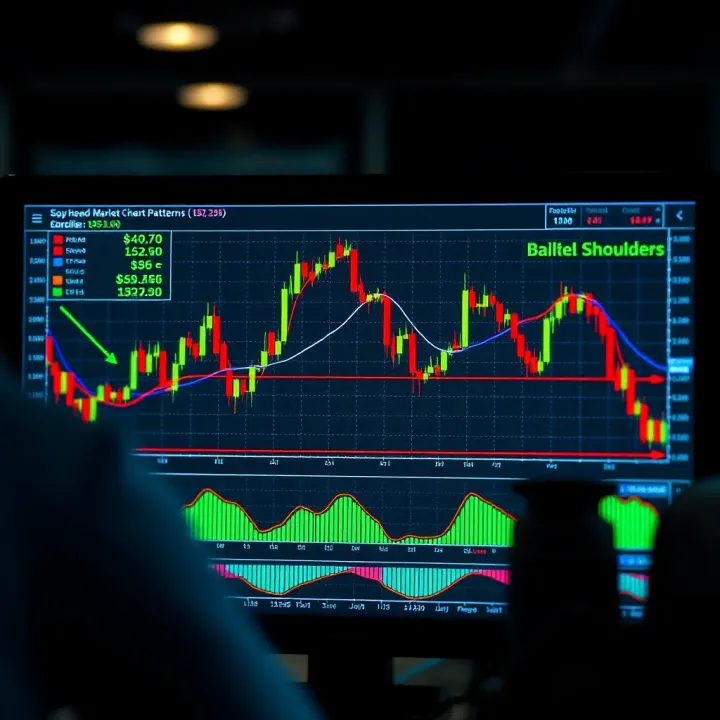
The Head and Shoulders pattern signals a likely reversal from an uptrend to a downtrend—or vice versa in the inverse form. It consists of three peaks: the middle one (head) is the highest, flanked by two smaller shoulders. This pattern shows a weakening momentum, where buyers fail to push prices higher after the head peak. Traders often watch for a break of the "neckline" (a support or resistance level connecting the shoulders) to confirm the reversal and decide on entering or exiting positions.
Triangles are common in Indian markets and come in three main types: ascending, descending, and symmetrical. These patterns form when price movement tightens between converging trendlines, indicating a pause before the next move. Usually, triangles suggest continuation of the existing trend, but sometimes they warn of reversal. For instance, an ascending triangle often hints at bullish continuation, while a descending triangle can signal bearish pressure.
Double tops appear as two consecutive peaks at similar price levels and indicate resistance, suggesting the uptrend may be fading. Conversely, double bottoms show two troughs near the same price, pointing to support and a possible reversal upwards. These patterns give clear entry and exit points, especially when combined with volume analysis. Indian traders find these useful during volatile sessions in stocks such as Reliance Industries or Tata Motors.
Candlestick patterns add context to chart formations by revealing short-term buyer or seller power. For example, spotting a bearish engulfing candlestick right after a head and shoulders pattern strengthens the signal for a downtrend. This combined approach reduces false alarms, giving traders higher confidence before making moves.
Using both helps time entries and exits more precisely. A triangle breakout confirmed by a bullish hammer candlestick on the daily chart can prompt timely buying before volumes surge. Similarly, spotting a morning star candlestick at a double bottom supports early selling decisions. These nuances can make the difference between small and big profits.
Take the Nifty 50 index: its recent double bottom around 16,000 points paired with a bullish engulfing candle suggested a bounce back, helping traders book gains during market recovery. Similarly, in the BSE Sensex, a head and shoulders pattern with confirmatory shooting star candles on stocks like Infosys hinted at short-term weakness. Observing these examples on charting platforms like NSE India or BSE India will sharpen your practical skills.
Combining candlestick and chart patterns equips you with a clearer, multi-layered view of market behaviour—crucial for Indian traders facing dynamic market conditions.
Gaining access to reliable books on candlestick and chart patterns in PDF format can save you time and money while ensuring the material is accurate and useful. These resources provide detailed explanations and examples that help traders from beginners to analysts sharpen their market reading skills. Getting trustworthy PDFs is especially helpful in India, where digital learning is growing, but not all sources are equally reliable.
Official publisher websites and authorised downloads are the safest bet for finding genuine PDFs. Publishers like Wiley, McGraw-Hill, and specific Indian educational publishers often offer free or paid e-books on technical analysis and chart patterns. Downloading from these sites guarantees you get versions without errors or illegal modifications. For example, books like "Japanese Candlestick Charting Techniques" by Steve Nison are often made available on official platforms, which means you avoid pirated copies that can mislead or confuse traders.
Educational platforms and Indian trading communities also serve as valuable sources. Platforms such as Zerodha Varsity, NSE Academy, and Indian investing forums sometimes offer authorised PDF guides or summaries supporting practical trading education. These platforms often update their materials based on market trends and Indian market conditions. Participating in these communities lets you access feedback and clarifications, which enhances your learning beyond just reading.
Avoiding pirated or unreliable sources is critical for your trading journey. Many websites offer free downloads of popular books but distributing these without permission is illegal and often risky. Such PDFs might contain outdated information or be incomplete. Worse, relying on such content can hurt your decision-making on the NSE or BSE markets, as wrong interpretations of candlestick patterns could lead to losses. So, always verify the source before downloading.
Titles known for clear explanations and practical examples stand out when studying candlestick and chart patterns. Books like "Encyclopedia of Chart Patterns" by Thomas Bulkowski provide comprehensive pattern lists paired with success rates and trading tips. These examples based on actual market data help traders apply patterns correctly. Such titles demystify complex signals, making it easier for you to grasp concepts without getting bogged down by jargon.
Books by experts popular among Indian traders include works by Steve Nison or John J. Murphy. Their writing blends global best practices with strategies relevant to Indian markets. For instance, Murphy’s "Technical Analysis of the Financial Markets" covers various charting methods that Indian traders actively use alongside NSE index movements. Choosing books authored by trusted experts ensures you learn techniques tested over decades.
How to use these books alongside charting software is another important point. Reading alone is not enough; pairing study materials with tools like TradingView, Zerodha Kite, or Upstox Pro lets you view real-time charts and practice pattern identification. Many books include exercises designed to be tried out on software platforms to strengthen your skills. Doing this hands-on makes the study practical rather than theoretical, improving your entry and exit decisions.
Accessing good PDF books from reliable sources and using them alongside charting tools is the best way for Indian traders to master candlestick and chart patterns effectively.
By focusing on trustworthy PDF resources and quality books, you build a solid foundation for confident trading in Indian markets and beyond.
Mastering candlestick and chart patterns is a practical step for any trader who wants to read markets more effectively. These visual tools offer clues about market sentiment and potential price moves. But improving your trading skills needs more than just knowing patterns; it requires deliberate practice, combining indicators, and solid risk management.
Using historical charts to identify patterns is essential. By reviewing past price movements on charts from Indian markets like NSE and BSE, traders develop an eye for recognising familiar formations such as hammers, engulfing patterns, or triangles. This historical study builds confidence, helping you spot these signals in live trading.
Simulating trades based on observed patterns helps test your interpretations without risking capital. Many platforms offer paper trading or demo accounts where you practise trade entries and exits after recognising a pattern. This trial runs fine-tune your decision-making and reveal how certain patterns behave in real market conditions.
Several tools and apps accessible in India support this learning curve. Platforms like Zerodha Kite, Upstox Pro, and TradingView allow historical chart analysis and simulation. Mobile apps, including Moneycontrol and ET Markets, offer real-time data and pattern recognition alerts, making it easier to practise anytime.
Pairing candlestick and chart patterns with volume, moving averages, or the Relative Strength Index (RSI) helps confirm signals. For instance, a bullish engulfing pattern supported by rising volume and an RSI below 30 suggests a stronger buy signal than the pattern alone. Likewise, simple moving averages (SMA) help determine trend direction and strengthen confidence in pattern outcomes.
This combination reduces false signals that may otherwise lead you astray. It’s common for patterns to fail without additional confirmation, so filtering trades with extra technical indicators means fewer bad entries, saving money and stress.
Examples from NSE and BSE show how combining tools boosts success. A trader spotting a head and shoulders formation in Reliance Industries shares might wait for a moving average crossover or RSI divergence before acting. This wait-and-watch approach increases the odds of a profitable trade.
Setting stop-loss and target prices is crucial for protecting gains and limiting losses. If a particular candlestick pattern suggests a reversal, placing a stop-loss just beyond the pattern’s high or low can lock in safety. Similarly, defining a target based on the pattern’s projected move or past support/resistance helps manage expectations.
Controlling position size according to your risk appetite and portfolio size also matters. Even with a strong pattern, risking a large portion of your capital on a single trade can lead to heavy losses. Many Indian brokers provide calculators to recommend position size based on stop-loss distance and risk tolerance.
Avoiding emotional trading traps is often overlooked but plays a big role. Patterns sometimes fail or give mixed signals leading to hesitation or panic. Sticking to predefined rules based on patterns and indicators helps you keep emotions in check, ensuring disciplined and focused trading.
Practising with intent, combining multiple indicators for confirmation, and managing risks carefully form a balanced approach. This makes candlestick and chart patterns reliable aids for smarter trading in Indian markets.
Learn how to read candlestick patterns in stock & forex trading 📈, with clear tips and HD PDF guides for sharper decisions and smarter investments 📚.

📊 Understand key candlestick chart patterns with clear images to spot bullish and bearish signals in stock and forex trading. Make smarter market decisions today!

📊 Learn candlestick chart patterns in Hindi with this practical guide! Understand basic to advanced signals for smart trading decisions. Get reliable PDF resources too.
📈 Learn essential market chart patterns traders use to read price moves. Get tips & PDF resources for in-depth analysis & smarter investing decisions.
Based on 13 reviews